
Stress Inoculation Training (SIT) is a structured cognitive behavioral intervention to improve stress management and psychological resilience.
SIT prepares people to handle future stressors by teaching coping skills before or during exposure to pressure. Donald Meichenbaum developed SIT as a practical training model rather than a passive insight-based therapy. Clinical use ranges from mental health care to workplace performance and high-pressure environments. The full scope of stress inoculation training includes definition, theory, phases, techniques, treatment settings, comparisons, and beginner implementation.
What is Stress Inoculation Training (SIT)?
Stress Inoculation Training (SIT) is a cognitive behavioral method that teaches people how to understand stress, build coping skills, and apply those skills under pressure. SIT aims to reduce emotional, cognitive, and physical stress reactions before they become overwhelming. Common use cases include anxiety-related problems, trauma-related symptoms, occupational stress, and performance pressure. SIT works by combining psychoeducation, coping rehearsal, and graduated practice in stressful situations. The method is structured, active, and skill-focused rather than purely reflective. A concise answer to what is stress inoculation training is that SIT teaches people how to respond to stress more effectively before stress takes control. The broader Stress Inoculation Training (SIT) model is best understood as a preparation and resilience-building system.
Who Developed Stress Inoculation Training?
Donald Meichenbaum developed Stress Inoculation Training as part of the broader cognitive behavioral tradition. Early work on SIT grew from the idea that stress responses are shaped not only by events but by interpretation, coping beliefs, and learned habits. Meichenbaum’s model evolved from cognitive behavioral principles that emphasized self-instruction, coping rehearsal, and behavior change. Clinical development framed stress as something that could be managed through preparation rather than only endured after damage occurred. Later use expanded SIT into treatment, prevention, and performance settings. The method became relevant in anxiety work, trauma-related care, and resilience training because it offered a clear and teachable structure.
What are the Core Principles of Stress Inoculation Training?
The core principles of Stress Inoculation Training are listed below.
- Stress Appraisal: Stress appraisal means identifying how a person interprets a stressor before reacting to it. Interpretation often shapes the intensity of the emotional response.
- Coping Skill Acquisition: Coping skill acquisition means learning practical strategies for managing stress reactions. Training includes cognitive, behavioral, and relaxation methods.
- Graduated Practice: Graduated practice means applying coping skills first in manageable situations and later in more demanding ones. Repetition helps increase confidence and stability.
- Self-regulation: Self-regulation means recognizing thoughts, emotions, body signals, and behavior patterns during stress. Awareness improves the ability to respond deliberately rather than automatically.
- Resilience Building: Resilience building means strengthening the belief that stress can be handled with learned skills. Confidence grows through successful rehearsal and application.
Is Stress Inoculation Training Effective?
Yes, Stress Inoculation Training is effective in several clinical and performance-related settings, although outcomes depend on the condition being treated, the quality of implementation, and the person’s engagement. SIT has reported that it has benefits for anxiety reduction, performance under pressure, and some trauma-related symptom management. Stronger results appear when SIT is delivered in a structured way with repeated rehearsal and application. Therapist guidance and regular practice both improve the chance of meaningful improvement. Evidence does not suggest that SIT solves every stress-related problem equally well, but evidence does support SIT as a credible cognitive behavioral intervention. Careful treatment matching remains important for the best results.
Empower Young Men on their journey to sobriety
Discover a dynamic, adventure-based treatment program engineered specifically to help young men defeat mental health challenges.
How does Stress Inoculation Training (SIT) Change Stress Responses?
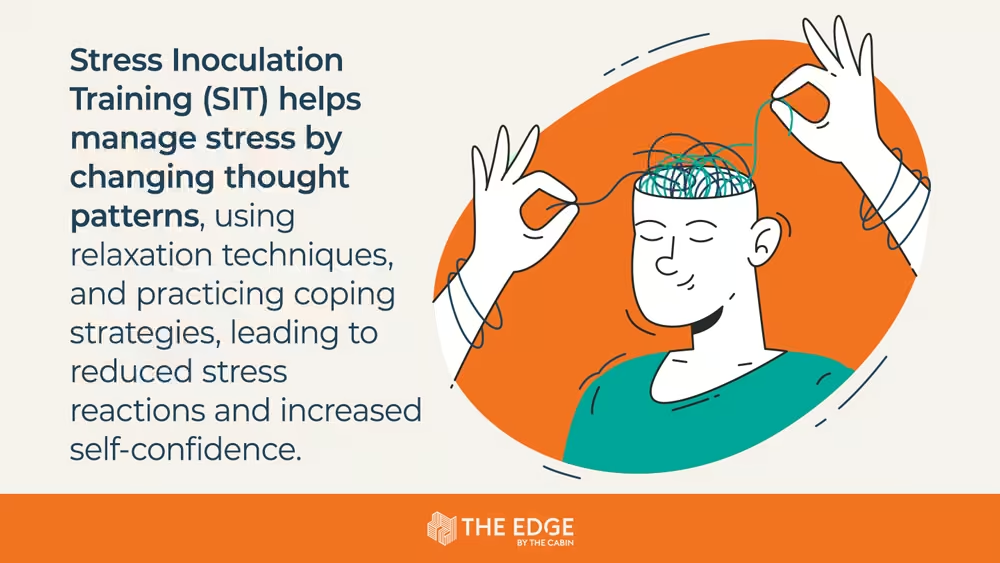
Stress Inoculation Training (SIT) changes stress responses by altering the interpretation of stress and the behavioral reaction that follows. Cognitive change occurs when a person learns to identify unhelpful thoughts and replace them with more adaptive coping statements. Physiological change follows when relaxation methods reduce excessive arousal under pressure. Behavioral change develops through repeated rehearsal of coping actions in increasingly demanding situations. Automatic stress responses lose intensity when the person no longer treats every challenge as an unmanageable threat. Self-confidence improves because successful practice strengthens coping expectations. SIT changes stress by modifying appraisal, body response, and action pattern together.
How does SIT Build Coping Skills?
SIT builds coping skills by teaching people how to prepare for stress before the most difficult moment arrives. Skill development begins with awareness of triggers, thoughts, body reactions, and current coping deficits. Therapists introduce strategies such as self-instruction, breathing control, problem solving, role rehearsal, and cognitive restructuring. Repeated rehearsal helps those methods become easier to use under pressure. Self-efficacy grows when the person experiences successful coping in manageable situations first. Resilience strengthens because coping becomes practiced and repeatable instead of something left to chance. The result is a more adaptive and more deliberate response style during stress.
Can Stress Inoculation Training Reduce Anxiety Symptoms?
Yes, Stress Inoculation Training can reduce anxiety symptoms by teaching people how to understand stress reactions and respond with structured coping skills. Anxiety grows when a person interprets pressure as overwhelming and lacks a reliable response plan. SIT interrupts that pattern through rehearsal, cognitive reframing, and regulation of body arousal. Stress exposure becomes easier to tolerate because the person has practical tools ready before the stress peak. Improvement is strongest when skills are practiced consistently and applied across different situations. A reduction in anxiety symptoms becomes more likely when coping skills are trained, repeated, and reviewed over time.
How does Stress Inoculation Training (SIT) Work?
Stress Inoculation Training works through a three-phase model that moves from understanding stress to learning coping skills and then applying skills under pressure. First, the conceptualization phase helps identify stressors, current coping problems, and the way stress is being interpreted. Second, the skills acquisition and rehearsal phase teaches cognitive, behavioral, and relaxation strategies in a structured way. Third, the application phase helps the person use skills in simulations, graduated exposure tasks, or real-life stress situations. Each phase builds on the previous phase rather than standing alone. The full method develops coping through repeated learning, guided practice, and increasing stress tolerance.
What Happens During the Conceptualization Phase?
The conceptualization phase identifies the main stressors, patterns of appraisal, and coping deficits that shape the person’s current response to pressure. Assessment includes discussion of triggers, typical thoughts, body reactions, emotional patterns, and avoidance habits. The therapist and client work together to define which stress situations are most important to target. Goal setting begins because treatment needs clear priorities before skill training starts. Psychoeducation helps the person understand that stress responses are learned, modifiable, and not fixed traits. A collaborative formulation makes the later skill work more specific and more useful. Strong conceptualization improves the fit between the intervention and the actual stress problem.
What Techniques are Learned During the Skills Acquisition Phase?
The techniques learned during the Skills Acquisition Phase are listed below.
- Self-Instruction Training: Self-instruction training teaches deliberate coping statements that replace panic, defeat, or helplessness. The method helps organize thinking under pressure.
- Cognitive Restructuring: Cognitive restructuring teaches people how to identify exaggerated, rigid, or defeatist-based thoughts and replace them with more adaptive interpretations. Better thinking supports steadier stress responses.
- Problem Solving: Problem-solving skills break a stressful situation into manageable parts. Structured action planning reduces confusion and helplessness.
- Behavioral Rehearsal: Behavioral rehearsal gives people repeated practice using coping skills before a real stress event occurs. Repetition improves readiness and confidence.
- Relaxation Training: Relaxation training teaches breathing control, muscle release, and attention regulation. Lower arousal makes coping skills easier to use when pressure rises.
How are Cognitive Techniques used in SIT?
Cognitive techniques in SIT are used by identifying stress-producing thoughts and replacing them with more adaptive internal dialogue. Cognitive restructuring helps the person examine whether a thought is realistic, useful, and proportional to the actual situation. Self-instruction techniques provide short coping statements that guide attention and behavior during stress. Statements may focus on preparation, staying present, or breaking the challenge into smaller parts. Thought patterns matter because stress reactions intensify when the mind predicts catastrophe or personal failure. A more balanced interpretation reduces escalation and creates room for deliberate action. Cognitive techniques help turn stress from a threat spiral into a manageable task.
How are Behavioral Techniques used in SIT?
Behavioral techniques in SIT are used through rehearsal, modeling, and repeated coping practice. Rehearsal allows the person to practice a stress response before facing a real high-pressure situation. Modeling may involve a therapist’s demonstration or structured examples of effective coping behavior. Repetition is important because skill familiarity improves confidence and speed under pressure. Coping practice makes the response more automatic when stress rises suddenly. Behavioral training is one of the main ways SIT strengthens resilience rather than leaving coping at a purely theoretical level. Stress responses improve because behavior has been trained before the difficult moment arrives.
How are Relaxation Techniques used in SIT?
Relaxation techniques in SIT are used to lower excessive physiological arousal and make coping skills easier to apply. Breathing exercises help slow the body’s alarm response and improve a sense of control. Progressive muscle relaxation reduces tension that builds during fear, overload, or anticipatory worry. Mindfulness-based methods may be used to anchor attention and reduce mental escalation. Physiological effects matter because a highly activated body narrows attention and weakens judgment. Better regulation of breathing and tension can therefore support calmer thinking and more effective behavior. Relaxation techniques are not the whole of SIT, but relaxation techniques are an important part of the skill set.
What Happens During the Application Phase?
The application phase brings learned skills into increasingly realistic stress situations. Simulations, role plays, imagery, graded exposure, and real-world practice are used during this stage. The purpose is to help the person apply coping methods under pressure rather than only discuss them in session. Graduated difficulty is important because moderate challenge helps strengthen resilience without creating chaotic overload. Therapist feedback continues so the person can refine coping responses after each practice attempt. The application shows whether the skills transfer from session learning to real-life functioning. Progress becomes most visible during this phase because coping is tested directly.
Begin Your Wellness Journey
Entering rehab may feel daunting, but understanding what comes next can turn anxiety into hope. The Edge is here to provide the support you need to regain control of your life.
Where is Stress Inoculation Training SIT used?

Stress Inoculation Training (SIT) is used in mental health treatment, workplace settings, and performance environments. Mental health treatment uses SIT for anxiety-related problems, trauma-related distress, and coping deficits. Workplace settings use SIT for occupational stress, conflict, and role pressure. Performance environments apply SIT in sports, emergency roles, military training, and other high-demand contexts. The method adapts well because it focuses on stress appraisal, skill building, and practical application rather than one narrow diagnosis.
The Stress Inoculation Training (SIT) is used in the settings listed below.
- Mental Health Treatment: Therapists use SIT to help individuals manage stress, anxiety, trauma-related distress, and coping difficulty. Clinical use blends psychoeducation with structured practice.
- Workplace Settings: Organizations use SIT to improve employee coping under deadlines, conflict, role overload, and high responsibility. Stress management training may reduce burnout risk and improve functioning.
- Performance Environments: Sports, military, emergency, and high-pressure professions use SIT to strengthen preparation and maintain performance during intense demands. The method helps people stay functional when pressure rises.
How is SIT used in Mental Health Treatment?
SIT is used in mental health treatment by following the three steps. First, therapists assess how stress is being interpreted and identify the situations that trigger the strongest reactions. Second, treatment plans introduce coping methods such as self-instruction, cognitive restructuring, breathing control, and rehearsal of adaptive responses. Lastly, methods are practiced through structured exercises that prepare the person for actual pressure situations. Mental health treatment uses SIT with anxiety-related problems, trauma-related stress, anger under pressure, and broader coping deficits. The goal is not to remove all stress from life, but to improve how stress is handled. The role of SIT in mental health treatment is strongest when coping skill deficits and stress reactivity are central parts of the problem.
Can SIT help People with Post Traumatic Stress Disorder?
Yes, SIT can help people with Post Traumatic Stress Disorder by teaching anxiety management and coping skills that reduce distress under trauma-related stress. SIT is considered a non-trauma-focused CBT approach in PTSD care rather than a direct trauma processing treatment. Relaxation, positive self-talk, and coping rehearsal may reduce anxiety and improve functioning. Benefit depends on symptom pattern, treatment goals, and whether the person needs trauma-focused methods. Some individuals respond better to exposure-based or cognitive processing models when trauma memory work is central. SIT still has value for post-traumatic stress disorder when the clinical aim is stronger coping under stress rather than full trauma memory restructuring. Careful treatment selection remains important.
How is SIT used in Workplace Settings?
SIT is used in workplace settings by following the three steps. First, organizations identify common occupational stressors such as workload pressure, conflict, time demands, decision fatigue, and performance scrutiny. Second, SIT programs teach employees how to recognize stress reactions early and apply coping skills before performance breaks down. Lastly, role-based simulations or practice tasks help staff use skills in realistic scenarios. Workplace use emphasizes preparation, emotional regulation, and effective communication under pressure. Organizational benefit comes from improved coping rather than the elimination of every external stressor. Employee health programs prefer SIT because the model is teachable, structured, and transferable to daily work demands.
Can SIT Improve Employee Resilience?
Yes, SIT can improve employee resilience when the program is delivered in a structured way, and the taught skills are practiced consistently. Resilience improves because employees learn how to interpret pressure more adaptively and respond with rehearsed coping actions. Better preparation reduces the feeling of being overwhelmed by deadlines, conflict, or uncertainty. Practical skill training is important because resilience grows through repeated use rather than through information alone. Stronger coping may support steadier communication and better decision-making during demanding tasks. Results still depend on workplace culture, job conditions, and follow-through. SIT works best when individual skill training is supported by a workable organizational environment.
How is SIT used in Performance Environments?

SIT is used in performance environments by following the three steps. First, coaches, trainers, or clinicians identify the specific high-pressure demands involved in the performance setting. Second, coping methods are taught for concentration, self instruction, emotional regulation, and controlled breathing. Lastly, simulations or graded practice recreate pressure so the performer can rehearse the response before the actual event. Sports settings use SIT for competition stress, evaluation anxiety, and mistake recovery. Military, emergency, and other high-risk roles use SIT for preparation under threat, uncertainty, and rapid decision-making. Performance environments benefit from SIT because the method turns pressure into a trainable condition instead of a purely unpredictable reaction.
Can SIT Improve Performance Under Pressure?
Yes, SIT can improve performance under pressure by reducing disruptive anxiety and strengthening practiced coping responses. Performance suffers when stress overwhelms attention, working memory, and self-control. SIT prepares the person to handle moments with more stable breathing, more useful self-talk, and better behavioral execution. Improvement depends on practice because coping methods need rehearsal before they become reliable. Pressure does not disappear, but the response to pressure becomes more organized. Better functioning under stress is one reason SIT has been studied in performance settings. Gains are strongest when preparation is repeated and tailored to the actual challenge.
Give yourself the best change for recovery
The Edge Crete team is ready to help you work through your past and present struggles. Call us today for a confidential consultation.
How does Stress Inoculation Therapy SIT Differ from other Approaches?
Stress Inoculation Therapy differs from other approaches by a structured cognitive behavioral training model that emphasizes preparation, coping skill rehearsal, and graduated application under stress. Many interventions help with stress, but SIT is more systematic in how it moves from conceptualization to skill learning and then to practical stress exposure. Comparisons are useful because treatment choice depends on whether the main need is skill acquisition, trauma processing, symptom relief, or general lifestyle adjustment. SIT is distinctive when the goal is to prepare for stress before performance or functioning breaks down. The method is notable for combining cognitive, behavioral, and physiological regulation strategies in one training model. Clear comparison helps clinicians and clients choose the intervention that fits the problem best.
What is the Difference Between SIT and Cognitive Behavioral Therapy?
The difference between SIT and Cognitive Behavioral Therapy is that SIT is a specific cognitive behavioral intervention, while Cognitive Behavioral Therapy is a broader family of therapies with many different protocols and targets. SIT grew directly from Cognitive Behavioral Therapy principles and uses many of the same ideas about thoughts, emotions, and behaviors. The difference is that SIT focuses more narrowly on stress management, resilience, coping rehearsal, and preparation for future stressors. General Cognitive Behavioral Therapy covers a wider range of conditions and methods, including depression, OCD, panic, trauma, insomnia, and more. SIT follows a three-phase skill training model, while CBT protocols vary according to diagnosis and treatment goal. SIT and CBT overlap strongly, but SIT is best understood as a structured CBT-based program for stress-related functioning.
What is the Difference Between SIT and Exposure Therapy?
The difference between SIT and Exposure Therapy lies in their main purposes and methods. SIT teaches coping skills, cognitive reframing, relaxation, and rehearsal before or during stress exposure. Exposure Therapy focuses more directly on fear extinction through repeated confrontation with feared stimuli or memories. Stress inoculation work uses graduated application, but the central aim is better coping under stress rather than the extinction of a specific fear response. Exposure treatment is chosen when avoidance of a feared cue is the main maintenance factor in anxiety or trauma-related distress. SIT is broader in its stress management focus and may be used in performance, workplace, or prevention settings. Clinical choice between SIT and Exposure Therapy depends on whether the main need is fear reduction, coping preparation, or both.
What is the Difference Between SIT and General Stress Management?
The difference between SIT and General stress management is that general stress management refers to broad methods for lowering stress (time management, exercise, sleep improvement, relaxation, and healthier lifestyle routines). SIT differs because it is a structured cognitive behavioral intervention with a defined phase model and explicit coping rehearsal process. Many general stress management approaches improve well-being, but they do not always include the same level of assessment, self-instruction training, behavioral rehearsal, and graduated application under challenge. SIT is more targeted when stress reactivity is severe, repeated, or tied to performance and coping deficits. The method is more focused on building a planned response before major stress exposure happens. General stress management can still support SIT, but the two are not identical. Structure, purpose, and progression make SIT more clinically specific.
How can Beginners Practice Stress Inoculation Training (SIT)?
Beginners can practice Stress Inoculation Training (SIT) by starting with manageable stressors and building coping skill use in small steps. Initial work should focus on understanding personal stress patterns rather than jumping straight into an intense challenge. Basic coping tools such as breathing control, self instruction, and simple problem solving create a good starting point. Practice becomes more effective when the stressor is mild enough to allow learning but strong enough to feel real. Repetition is important because resilience develops gradually through use. A beginner-friendly framework should stay structured, realistic, and progressive. Small success is more useful than dramatic early overload.
What Steps Should Beginners Follow?
There are six steps that beginners should follow. First, identify a common stressor that creates discomfort but does not overwhelm safety or stability. Second, write down the main thoughts, body reactions, and behaviors that appear in that situation. Third, choose one or two coping skills (slow breathing and a short self instruction phrase), and rehearse them before facing the stressor. Fourth, practice the skill during a mild version of the stress situation and observe what changes. Fifth, review what worked, what failed, and what still needs adjustment. Lastly, repeat the process with slightly harder situations once confidence grows. A numbered sequence helps beginners build skill through preparation, practice, and evaluation rather than guesswork.
What Mistakes Should Beginners Avoid?
The mistakes beginners should avoid are listed below.
- Starting Too High: Beginning with an extreme stressor often overwhelms learning. Moderate difficulty is more effective for early skill building.
- Skipping Practice: Reading about coping skills without rehearsing them rarely changes stress responses. SIT depends on repeated use, not passive understanding.
- Using Too Many Skills at Once: Overloading the plan with techniques may create confusion. A small set of well-practiced skills works better early on.
- Ignoring Review: Failing to evaluate the outcome makes it harder to refine the response. Reflection is part of the training process, not an optional extra.
- Expecting Instant Mastery: Stress responses rarely change fully after one attempt. Gradual improvement is more realistic and more stable.
- Avoiding the Stressor Completely: Total avoidance blocks application and learning. Practice needs some level of contact with the challenge to work.
Can Beginners Practice SIT without Professional Guidance?
Yes, beginners can practice SIT without professional guidance when the stressors are mild and the person is stable enough for self-directed work. Simple breathing practice, self-instruction, stress journaling, and small rehearsal tasks can be learned independently. Professional support becomes more important when stress is severe, persistent, trauma-related, or linked with significant anxiety, depression, or impairment. A therapist can improve assessment, pacing, technique choice, and review of coping effectiveness. Guidance is useful when avoidance, panic, or emotional flooding interferes with practice. Self-directed SIT is possible at a basic level, but complex cases benefit from structured clinical supervision.
It's Never Too Early—or Too Late—to Seek Help
The Edge Rehab provides a safe, structured, and compassionate environment for your recovery. Contact us for a free consultation—we’ll reply within 24 hours.