
Cognitive Processing Therapy (CPT) is a structured, manualized cognitive behavioural therapy created for trauma-related disorders, especially post-traumatic stress disorder.
CPT works by helping individuals identify, examine, and modify maladaptive beliefs that developed after trauma. The treatment is a standalone evidence-based psychotherapy system rather than a small technique added onto another model. Its framework uses written reflection, therapist-guided questioning, and repeated cognitive restructuring across sessions. Core change happens when trauma-related beliefs become more balanced, specific, and less controlling.
What is Cognitive Processing Therapy (CPT) as a psychotherapy system?
Cognitive Processing Therapy (CPT) is a trauma-focused cognitive behavioral therapy model designed to reduce post traumatic stress symptoms by restructuring maladaptive belief systems linked to trauma. CPT treats trauma-related distress as a problem maintained in part by distorted interpretations about safety, trust, control, esteem, intimacy, and self-blame. The system is structured, manualized, and sequential, which means each part of treatment builds on the earlier work. Sessions guide clients to identify “stuck points,” which are rigid trauma-related beliefs that keep distress active. Therapist-guided cognitive work then helps challenge those beliefs and replace them with more balanced interpretations. The Cognitive Processing Therapy (CPT) is a psychotherapy system because it includes theory, session structure, worksheets, written tasks, and defined treatment targets. Its strongest clinical use is in PTSD care, but the framework is broader than simple symptom discussion.
What theoretical foundations does Cognitive Processing Therapy are based on?
Cognitive theory, schema theory, trauma-related meaning making, and belief change are the theoretical foundations of Cognitive Processing Therapy. Cognitive Processing Therapy is based on the idea that trauma disrupts core belief systems and creates maladaptive meanings about the self, other people, and the world. CPT assumes that traumatic experiences can alter schemas related to safety, trust, control, esteem, and intimacy. Distress persists when those schemas remain rigid, extreme, or inaccurate after the traumatic event. The model explains that some beliefs become overly accommodated, overly assimilated, or distorted in ways that keep fear, shame, guilt, or anger active. Cognitive theory in CPT focuses less on changing the memory itself and more on changing the interpretation attached to the memory. Therapy aims to reconstruct disrupted schemas through repeated reflection, questioning, and practice. The theoretical base explains why belief change is treated as the main path toward symptom relief.
Does Cognitive Processing Therapy Change Memory or Interpretation of Trauma?
Yes, Cognitive Processing Therapy mainly changes the interpretation of trauma rather than erasing or rewriting the core memory itself. The treatment helps clients examine the meaning they attached to the event after it happened. Trauma memories may feel less overwhelming over time, but the therapy does not aim to delete the factual content of what occurred. Emotional relief often follows because beliefs about blame, danger, guilt, helplessness, and trust become more balanced. A patient may still remember the trauma clearly while feeling less trapped by extreme conclusions drawn from it. Clinical change centers on meaning, appraisal, and schema revision. The distinction is important because CPT targets cognition more directly than memory content.
Treating Addiction Means Treating the Whole Person
Every addiction is different, and so is every recovery. The Edge addresses the physical, emotional, and psychological factors behind addiction for sustainable recovery.
How Cognitive Processing Therapy (CPT) Produces Cognitive Change?
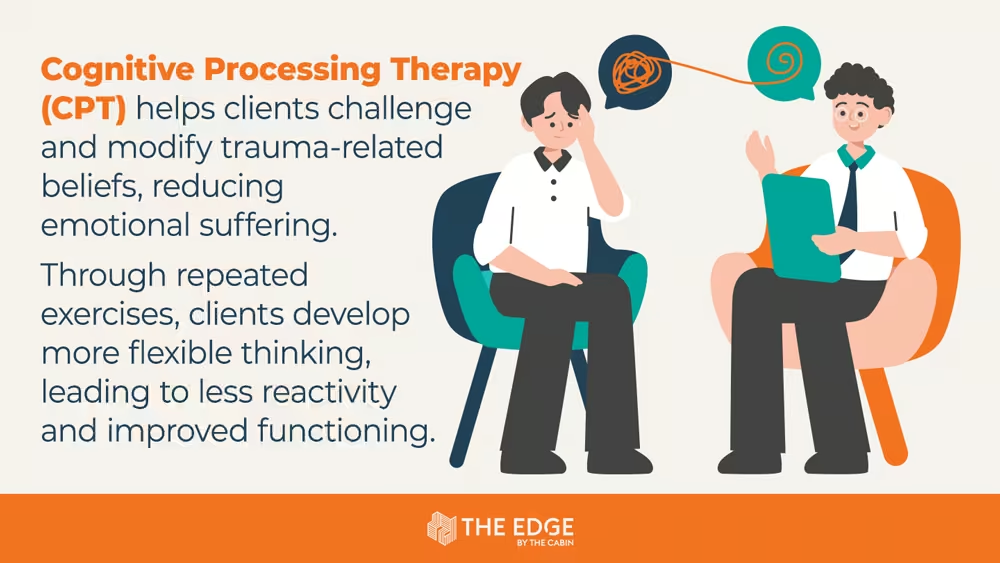
Cognitive Processing Therapy produces cognitive change through repeated evaluation and modification of trauma-related beliefs. Cognitive restructuring is the central mechanism because clients are taught to identify stuck points, question them, and replace them with more balanced alternatives. Change does not happen in one single insight moment, and change usually develops through repeated written work, discussion, and review. Therapists guide clients to test whether a belief is fully accurate, overly broad, or based on distorted assumptions formed after trauma. Emotional suffering often decreases when guilt, shame, distrust, or constant danger appraisals lose some of their authority. The process is iterative because each session builds on earlier cognitive work. Over time, more flexible thinking supports less reactivity and better functioning.
What Mechanisms drive change in Cognitive Processing Therapy?
The mechanisms that drive change in Cognitive Processing Therapy include Socratic questioning, written cognitive processing, structured homework, therapist feedback, and repeated stuck point review. Socratic questioning is central because the therapist helps clients examine whether a belief is accurate, complete, and helpful rather than simply telling them what to think. Written processing assignments create a record of how trauma-related meanings develop and how those meanings can be revised. The therapist’s feedback sharpens the client’s ability to notice distortions that were previously automatic. Session by session repetition strengthens the link between cognitive awareness and emotional response. Belief change becomes more durable when the client learns to challenge stuck points independently. The feedback loop explains why CPT remains highly structured and skill-based.
What Components Define Cognitive Processing Therapy Protocol?
The components that define the Cognitive Processing Therapy protocol are listed below.
- Impact Statements: Impact statements are structured writings that describe how the trauma affected beliefs about the self, others, and the world. They help establish a baseline map of trauma-related meaning.
- Stuck Points: Stuck points are rigid or distorted beliefs that keep trauma-related distress active. These beliefs become the main targets of cognitive work.
- Worksheets: Worksheets help clients track thoughts, feelings, beliefs, and alternative interpretations across treatment. They organize the therapy into repeatable clinical steps.
- Socratic Questioning: Socratic questioning helps clients evaluate the evidence, logic, and consequences of trauma-related beliefs. The method supports discovery rather than simple instruction.
- Cognitive Restructuring Tasks: Cognitive restructuring tasks teach clients how to identify, challenge, and replace maladaptive beliefs. The process is repeated across multiple content areas.
- Manualized Session Design: Manualized session design keeps treatment structured across a standard sequence. That structure supports consistency, fidelity, and clearer progress review.
What Role Worksheets Play in Cognitive Processing Therapy?
Learning tools, belief tracking forms, therapist feedback guides, and treatment records are the roles worksheets play in Cognitive Processing Therapy. Worksheets turn abstract trauma-related beliefs into trackable and changeable material. Written forms help clients identify stuck points that might otherwise remain vague or automatic. Structured belief tracking makes therapist feedback more precise and clinically useful. CPT tasks ask clients to connect an activating event, an interpretation, an emotion, and a more balanced response. The written sequence helps reveal distortions, including overgeneralization, self-blame, or all-or-nothing thinking. Practice becomes more effective because progress becomes visible from one session to the next. Worksheets function as learning tools and treatment records throughout CPT.
What are Impact Statements in Cognitive Processing Therapy?
The impact statements in Cognitive Processing Therapy are listed below.
- Baseline Meaning Narratives: Impact statements are written reflections about what the trauma came to mean. They show how the event changed beliefs about self, others, and the world.
- Belief Documentation Tools: These writings document early trauma-related conclusions before deeper restructuring begins. Therapists use them to identify major stuck points and schema themes.
- Clinical Comparison Markers: Impact statements can be compared across treatments to show how beliefs changed. That comparison makes cognitive progress easier to see clearly.
- Theme Identification Guides: Statements often reveal trauma themes involving safety, trust, control, esteem, and intimacy. Those themes shape later cognitive work in treatment.
What is Cognitive Restructuring in Cognitive Processing Therapy?
Cognitive restructuring in Cognitive Processing Therapy is the process of identifying, challenging, and modifying maladaptive trauma-related beliefs. The method begins by finding beliefs that are rigid, overgeneralized, self-blaming, or disconnected from fuller evidence. Therapists guide clients through questions that test whether the beliefs are accurate and useful. Replacement does not mean creating falsely positive thinking. Replacement means building a more balanced interpretation that fits the evidence better. The process is repeated across many stuck points, so belief change becomes a learned skill rather than a one-time correction. Emotional improvement follows because shame, guilt, danger appraisals, and helplessness become less intense. The structure resembles broader cognitive restructuring work but stays centered on trauma meaning and schema repair.
Begin Your Wellness Journey
Entering rehab may feel daunting, but understanding what comes next can turn anxiety into hope. The Edge is here to provide the support you need to regain control of your life.
How Is Cognitive Processing Therapy (CPT) Structured Across Treatment Phases?
Cognitive Processing Therapy is structured across treatment phases through a standardized phased model that moves from orientation and belief mapping toward deeper restructuring and consolidation. Early sessions focus on education about PTSD and the cognitive model, along with initial identification of trauma-related meanings. Middle sessions emphasize worksheet practice, stuck point review, and more specific restructuring around key trauma themes. Later sessions apply those skills to major schema areas such as safety, trust, control, esteem, and intimacy. Session cycles usually include review of homework, belief evaluation, therapist-guided questioning, and a new assignment. A manualized format helps keep the treatment focused and cumulative.
The main phases in the CPT structure are listed below.
- Introduce the CPT Model. Early treatment explains trauma symptoms, the role of stuck points, and the logic of cognitive change. This phase creates a shared framework for the work that follows.
- Identify Trauma-Related Beliefs. Clients begin to notice beliefs linked to guilt, danger, blame, helplessness, or mistrust. These beliefs are recorded and prioritized for later work.
- Practice Structured Restructuring. Middle sessions use worksheets and discussion to challenge maladaptive appraisals. Repetition strengthens the client’s ability to question beliefs more independently.
- Apply Cognitive Change to Core Themes. Later work addresses broader schema areas affected by trauma. Theme-focused review helps move the therapy beyond isolated thoughts toward deeper system change.
- Consolidate Skills and Review Progress. Final treatment stages compare earlier and later beliefs and strengthen independent use of CPT methods. The goal is long-term cognitive flexibility rather than temporary relief alone.
What Happens During a Cognitive Processing Therapy Session?
Homework review, stuck point discussion, cognitive evaluation, therapist-guided belief questioning, worksheet review, and the next written task happen during a Cognitive Processing Therapy session. Sessions begin by examining what the client noticed between appointments, especially stuck points, emotional reactions, and worksheet patterns. Therapists guide the client through focused questioning to test whether trauma-related beliefs are fully accurate or overly distorted. Written material becomes the basis for discussion because it shows how the person is currently interpreting the trauma. Belief change is not forced, and the therapist uses a structured process that helps the client reach a more balanced conclusion. Each session builds on the previous one, so the work remains cumulative.
The main steps in a typical CPT session are listed below.
- Review Homework. The therapist and client examine the written assignments completed since the last meeting. This review helps identify active stuck points and current cognitive themes.
- Track Emotional and Cognitive Links. Sessions connect emotions such as guilt, shame, fear, or anger to the beliefs that are driving them. This step clarifies why cognition matters in symptom maintenance.
- Question Trauma-Related Beliefs. The therapist uses Socratic methods to help the client evaluate accuracy, context, and alternative interpretations. The goal is guided discovery rather than argument.
- Apply Worksheet-Based Restructuring. Patients practice identifying distortions and generating more balanced thoughts. Repetition improves skill and confidence.
- Assign New Written Practice. The session ends with another structured task that extends the cognitive work into daily life. Homework keeps the treatment active between meetings.
What Homework Does Cognitive Processing Therapy Require?

The homework for Cognitive Processing Therapy is listed below.
- Write Impact Statements. Impact statement writing helps document how trauma changed core beliefs. The task gives the therapist a starting map for later restructuring.
- Track Stuck Points. Clients record trauma-related beliefs that trigger distress or interfere with recovery. The tracking keeps important cognitions visible across sessions.
- Complete Thought Record Style Worksheets. Worksheet tasks help break down an event, a thought, an emotion, and a more balanced alternative. Repeated practice strengthens cognitive flexibility.
- Review Theme Specific Beliefs. Homework often focuses on beliefs related to safety, trust, control, esteem, or intimacy. This task deepens schema-level work beyond surface thoughts.
- Practice Written Cognitive Reflection. Clients may be asked to describe how new beliefs differ from older trauma-based conclusions. Reflection helps consolidate the change process.
What Outcomes Does Cognitive Processing Therapy (CPT) Produce?
Greater cognitive flexibility, lower trauma-related belief intensity, reduced guilt and shame, reduced avoidance, more stable emotional functioning, and stronger daily functioning are the main outcomes Cognitive Processing Therapy produces. Clients often report reduced self-blame, fear, and rigid danger-based thinking after successful treatment. Emotional stabilization improves because trauma meanings become less extreme and less controlling. Many people show reduced avoidance because trauma reminders are no longer interpreted through distorted logic. Functional gains appear in relationships, work, daily activity, and self-care when beliefs become more balanced. The treatment outcome is not emotional numbness because CPT supports clearer interpretation and healthier regulation. CPT aims for durable cognitive and emotional change rather than only short-term symptom reduction.
How CPT Improves Emotional Regulation and Long-term Cognitive Stability?
CPT improves emotional regulation and long-term cognitive stability by helping patients see the connection between thought patterns and trauma-driven emotional reactions. Guilt, shame, anger, fear, and distrust become less intense when the beliefs underneath them are examined carefully. The process builds awareness that emotions are influenced by interpretation rather than controlled entirely by memory alone. A more balanced approach to thinking facilitates a steadier emotional recovery from stress or trauma reminders. Long-term stability improves because clients learn a repeatable method for evaluating stuck points on their own. Shame-driven and guilt-driven reactions decrease when global self-blame is replaced with a more specific and realistic appraisal. Continued use of the skill set helps prevent a return to older cognitive extremes. Emotional regulation becomes stronger through repeated cognitive practice rather than passive reassurance.
How Cognitive Processing Therapy Compares with Medication-Based Treatment Approaches?
Cognitive Processing Therapy compares with medication-based treatment approaches by targeting trauma-related beliefs directly, while medication-based treatment mainly targets symptoms through biological mechanisms. Medication-based care is used to reduce anxiety, sleep disturbance, irritability, or depressed mood, but medication does not teach a structured method for changing trauma interpretations. CPT works through cognitive restructuring and therapist-guided evaluation of maladaptive beliefs. The difference matters because trauma-related guilt, shame, self-blame, and distrust are central maintenance factors in PTSD. Medication-based treatment remains useful when comorbid symptoms interfere with therapy readiness. Durability of change is discussed differently because psychotherapy builds skills that remain useful after formal treatment ends. A balanced treatment plan uses CPT alone or CPT alongside Medication-Based Treatment, depending on the clinical picture.
THE EDGE CRETE YOUR SUPERIOR CHOICE FOR RESIDENTIAL REHAB
Discover a dynamic, adventure-based treatment program engineered specifically to help young men defeat addiction and mental health issues.
What Is Cognitive Processing Therapy (CPT) Used For in PTSD Treatment?
The uses of Cognitive Processing Therapy in PTSD treatment are listed below.
- Intrusive Thought Reduction: CPT helps reduce the meaning attached to intrusive trauma thoughts and memories. The person learns to respond to those thoughts with less distortion and less self-blame.
- Avoidance Pattern Reduction: CPT addresses the beliefs that make trauma reminders feel unbearable or permanently dangerous. Lower avoidance often follows when the meaning changes.
- Hyperarousal Cognition Work: The therapy helps challenge beliefs that keep the person in constant threat expectation. This work may reduce hypervigilance-driven interpretation over time.
- Guilt and Shame Processing: CPT is especially well known for addressing trauma-related guilt, shame, and self-blame. These cognitive themes are often central in PTSD recovery.
- Schema Reconstruction: CPT helps rebuild beliefs about safety, trust, control, esteem, and intimacy after trauma disruption. The broader schema work is one reason CPT is a major PTSD treatment.
What PTSD Symptoms Respond best to Cognitive Processing Therapy CPT?
The PTSD symptoms that respond best to Cognitive Processing Therapy are listed below.
- Intrusive Memories: Intrusive memories often become less distressing when the beliefs attached to them become more balanced. The memory may remain, but the interpretation becomes less damaging.
- Avoidance Behavior: Avoidance often decreases when trauma reminders are no longer interpreted through rigid danger or shame-based beliefs. Cognitive shift helps make the approach more possible.
- Hyperarousal Cognition: Hyperarousal linked with constant threat interpretation may soften when safety-related beliefs become more realistic. Cognitive change can reduce the mental fuel behind chronic alertness.
- Guilt-Based Interpretations: Guilt-based trauma meanings often respond well because CPT directly targets self-blame and responsibility distortions. Guilt-based is one of the model’s strongest clinical areas.
- Shame-Based Interpretations: Shame-based interpretations are PTSD Symptoms tied to beliefs about worth, weakness, or contamination. Emotional relief follows when global self-judgments are challenged, and the trauma meaning becomes more balanced.
How CPT Reduces PTSD Symptom Severity Through Cognitive Change?
CPT reduces PTSD symptom severity through cognitive change by weakening maladaptive trauma interpretations that keep fear, shame, guilt, and avoidance active. When beliefs shift from absolute and self-condemning toward balanced and specific, emotional intensity often decreases. Intrusive experiences may become less destabilizing because the person is no longer interpreting them through the same rigid schema. Avoidance also tends to decline because reminders feel less unbearable and less globally threatening. Repeated therapist feedback and written reflection keep the cognitive change process active across sessions. Symptom severity improves not because the trauma never happened, but because the trauma no longer controls meaning in the same way. The pattern explains why CPT is considered one of the strongest structured psychotherapies for PTSD.
When Is Cognitive Processing Therapy Not Recommended Clinically?
Cognitive Processing Therapy is not recommended when acute psychiatric instability, immediate crisis risk, severe disorganization, or low cognitive readiness make structured belief work unsafe or unworkable. Acute psychosis, imminent suicidal or homicidal risk, uncontrolled mania, or recent severe self-injurious behavior usually requires stabilization first. Severe dissociation can interfere when the person cannot remain oriented enough to engage with cognitive tasks consistently. CPT depends on attention, written reflection, and the ability to evaluate beliefs, so very low cognitive readiness can limit benefit. Timing matters because a structured trauma-focused model works best when the client can stay engaged without becoming overwhelmed. Clinical judgment is necessary because some people can return to CPT later after stabilization. Safe sequencing is more important than forcing manual fidelity during a crisis.
How Long Does Cognitive Processing Therapy (CPT) Take to Show Results?

Cognitive Processing Therapy (CPT) takes about 12 sessions to show results, with early cognitive shifts appearing in the first phase and broader improvement developing across treatment. A standard protocol is often described as about 12 sessions, although variable-length treatment depends on client response. Some clients notice clearer belief awareness early, especially once stuck points are identified and linked to emotions. Larger changes in shame, guilt, trust, and threat-related thinking usually require repeated practice across sessions. Improvement timing varies because trauma severity, chronicity, comorbidity, homework completion, and therapeutic engagement affect pace. Some Patients progress quickly once the core schema problem is identified. Other patients need more time to stabilize, reflect, and practice the restructuring method. Results emerge within treatment cycles, but not always at the same speed for every patient.
How Quickly Cognitive Changes Appear in Cognitive Processing Therapy?
Cognitive changes in Cognitive Processing Therapy often appear within the first few sessions, especially when patients recognize the link between trauma-related beliefs and emotional reactions. Initial sessions produce noticeable shifts in awareness before larger symptom reduction appears. Early progress looks like identifying stuck points more clearly and questioning long-held assumptions for the first time. Deeper restructuring takes longer because beliefs related to safety, trust, control, esteem, and intimacy are deeply embedded. Therapist guidance and homework speed the process when the client practices consistently between sessions. Change unfolds gradually, even when insight appears quickly. The early phase creates the foundation for broader cognitive revision later in treatment.
What Factors Influence CPT Treatment Duration?
The factors that influence CPT treatment duration are listed below.
- Trauma Severity: More severe or repeated trauma often creates broader and more rigid belief disruptions. Deeper distortion may require more time for careful restructuring.
- Depth of Belief Distortion: Some patients present with highly entrenched guilt, shame, mistrust, or danger beliefs. More rigid schema patterns often slow the pace of change.
- Homework Adherence: CPT depends heavily on written assignments and between-session practice. Strong homework completion often improves speed and depth of progress.
- Engagement Level: Treatment usually moves more efficiently when the client is willing to examine beliefs openly and tolerate emotional discomfort. Avoidance within therapy may lengthen the process.
- Comorbidity: Depression, substance misuse, dissociation, anxiety, or personality-related difficulties may complicate treatment. A more complex clinical picture affects pacing.
- Therapist Protocol Fidelity: Consistent and skilled delivery supports clearer progress. Poor fidelity or weak structure may reduce efficiency.
How Many Sessions Does Cognitive Processing Therapy Typically Require?
Cognitive Processing Therapy typically requires about 12 sessions in its standard manual-based format. Standard delivery usually follows a weekly structure, which often places the treatment over about 3 months. Individual sessions are commonly about 60 minutes, while group sessions are longer because more discussion and review are involved. The session sequence is organized to move from psychoeducation and impact statements into stuck point identification, worksheet practice, and deeper cognitive restructuring across major trauma themes. Clinical flexibility remains important because some patients improve enough to finish before all 12 sessions are completed. Other patients need additional sessions when trauma beliefs stay rigid, symptoms remain severe, or homework-based progress develops more slowly. Treatment length follows a structured standard, but patient response, symptom reduction, and engagement with the cognitive work all influence the final number of sessions.
It's Never Too Early—or Too Late—to Seek Help
The Edge Rehab provides a safe, structured, and compassionate environment for your recovery. Contact us for a free consultation—we’ll reply within 24 hours.
