
Exposure therapy is a CBT-based intervention that reduces fear by helping a person face feared situations, sensations, objects, or memories in a controlled and repeated way.
The method targets fear extinction and inhibitory learning rather than simple reassurance. Repeated confrontation weakens avoidance behavior because the person learns that fear can be tolerated and that the expected catastrophe often does not occur. Clinical use focuses on changing the learned connection between a trigger and a panic-driven or avoidance-based response.
What is Exposure Therapy in Psychology?
Exposure therapy in psychology is a behavioral intervention within the cognitive behavioral therapy framework that helps people confront feared stimuli in a planned and therapeutic way. The treatment was developed from conditioning-based models of fear learning, avoidance, and extinction. Fear grows stronger when a person escapes the trigger every time distress appears. Repeated avoidance teaches the brain that the feared object or situation is dangerous and intolerable. The exposure therapy interrupts that cycle by creating corrective learning through direct contact with the fear cue. The goal is not reckless confrontation, but structured practice that reduces fear-based responding over time. Clinical protocols usually involve assessment, hierarchy building, repetition, and review of emotional and behavioral change.
How Exposure Therapy Works in Anxiety Treatment?

Exposure therapy works in anxiety treatment by using extinction learning and inhibitory learning to weaken fear-based responses. Repeated contact with the feared cue allows the brain to learn that the trigger does not always lead to the expected danger. Habituation may occur during or across sessions, but modern models place stronger emphasis on new learning than on immediate anxiety drop alone. The person practices staying with the feared situation long enough for avoidance not to control the outcome. The anxiety treatment improves because the client gathers direct evidence that distress can be tolerated and that feared predictions are often exaggerated. Repetition matters because one exposure session rarely changes a long-standing fear pattern by itself. Stronger progress usually appears when the exposures are consistent, graduated, and completed without safety behaviors that block learning.
What Changes Occur in the Brain during Exposure Therapy?
Reduced threat signaling, stronger fear regulation, improved extinction learning, better context recall, and lower avoidance are the main brain-related changes that occur during exposure therapy. Amygdala-driven alarm responses become less intense as repeated exposure reduces learned threat value. Prefrontal regions involved in attention, appraisal, and regulation gain stronger control over fear responses during successful extinction learning. Hippocampal processes matter because context learning influences whether safety learning is recalled in new situations. Fear does not disappear permanently from the brain, but the response becomes less dominant and less automatic. Exposure therapy supports new non-fear associations rather than deleting all old fear memories. Clinical improvement reflects better regulation, lower avoidance, and stronger retrieval of safer learning when the trigger appears again.
What are the Types of Exposure Therapy?
The types of exposure therapy are listed below.
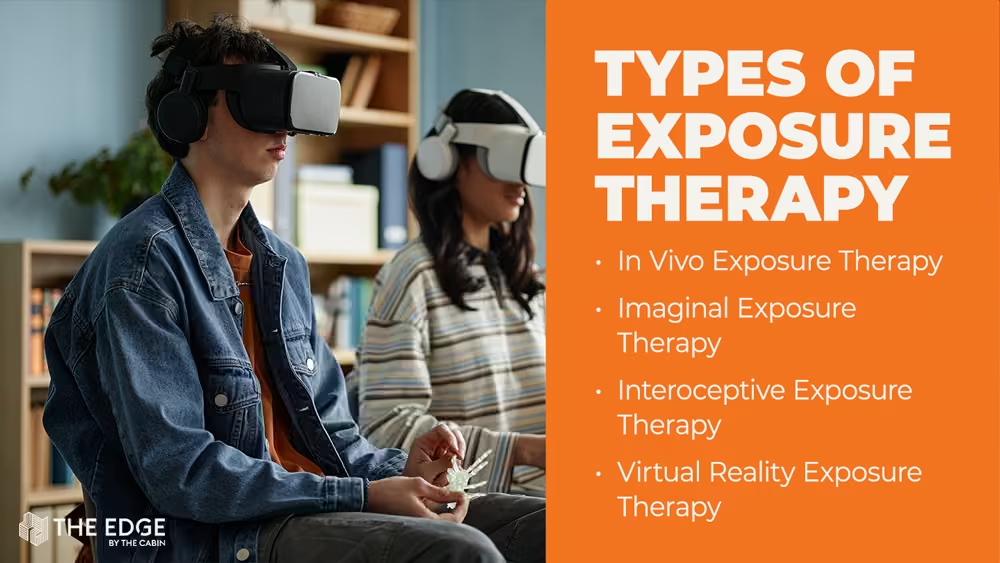
- In Vivo Exposure Therapy: In vivo exposure uses direct real-world contact with the feared object, place, or situation. The method is common in phobias, OCD, panic-related avoidance, and social anxiety.
- Imaginal Exposure Therapy: Imaginal exposure uses detailed mental revisiting of feared or traumatic situations. The method is useful when the feared event cannot or should not be recreated directly.
- Interoceptive Exposure Therapy: Interoceptive exposure targets feared bodily sensations such as dizziness, shortness of breath, or heart pounding. The method is especially relevant in panic disorder treatment.
- Virtual Reality Exposure Therapy: Virtual reality exposure uses immersive simulated settings to recreate feared situations under clinical control. The method is useful when real-world exposure is difficult, expensive, or hard to standardize.
What is in Vivo Exposure Therapy?
In vivo exposure therapy is a real-world exposure method in which the client directly faces a feared object, place, situation, or activity. In vivo exposure therapy is used for spiders, heights, driving, contamination fears, crowds, or public speaking situations. Clinical work usually begins with a graded hierarchy, so lower intensity triggers are faced before harder ones. A therapist helps the client stay engaged long enough for new learning to occur rather than escaping immediately. Repetition across settings strengthens the effect because fear tends to return when practice stays too narrow. In vivo exposure is one of the clearest and most direct ways to reduce learned avoidance. Daily life improves when the feared situation stops controlling movement, routine, and choice.
What is Imaginal Exposure Therapy?
Imaginal exposure therapy is a method in which the client repeatedly imagines a feared or traumatic event in a structured and detailed way. Imaginal exposure therapy is used when real-life exposure is impossible, unsafe, or clinically inappropriate. Trauma treatment often uses imaginal exposure to revisit painful memories under therapist guidance. Repeated narrative review helps reduce avoidance of the memory itself and allows emotional processing to occur more fully. Mental visualization is not casual storytelling, and the process is deliberate, repeated, and linked with specific treatment goals. Strong structure helps the client remain engaged rather than drifting into vague avoidance or complete emotional shutdown. Imaginal work is especially important when the fear trigger is internal, past, or not directly reproducible in the real world.
What is Interoceptive Exposure Therapy?
Interoceptive exposure therapy is a method that exposes the client to feared internal bodily sensations such as dizziness, rapid heartbeat, shortness of breath, trembling, or lightheadedness. Panic disorder treatment uses this approach because panic is strongly shaped by fear of the body’s own sensations. The therapist may guide exercises that safely create those sensations, including spinning, stair running, breath holding, or head movement tasks. Repetition helps the person learn that the sensation itself is uncomfortable but not catastrophic. Fear of panic often weakens when bodily cues stop being treated as emergency signals. Structured practice also reduces safety behaviors that keep the fear alive. Interoceptive exposure is therefore central when the trigger is not the outside world but the body itself.
What is Virtual Reality Exposure Therapy?
Virtual reality exposure therapy is a form of exposure that uses immersive digital environments to simulate feared situations in a controlled clinical setting. The method can recreate heights, flying, crowds, trauma-related cues, or social situations without leaving the therapy space. Clinical control is one of its main advantages because the therapist can adjust intensity with greater precision than some real-world settings allow. Safety often feels easier to maintain when the environment can be paused, repeated, or modified quickly. The treatment is not separate from exposure principles, and it still relies on repeated confrontation of fear cues without avoidance. Research supports VR-based exposure as an effective option for several anxiety-related presentations. Virtual delivery is especially useful when the feared situation is difficult to access consistently in everyday life.
Every addiction is different, and so is every recovery
The Edge addresses the physical, emotional, and psychological factors behind addiction for sustainable recovery.
What Techniques are used in Exposure Therapy?
The techniques used in Exposure Therapy are listed below.
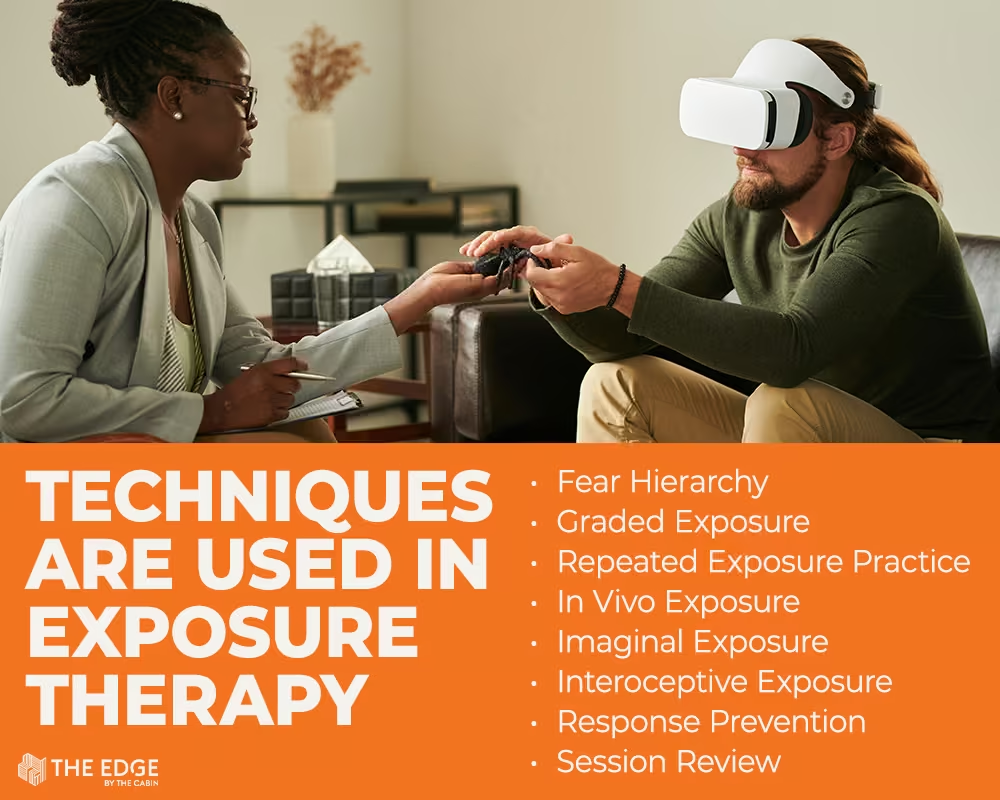
- Fear Hierarchy: A fear hierarchy is a ranked list of feared triggers arranged from lower distress to higher distress. The hierarchy gives treatment a clear order and helps the person face fear in manageable steps.
- Graded Exposure: Graded exposure means starting with a less distressing item on the hierarchy and moving upward over time. This progression helps build confidence while reducing the urge to escape too early.
- Repeated Exposure Practice: Repeated exposure practice means facing the same feared trigger more than once across sessions or homework tasks. Repetition strengthens learning and helps fear lose some of its intensity and control.
- In Vivo Exposure: In vivo exposure uses direct contact with a feared object, place, or real-life situation. This technique is useful when the feared trigger can be approached safely in everyday settings.
- Imaginal Exposure: Imaginal exposure uses a detailed mental review of a feared event, image, or memory under therapist guidance. This method is useful when the trigger cannot be recreated directly or when trauma memories need structured processing.
- Interoceptive Exposure: Interoceptive exposure targets feared body sensations such as dizziness, shortness of breath, shaking, or rapid heartbeat. This technique is often used when panic symptoms are maintained by fear of internal physical sensations.
- Response Prevention: Response prevention means reducing rituals, checking, reassurance seeking, or escape behaviors that usually follow fear. This method is especially important when compulsive behavior keeps anxiety strong.
- Session Review: Session review involves comparing feared predictions with what actually happened during the exposure task. This step helps the person recognize new learning and prepares the next stage of graded progression.
How is the Exposure Hierarchy Constructed?
Exposure hierarchy is constructed by creating a fear ladder that ranks triggers from lower intensity to higher intensity. The process starts with identifying specific feared cues rather than broad labels. A client with contamination fear, for example, does not only list germs, but also lists very specific actions such as touching a doorknob, delaying handwashing, or eating after contact with a public surface. The therapist and client then rate each item by expected distress. Lower-level items become the early practice targets, and higher-level items are saved for later work. Patient involvement is essential because the hierarchy must reflect real fear experience rather than the therapist’s guesswork. The ladder becomes a map for gradual and repeated exposure across sessions.
The main steps in constructing an exposure hierarchy are listed below.
- List Specific Fear Triggers. Begin by naming concrete situations, objects, sensations, or memories linked to fear. Specificity makes exposure planning more accurate.
- Assign Distress Ratings. Each trigger receives a subjective fear rating. Ranking helps separate lower-level tasks from high-intensity tasks.
- Arrange Items From Low to High. Order the triggers from least distressing to most distressing. This order creates a practical stepwise ladder.
- Choose Starting Tasks Collaboratively. Select a beginning item that is challenging but manageable. Early success builds confidence without overwhelming the client.
- Revise the Hierarchy Over Time. Adjust ratings and task order as learning develops. A flexible hierarchy better reflects actual treatment progress.
How is Gradual Exposure Implemented in Therapy Sessions?
Gradual exposure is implemented in therapy sessions through stepwise confrontation of feared stimuli across repeated and planned practice. The process usually starts with lower hierarchy items and moves upward as learning improves. Session work focuses on staying with the feared cue long enough for corrective learning to occur. The therapist helps the client resist escape, rituals, or reassurance seeking that would block the exposure effect. Progression depends on engagement, repetition, and the ability to tolerate discomfort rather than on total absence of anxiety. Learning deepens when the same task is repeated in more than one context.
The main steps in gradual exposure implementation are listed below.
- Select a Hierarchy Item. Choose one fear target that matches the client’s current readiness. The step should be challenging without being chaotic.
- Set a Clear Exposure Goal. Define what the client will do, how long the practice will last, and which safety behaviors will be reduced. Clarity prevents avoidance through vagueness.
- Complete the Exposure Task. Face the feared cue directly and remain engaged with it. The task continues long enough for new learning to develop.
- Repeat the Same Practice. Repetition within or across sessions helps weaken the old fear association. Single contact is rarely enough for durable change.
- Review Anxiety and Learning. Compare the prediction, experience, and outcome after the task. This review helps consolidate the new message learned during exposure.
- Advance to Higher Steps When Ready. Move to more difficult items once earlier tasks become more manageable. Progress stays structured rather than rushed.
Is Response Prevention Part of Exposure Therapy?
Yes, response prevention is part of exposure therapy, especially in obsessive-compulsive disorder treatment. Exposure alone is not enough when the client also uses rituals, checking, reassurance, or avoidance to neutralize fear. Response prevention means resisting the compulsive or safety behavior that normally follows the trigger. The combined method is commonly called exposure and response prevention, or ERP. Learning improves because the person remains with anxiety without performing the behavior that usually brings short-term relief. OCD treatment depends heavily on this model because rituals keep obsessional fear alive. The response prevention sits at the center of one of the most established forms of exposure treatment.
What is Flooding in Exposure Therapy?
Flooding in exposure therapy is an immediate high-intensity exposure method in which the person confronts a highly feared stimulus from the start rather than building gradually. The goal is rapid fear reduction through sustained contact with the feared cue. Older behavioral models linked flooding closely with extinction through prolonged confrontation. Modern practice uses flooding less often because the method is emotionally demanding and may reduce adherence in some clients. Graded exposure is more commonly preferred because it gives better control over pacing and tolerance. Flooding is not random overwhelm, and the method still requires planning, consent, and clinical judgment. The approach may work in selected cases, but it is not the standard choice for every anxiety presentation.
What Conditions are Treated with Exposure Therapy?
The conditions treated with exposure therapy are listed below.
- Obsessive Compulsive Disorder (OCD): Exposure therapy in OCD usually takes the form of exposure and response prevention. The treatment breaks the cycle between obsessional fear and compulsive relief-seeking.
- Post-traumatic stress disorder (PTSD): Exposure therapy for PTSD uses imaginal and in vivo approaches. The treatment helps reduce avoidance of trauma memories and reminders.
1. Obsessive Compulsive Disorder (OCD)
Obsessive Compulsive Disorder (OCD) is treated with exposure therapy when the treatment uses exposure with response prevention. The model works by exposing the person to obsessional triggers while blocking the compulsive behavior that normally follows. The pairing is important because compulsions reinforce the belief that the feared outcome was prevented only by the ritual. Exposure with response prevention weakens that reinforcement loop through repeated practice without ritual completion. Distress rises in the short term, but corrective learning becomes more likely when the person remains in contact with the trigger. Symptom reduction follows when obsessions stop controlling daily routine, and compulsions lose their immediate function. Clinical work for Obsessive Compulsive Disorder (OCD) depends heavily on the combined exposure and response prevention model.
2. Post Traumatic Stress Disorder (PTSD)
Post-traumatic stress disorder (PTSD) is treated with exposure therapy when avoidance keeps trauma memories, reminders, feelings, and safe situations linked to fear. Exposure therapy is an established treatment for PTSD, especially in the form of prolonged exposure. Imaginal exposure helps the person revisit the traumatic memory in a structured and repeated way. In vivo exposure helps the person reenter safe but avoided places, objects, or cues linked to the trauma. Repeated confrontation of trauma reminders supports emotional processing and reduces conditioned fear. The process does not erase the traumatic memory, but it reduces the sense that the memory and reminders are still an immediate danger. Exposure-based work for Post Traumatic Stress Disorder (PTSD) is useful when avoidance is a major maintaining factor.
Empower Young Men on their journey to sobriety
Discover a dynamic, adventure-based treatment program engineered specifically to help young men defeat addiction and mental health challenges.
How effective is Exposure Therapy?

Exposure therapy is highly effective for many fear-based and anxiety-related conditions, but the degree of improvement varies by diagnosis, severity, comorbidity, adherence, and treatment quality. Strong evidence supports exposure approaches in specific phobias, OCD, PTSD, panic disorder, and social anxiety disorder. Some clients experience major symptom reduction, while others improve more slowly or require adapted protocols. Disorder type matters because a simple phobia often responds more quickly than severe OCD or complex trauma. Engagement matters because exposure works best when practice is repeated, and avoidance behaviors are reduced. Comorbid depression, substance misuse, dissociation, or poor attendance can lower the treatment effect. Exposure therapy has strong overall evidence, but outcomes should never be presented as identical across all patients and all conditions.
What is the Success Rate of Exposure Therapy?
The success rate of exposure therapy varies widely by disorder and protocol, so no single percentage fits every condition. Clinical research shows meaningful improvement in a large share of patients, but exact rates differ across OCD, PTSD, panic disorder, specific phobia, and social anxiety. OCD studies using ERP show strong benefit for many patients, while complete remission is less universal, and symptom severity influences outcome. PTSD prolonged exposure trials report large average effects, and phobia protocols show especially strong responses when the treatment is well targeted. A careful summary is that many exposure-based protocols help roughly half to a large majority of participants, depending on diagnosis, adherence, and protocol quality. Those ranges must be read as condition-dependent rather than as a universal guarantee. Success is best judged by symptom reduction, lower avoidance, and improved functioning rather than by one headline number.
What Factors Influence Exposure Therapy Outcomes?

Patient engagement, therapist skill, protocol fidelity, disorder type, symptom severity, comorbidity, motivation, and practice consistency are the main factors that influence exposure therapy outcomes. Consistency matters because skipped practice and incomplete exposure tasks weaken learning. Severity and comorbidity also matter because depression, substance misuse, dissociation, or personality-related difficulties complicate treatment. Therapist expertise influences pacing, hierarchy design, safety behavior reduction, and corrective learning review. Protocol fidelity matters because exposure loses power when it becomes diluted into reassurance or avoidance disguised as practice. Motivation and willingness to tolerate discomfort shape how fully the client engages with the process. Context variation affects outcomes because learning becomes stronger when exposures happen across more than one setting. Good results are most likely when the method is delivered as intended and practiced repeatedly.
How long does Exposure Therapy take?
Exposure therapy usually takes 3 to 6 sessions for simple phobias, 8 to 15 sessions for PTSD prolonged exposure, and several months for OCD or complex avoidance patterns. Simple or circumscribed fears improve faster when the trigger is clear, and avoidance is limited. PTSD prolonged exposure is commonly delivered across 8 to 15 sessions, while OCD and complex avoidance patterns require longer treatment. Duration depends on whether the client completes homework, reduces safety behaviors, and practices between appointments. Higher severity requires more time because the fear network is broader and more entrenched. Progress slows when comorbidity, dissociation, depression, or unstable life circumstances interfere with regular exposure to work. Treatment length remains flexible because exposure therapy depends on condition type, symptom severity, and treatment engagement.
Don’t let your addiction and mental health condition define your future.
The Edge Rehab provides a safe, structured, and compassionate environment for your recovery. Reach out to us to see how we can help.
What are the benefits of Exposure Therapy?
Reduced avoidance, stronger fear tolerance, improved coping, corrective learning, emotional confidence, and restored daily functioning are the main benefits of exposure therapy. Exposure therapy helps the person stop organizing life around escape from triggers. Corrective learning becomes personal and concrete because the feared cue is faced rather than only discussed. Emotional confidence grows when a person learns that distress can be tolerated without collapse or ritualized relief. Functional impairment decreases because work, school, travel, relationships, and self-care become less restricted by fear. Long-term benefit becomes more likely when the person continues using the new learning outside of treatment. The method is especially valuable when avoidance is a main driver of disability.
How does Exposure Therapy improve daily functioning?

Exposure therapy improves daily functioning by helping patients reenter situations they previously avoided because of fear. Social participation often increases when feared places, conversations, objects, or sensations no longer control behavior. Work and school performance may improve because energy is no longer spent on constant escape, checking, reassurance, or avoidance planning. Confidence grows when the person experiences direct success in situations that once felt impossible. Independence becomes stronger because everyday tasks such as travel, appointments, shopping, public interaction, or trauma reminder contact become more manageable. Functional gains matter because symptom reduction is only part of recovery. Daily life improves most clearly when exposure allows the person to do more of what matters again.
How does Exposure Therapy support long-term recovery?
Exposure therapy supports long-term recovery by building new non-fear associations that can be retrieved when the trigger appears again. Repeated practice strengthens extinction and inhibitory learning over time rather than relying on one good session. Recovery becomes more durable when the person continues approaching rather than returning to avoidance after treatment ends. Memory consolidation also improves when learning happens across multiple contexts and repeated situations. Long-term benefit depends on using the new skills during ordinary stress, not only in the therapy room. Setbacks may still occur because fear can return under pressure, but the return of fear does not erase the new learning. Recovery is stronger when exposure-based learning becomes a repeated part of daily response rather than a one-time intervention.
Is Exposure Therapy designed to Permanently Eliminate the Brain’s Baseline Capacity to Feel Fear?
No, exposure therapy is not designed to permanently eliminate the brain’s baseline capacity to feel fear. Fear is a normal and necessary survival function, and therapy is not meant to remove it entirely. The goal is to reduce excessive, inaccurate, or impairing fear responses tied to specific triggers. Exposure works by teaching the brain that certain cues are more tolerable and less dangerous than previously learned. Healthy caution can still remain after treatment, which is appropriate in real life. What changes is the overlearned fear pattern, not the basic human ability to feel fear. Effective therapy improves regulation and realism rather than eliminating the fear system itself.
What Risks occur during Exposure Therapy?
Short-term distress, temporary anxiety increase, emotional discomfort, poor pacing, incomplete assessment, and symptom worsening in unstable cases are the risks that occur during exposure therapy. Exposure therapy is safe and well-tolerated when it is properly assessed, structured, and delivered by a trained clinician. Short-term distress is expected because the treatment asks the person to face what has been avoided. Anxiety rises during the task before new learning becomes stronger. Temporary discomfort does not mean the therapy is harmful because discomfort is part of how the treatment works. Risks increase when pacing is poor, assessment is incomplete, or severe instability is ignored before starting exposure. Good clinical practice includes preparation, hierarchy design, monitoring, and adjustment when needed. Safety depends on matching the method to the person rather than pushing every client through the same protocol.
What Side Effects occur during Exposure Therapy?
The side effects that occur during exposure therapy are listed below.
- Temporary Anxiety Spikes: Temporary anxiety spikes are common during or just before exposure tasks. Distress rises before new learning begins to take hold.
- Emotional Fatigue: Emotional fatigue may appear after intense sessions or repeated high-effort practice. The work can feel mentally draining even when progress is happening.
- Avoidance Urges: Avoidance urges become stronger at the start of treatment because the person is facing long-feared situations. Avoidance urges are expected targets of therapy rather than proof of failure.
- Irritability or Tension: Irritability or tension may increase briefly when the person is pushing against habitual escape patterns. These reactions usually need monitoring rather than panic.
- Short-term Symptom Flare: Short-term symptom flare can happen when feared memories, situations, or body sensations are intentionally approached. A temporary increase in discomfort does not automatically mean the treatment is going badly.
When is Exposure Therapy not recommended?
Exposure Therapy is not recommended when acute psychosis, imminent suicidal or homicidal risk, recent serious self-injurious behavior, or severe instability make safe engagement unlikely. Careful assessment is essential before starting because not every high distress state is appropriate for exposure-based work. Severe dissociation, uncontrolled mania, active intoxication, or major disorganization may require stabilization first. Trauma exposure work needs caution when the client lacks enough grounding capacity to remain oriented and safe during the process. Clinical judgment matters because some conditions do not absolutely rule out all exposure methods, but timing and preparation become critical. A therapist first addresses safety, stabilization, and immediate risk before moving into direct fear confrontation. Exposure therapy works best when the person is stable enough to learn from the experience rather than become overwhelmed by it.
Give yourself the best change for recovery
The Edge Crete team is ready to help you work through your past and present struggles. Call us today for a confidential consultation.
