
Mindfulness-Based Cognitive Therapy (MBCT) is an evidence-based psychological intervention that combines mindfulness training with cognitive therapy principles.
The program was developed as a relapse prevention approach for recurrent depression and is now used more broadly for emotional regulation and stress-related difficulties. MBCT teaches people to notice thoughts, feelings, and body sensations without getting pulled automatically into them. CBT mindfulness techniques within MBCT include structured practices that train attention, awareness, and a different relationship to negative thinking.
What is Mindfulness-Based Cognitive Therapy (MBCT) in Psychology?
Mindfulness-Based Cognitive Therapy MBCT is a structured eight-week psychological program that combines mindfulness practice with cognitive therapy principles to reduce relapse risk in recurrent depression. The model teaches people to recognize early warning signs of depressive thinking and respond with awareness rather than automatic reaction. MBCT was developed within the broader evolution of cognitive behavioral therapy by integrating mindfulness training into relapse prevention work. The program is not simply meditation because it uses a clinical structure, guided exercises, psychoeducation, and repeated practice linked to mood patterns. MBCT helps patients notice thoughts as mental events rather than facts that must be obeyed. That shift can weaken rumination and lower the chance that a passing negative mood becomes a full depressive episode. The broader clinical aim of mindfulness-based cognitive therapy is to improve awareness, emotional regulation, and long-term recovery skills.
How did Mindfulness-Based Cognitive Therapy develop in clinical practice?
Mindfulness-Based Cognitive Therapy was developed in clinical practice through research showing that people with recurrent depression often relapse when mild low mood reactivates old negative thinking patterns. Cognitive therapy already showed that thoughts influenced emotional outcomes, but relapse research suggested that a different response to thoughts was needed. Mindfulness-based interventions contributed practices that trained present moment awareness, attention, and nonjudgmental observation. Clinicians combined those elements into a structured eight-week program delivered in a clear clinical format. MBCT grew into a group-based intervention with guided meditation, home practice, discussion, and cognitive understanding of mood vulnerability. Clinical use expanded because the program gave people practical skills for staying well rather than waiting for symptoms to become severe again. The method now sits within the cognitive behavioral tradition while keeping a distinct mindfulness-based focus.
Is Mindfulness-Based Cognitive Therapy Designed to Prevent Chronic Depression Relapse?
Yes, Mindfulness-Based Cognitive Therapy is designed to help prevent depressive relapse, especially in men with recurrent or chronic patterns of depression. The program teaches clients to notice early downward mood shifts before those shifts grow into stronger depressive spirals. Mindfulness practice helps reduce automatic identification with negative thoughts, which is one of the main relapse pathways in recurrent depression. Clinical use has focused strongly on staying well after previous depressive episodes rather than only treating symptoms in the moment. That focus makes MBCT especially relevant for long-term relapse prevention work. Suitability still depends on timing, readiness, and clinical stability. The chronic depression relapse helps explain why MBCT is used as a maintenance and emotional awareness approach.
How does Mindfulness-Based Cognitive Therapy work in the mind?
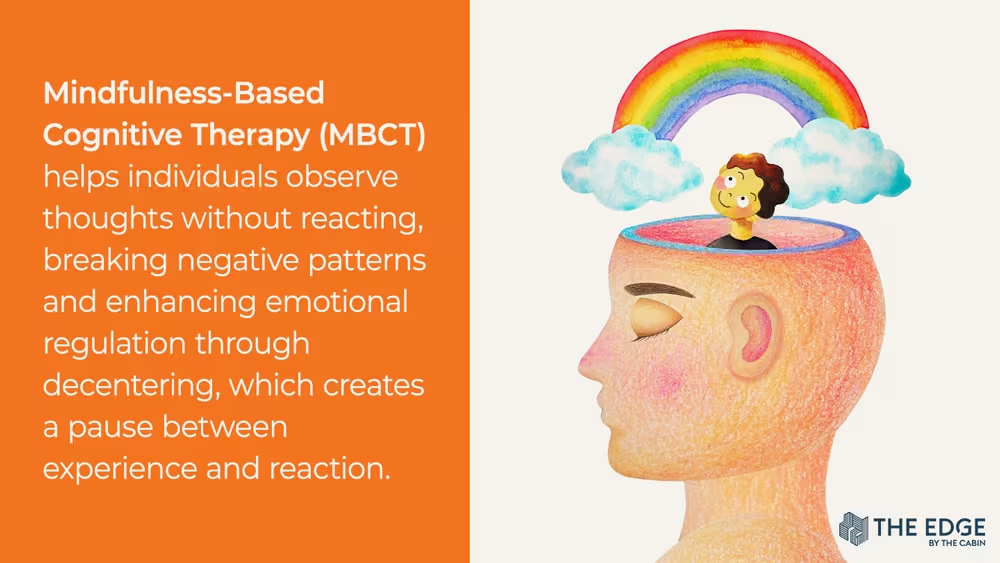
Mindfulness-Based Cognitive Therapy works in the mind by shifting attention away from automatic thinking and toward metacognitive awareness. The central change is not forcing thoughts to disappear, but learning to notice thoughts with less fusion and less reactivity. Rumination often keeps depression active because the mind repeats the same self-critical and hopeless loops. MBCT interrupts that cycle by training the person to observe the loop as a mental process rather than a truth that demands action. The method reduces emotional escalation because attention becomes more flexible and less trapped inside negative interpretation. Cognitive change then happens through decentering, which means stepping back from thoughts instead of becoming absorbed by them. Emotional regulation improves when awareness creates a pause between experience and reaction.
What Happens during Cognitive Change in MBCT?
A shift from identifying with thoughts to observing thoughts occurs during cognitive change in MBCT. Negative thinking starts to lose authority once the person sees thoughts as events in the mind rather than direct descriptions of reality. Emotional reactivity decreases because the thought no longer controls the entire response. Rumination becomes easier to interrupt when the person notices the pattern early. MBCT does not ask people to fight every thought or prove every thought wrong. The program trains a more spacious and less automatic mental stance. The stance supports calmer attention, less escalation, and better recovery from distressing mental habits.
Does Mindfulness Alter Negative Thinking Patterns?
Yes, mindfulness can alter negative thinking patterns by changing how those thoughts are noticed and responded to. MBCT does not promise that negative thoughts will never appear again. The main change is that the person becomes less likely to get caught in the same automatic chain of rumination, fear, or self-criticism. Mindful awareness helps create distance from thoughts and reduces the urge to react immediately. That shift can lower emotional intensity and make healthier decisions more available. Repeated practice is important because the new response style develops over time. Thought patterns may still arise, but their impact often becomes less dominant and less controlling.
Early help matters
Your loved one deserves a safe recovery. Contact a specialist from The Edge Rehab for a confidential recovery assessment and personalised guidance.
What are CBT Mindfulness Techniques in MBCT Practice?
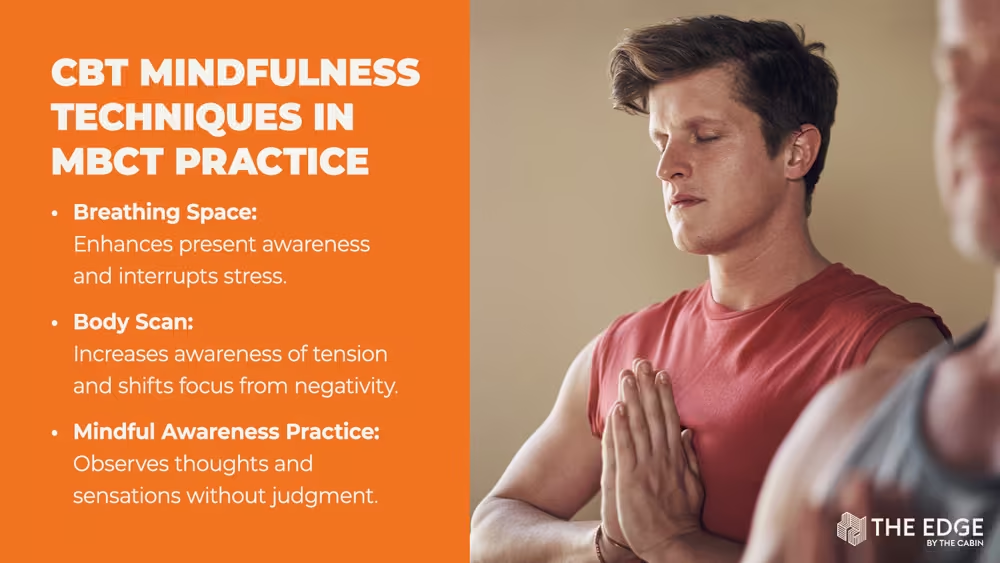
CBT mindfulness techniques in MBCT practice are structured attention and cognition exercises that help people notice thoughts, feelings, and body sensations with greater clarity. These exercises support cognitive regulation by reducing automatic pilot and strengthening present moment awareness. MBCT uses mindfulness techniques to help clients step back from rumination instead of becoming absorbed in it. Each method has a specific role in attention training, emotional regulation, and cognitive distancing.
The main CBT mindfulness techniques in MBCT practice are listed below.
- Breathing Space: Breathing space is a brief, structured practice that guides attention through present experience, breathing, and wider body awareness. The technique helps interrupt stress reactivity, reduce automatic thinking, and create a pause before emotional escalation.
- Body Scan: Body scan is a guided attention exercise that moves awareness through different parts of the body in a steady sequence. The technique strengthens concentration, increases awareness of physical tension, and helps shift attention away from repetitive negative thought patterns.
- Mindful Awareness Practice: Mindful awareness practice involves noticing thoughts, feelings, sounds, and sensations as they arise without immediate judgment or reaction. The technique supports cognitive distancing because thoughts are observed as mental events rather than treated as facts that must control mood or behavior.
How are CBT Mindfulness Techniques Applied to Thoughts?
CBT mindfulness techniques are applied to thoughts through a step-by-step process of observation, labeling, distancing, and release. The aim is not to suppress the thought, but to change the relationship with it. MBCT teaches that thoughts can be seen, named, and allowed to pass without immediate reaction.
The main steps in applying CBT mindfulness techniques to thoughts are listed below.
- Notice the Thought: Recognize that a thought has appeared. Build awareness before changing the response.
- Label the Thought: Name the mental event as a thought, worry, memory, prediction, or judgment. Reduce the feeling that the thought is identical to reality.
- Anchor Attention in the Present: Bring attention back to the breath, body, or immediate sensory experience. Reduce automatic drift into rumination.
- Allow the Thought to Be Present: Let the thought exist without forcing it away. Weaken resistance and emotional reactivity by allowing the thought without struggle.
- Release and Reorient: Return attention to the present moment after acknowledging the thought. Support cognitive distancing and reduce overidentification.
What Mental Health Conditions does Mindfulness-Based Cognitive Therapy Target?

The mental health conditions that Mindfulness-Based Cognitive Therapy targets are listed below.
- Recurrent Depression: Recurrent depression is the strongest and best-known target of MBCT. The program helps people recognize early mood shifts and mentally step back from relapse-driven thought patterns.
- Anxiety Disorders: Anxiety disorders often involve future-focused worry, body tension, and repeated mental scanning for threat. MBCT helps reanchor attention in the present and reduce reactivity to anxious thoughts.
- Chronic Stress: Chronic stress often keeps the mind in overthinking, emotional exhaustion, and constant reactivity. MBCT teaches calmer awareness and a more deliberate response under pressure.
1. Recurrent Depression
Recurrent depression is the central clinical condition most strongly linked with MBCT because the model was built around relapse prevention in people with repeated episodes. The program teaches participants how to recognize early signs of downward mood before those signs trigger a full relapse cycle. Negative thinking patterns become easier to notice when mindfulness is practiced regularly. Decentering helps the person step back from thoughts such as hopelessness, self-criticism, and helplessness. That shift lowers the chance that a brief low mood becomes a longer depressive spiral. Group structure and home practice strengthen awareness through repetition. MBCT remains especially useful for recurrent depression when relapse prevention is the main treatment goal.
2. Anxiety Disorders
Anxiety disorders respond to MBCT when worry, fear-based prediction, and physiological overarousal create repeated distress. Present moment awareness shifts attention away from future-oriented threat loops and back toward immediate experience. The practice does not remove uncertainty from life, but it helps the person stop feeding uncertainty with constant mental repetition. Emotional regulation improves when the mind learns to observe anxious thoughts without obeying them instantly. Mindfulness helps people notice bodily tension earlier and respond with steadier attention. The approach complements broader treatment for anxiety disorders when rumination and reactivity drive distress. MBCT works best when anxiety includes persistent worry and mental overengagement.
3. Chronic Stress
Chronic stress fits MBCT when overthinking, constant emotional reactivity, and persistent cognitive overload keep the stress cycle active. Stress becomes harder to manage when attention gets trapped in future demands, unfinished tasks, and repetitive mental pressure. Mindfulness training helps the person return to the present and respond with more intention. Body-based awareness helps identify stress signals before exhaustion becomes overwhelming. Emotional exhaustion lessens when the mind spends less time amplifying pressure through automatic thought loops. Daily practice strengthens calm attention and reduces stress reactivity over time. MBCT works well for chronic stress when the main problem is persistent mental overload.
Is MBCT Suitable for Acute Mental Health Crisis?
No, MBCT is not suitable for an acute mental health crisis because the program requires readiness, stability, and the ability to practice awareness safely. A severe crisis needs immediate stabilization, direct risk management, and close clinical support before structured mindfulness work begins. Group-based learning and home practice may be too demanding when distress is highly acute. Mindfulness exercises can also feel overwhelming for some people during a severe crisis or a major life upheaval. Suitability assessment is therefore an important part of MBCT care. Later use may still become helpful once the person is more stable and able to engage with the training. Timing matters because the program works best when the participant has enough psychological space to practice it.
Give yourself the best change for recovery
The Edge Crete team is ready to help you work through your past and present struggles. Call us today for a confidential consultation.
How is a Mindfulness-Based Cognitive Therapy Program Structured over time?
Mindfulness-Based Cognitive Therapy program is structured over time through an eight-week group-based sequence that builds skills from basic awareness to relapse prevention. Early sessions focus on attention training, body awareness, and recognition of automatic pilot patterns that often go unnoticed in daily life. Later sessions help participants observe thoughts and feelings with greater distance, which supports less rumination and lower emotional reactivity. Middle stages strengthen the ability to notice early mood shifts before those changes deepen into more serious depressive patterns. Final sessions apply mindfulness and cognitive awareness skills to daily stress, warning signs, and relapse prevention planning. MBCT uses this gradual structure because emotional regulation improves more effectively when awareness skills develop in sequence rather than all at once. The full program helps participants move from present moment attention toward a steadier and more practical response to difficult thoughts and mood changes.
What Exercises are Included in MBCT Sessions?
The main exercises included in MBCT sessions are listed below.
- Body Scan: Body scan is a guided exercise that moves attention slowly through different parts of the body. The practice strengthens present moment awareness and helps participants notice tension, discomfort, and mood-related body signals without immediate reaction.
- Mindful Breathing: Mindful breathing is a focused attention practice that brings awareness back to the breath whenever the mind wanders. The exercise improves concentration, reduces automatic rumination, and supports calmer cognitive regulation during stress.
- Mindful Movement: Mindful movement uses gentle stretching or simple movement with close awareness of bodily sensation and breathing. The practice trains attention during action and helps participants develop a steadier connection between body awareness and emotional regulation.
How does Mindfulness-Based Cognitive Therapy Compare with Cognitive Behavioral Therapy (CBT)?
Mindfulness-Based Cognitive Therapy compares with Cognitive Behavioral Therapy (CBT) by sharing cognitive behavioral roots while differing in focus, method, and style of cognitive change. CBT emphasizes identifying distorted thoughts and actively restructuring them. MBCT places greater emphasis on noticing thoughts, decentering from thoughts, and reducing automatic reactivity. Both approaches support depression and anxiety treatment, but MBCT is especially known for relapse prevention in recurrent depression. The Cognitive Behavioral Therapy (CBT) works through direct cognitive restructuring and behavior change tasks, while MBCT works through awareness training and metacognitive shift.
The comparison of MBCT and CBT is shown in the table below.
|
Aspect |
MBCT |
CBT |
|
Main Focus |
MBCT focuses on awareness of thoughts and relapse prevention |
CBT focuses on changing distorted thinking and behavior patterns |
|
Core Method |
MBCT uses mindfulness training and cognitive awareness |
CBT uses cognitive restructuring and behavioral strategies |
|
View of Thoughts |
MBCT teaches observation of thoughts as mental events |
CBT teaches the evaluation and correction of distorted thoughts |
|
Emotional Change Path |
MBCT reduces reactivity and rumination |
CBT changes beliefs and behaviors to reduce symptoms |
|
Typical Use |
MBCT is strongly linked with recurrent depression relapse prevention |
CBT is broadly used across depression, anxiety, trauma, and behavior change |
|
Session Style |
MBCT often uses meditation practice, inquiry, and home mindfulness work |
CBT often uses worksheets, behavioral tasks, and thought records |
|
Best Known Strength |
MBCT is especially useful for recurrent depressive relapse and rumination |
CBT is especially useful for symptom-focused cognitive and behavioral treatment |
What Benefits does Mindfulness-Based Cognitive Therapy Provide?
Reduced relapse risk, steadier emotion regulation, stronger thought awareness, reduced rumination, and greater stress tolerance are the main benefits that Mindfulness-Based Cognitive Therapy provides. Participants learn to notice early mood changes before the shifts become more serious emotional episodes. Greater cognitive awareness develops as the program teaches people to step back from rumination and automatic interpretation. Emotional responses become calmer because thoughts lose some of their immediate influence over mood and behavior. MBCT supports acceptance of inner experience without encouraging passivity or surrender. Relapse prevention remains one of the most important benefits, especially for individuals with recurrent depression, because early warning signs become easier to recognize and manage. Reduced rumination is another key benefit because repetitive negative thinking weakens when attention becomes more flexible and present-focused. Greater stress tolerance develops as mindfulness practice helps individuals remain present during discomfort instead of reacting with avoidance or escalation.
THE EDGE CRETE: YOUR SUPERIOR CHOICE FOR RESIDENTIAL REHAB
Don’t let your addiction and mental health condition define your future. The Edge Rehab provides a safe, structured, and compassionate environment for your recovery. Reach out to us to see how we can help.
What Limitations does Mindfulness-Based Cognitive Therapy have?
The limitations of Mindfulness-Based Cognitive Therapy are listed below.
- Time Commitment: MBCT requires regular attendance and consistent home practice over an eight-week period. Progress depends on repetition rather than brief exposure.
- Adherence Difficulty: Some patients struggle to maintain daily practice, especially during busy or emotionally difficult periods. Low adherence may reduce benefits.
- Training Requirement: MBCT works best when taught by well-trained clinicians or teachers with experience in the model. Program quality may vary when training is limited.
- Less Direct Cognitive Restructuring: MBCT places less emphasis on directly challenging thoughts than standard CBT. Some patients may need more explicit thought correction strategies.
- Suitability Limits in Acute States: Severe acute crisis, major disorganization, or instability may make MBCT less suitable at the start of care. Stabilization may need to come first.
- Possible Discomfort with Silence or Awareness: Mindfulness practice can bring difficult emotions or memories into awareness. Some patients need careful pacing and clinical guidance.
What Evidence Supports Mindfulness-Based Cognitive Therapy Effectiveness?
Clinical trials, meta-analyses, clinical guidance, and outcome research support Mindfulness-Based Cognitive Therapy’s effectiveness, especially for relapse prevention in recurrent depression. Early clinical trials showed that people with repeated depressive episodes had lower relapse risk after MBCT than after usual care alone. Later meta-analyses found significant relapse risk reduction compared with usual care and broadly comparable outcomes to other active treatments. National Institute for Health and Care Excellence (NICE) guidance has treated MBCT as an evidence-based relapse prevention option for people at higher risk of depression recurrence. Research reports improvements in rumination, mindfulness, and emotional regulation across several clinical settings. The strongest evidence remains linked to recurrent depression rather than every mental health condition. Current findings support MBCT as a credible and structured clinical approach rather than a general wellness exercise alone.
Which Clinical Studies Validate MBCT?
The clinical studies that validate MBCT include early randomized trials, pragmatic comparative trials, individual patient data meta-analyses, network meta-analyses, and NHS replication studies. Early randomized trials in recurrent depression provided strong evidence that the program lowers relapse risk in people with multiple previous episodes. Later pragmatic and comparative trials examined MBCT against other active treatments, including maintenance medication approaches. Individual patient data meta-analyses strengthened confidence in the overall relapse prevention effect. Network meta-analyses supported MBCT as more effective than usual care for preventing depressive relapse over follow-up periods. Replication across the National Health Service (NHS) and other clinical settings added real-world support for the model. The body of research established MBCT as an evidence-based intervention rather than a purely theoretical method.
What Findings do MBCT Research Studies Report?
Reduced relapse risk in recurrent depression, lower rumination, stronger mindfulness skills, better emotional regulation, and improved response to negative thoughts are the main findings MBCT research studies report. Findings show that participants become less reactive to internal experiences after treatment. Several studies report benefits comparable to other active relapse prevention treatments rather than no treatment. Results are strongest for people with recurrent depression and a clear pattern of mood-related rumination. Research also reports broader benefits for anxiety, stress, and depressive symptoms, although the evidence base is more specific for relapse prevention. Overall findings support MBCT as a structured method for changing the relationship between thought and mood.
How do you Practice Mindfulness-Based Cognitive Therapy at Home?

Practice Mindfulness-Based Cognitive Therapy at home by completing structured mindfulness exercises, repeating daily awareness skills, and using brief practices during emotional difficulty. Home practice includes formal exercises, including body scan, mindful breathing, and the three-minute breathing space, along with informal awareness during daily activities. Repetition matters because the skills become more usable when they move beyond the therapy room. Daily routine helps maintain attention, training, and makes relapse prevention more practical in real life. Home practice strengthens the ability to notice early mood shifts before rumination fully takes over. The work is active because it requires regular return to awareness when the mind wanders. A consistent routine makes mindfulness-based cognitive therapy more useful during ordinary stress and emotional difficulty.
What Daily Routine Supports MBCT Home Practice?
A daily routine that supports MBCT home practice includes morning awareness, midday breathing, informal mindfulness, evening reflection, and brief pattern tracking. Consistent practice helps mindfulness skills move from formal sessions into ordinary daily life. A simple structure makes relapse prevention more practical because mood shifts, stress signals, and rumination patterns become easier to notice.
The main daily routine for MBCT home practice is listed below.
- Begin With Morning Awareness. Start the day with a short breathing practice or body scan. Morning attention training sets a steadier tone before the mind becomes crowded with tasks.
- Use a Midday Breathing Space. Pause during the middle of the day for a three-minute breathing space. This practice helps interrupt stress buildup and restore perspective.
- Add Informal Mindfulness During Routine Tasks. Bring attention to walking, eating, washing, or listening during ordinary daily moments. Informal practice teaches mindfulness outside formal meditation time.
- Complete Evening Reflection. End the day with a short mindful breathing or body awareness exercise. Evening reflection helps notice mood, stress, and thought patterns without judgment.
- Track Patterns Briefly. Record mood shifts, triggers, or practice observations in simple notes. Tracking helps connect home practice with relapse prevention awareness.
What Beginner Exercises Support MBCT Practice at Home?
Beginner exercises that support MBCT practice at home include the three-minute breathing space, short body scan, mindful listening, mindful breathing, and mindful daily action. These exercises help build attention, body awareness, and a less reactive relationship with thoughts. Simple practice works best at the start because short exercises are easier to repeat consistently.
The most useful beginner exercises are listed below.
- Practice the Three Minute Breathing Space. Pause and notice current thoughts, emotions, and body sensations. Bring attention to the breath, then widen awareness again to the body as a whole.
- Complete a Short Body Scan. Sit or lie down and move attention slowly through different parts of the body. Notice sensation without trying to fix or judge anything.
- Use Mindful Listening. Choose one sound in the environment and listen closely for a short period. This exercise trains stable attention and reduces mental drift.
- Follow Mindful Breathing. Sit quietly and notice the breath moving in and out. When the mind wanders, gently return attention without criticism.
- Apply Mindful Daily Action. Choose one simple daily activity and complete it with full attention. This step helps connect formal mindfulness skills with ordinary life.
Every journey starts with one step forward
Take the first step in regaining control of your life by getting in touch with us and finding out what you can become.
