
Rational Emotive Behavior Therapy (REBT) is a cognitive behavioral psychotherapy that focuses on changing irrational beliefs that drive unhealthy emotions and self-defeating behavior.
Albert Ellis developed REBT as an active and structured approach that teaches people how beliefs shape emotional reactions and daily choices. The method serves as a comprehensive guide for cognitive behavioral change because it combines theory, practical methods, emotional regulation skills, and real-world application. REBT explains that people are more disturbed by what they believe about events than by the events themselves. A full understanding of REBT requires attention to the ABC model, irrational beliefs, disputation methods, behavioral practice, and relapse prevention.
What does Rational Emotive Behavior Therapy mean in simple terms?
Rational Emotive Behavior Therapy means learning how to change unhealthy thoughts so emotions and behavior become healthier too. REBT teaches that the problem is not the event itself, but the belief a person attaches to the event. Simple examples show the idea clearly because rejection, criticism, or mistakes do not automatically create emotional collapse in every person. Beliefs about failure, approval, control, or unfairness shape the emotional response that follows. The therapy focuses on the link between belief, emotion, and action rather than only on the external situation. REBT removes clinical jargon by showing that rigid thoughts create intense distress and flexible thoughts create healthier reactions. Emotional change becomes possible when irrational beliefs are challenged and replaced with more rational ones. The broader Rational Emotive Behavior Therapy (REBT) model stays practical because it teaches people how to think differently during daily stress.
What is the ABC model in REBT theory?
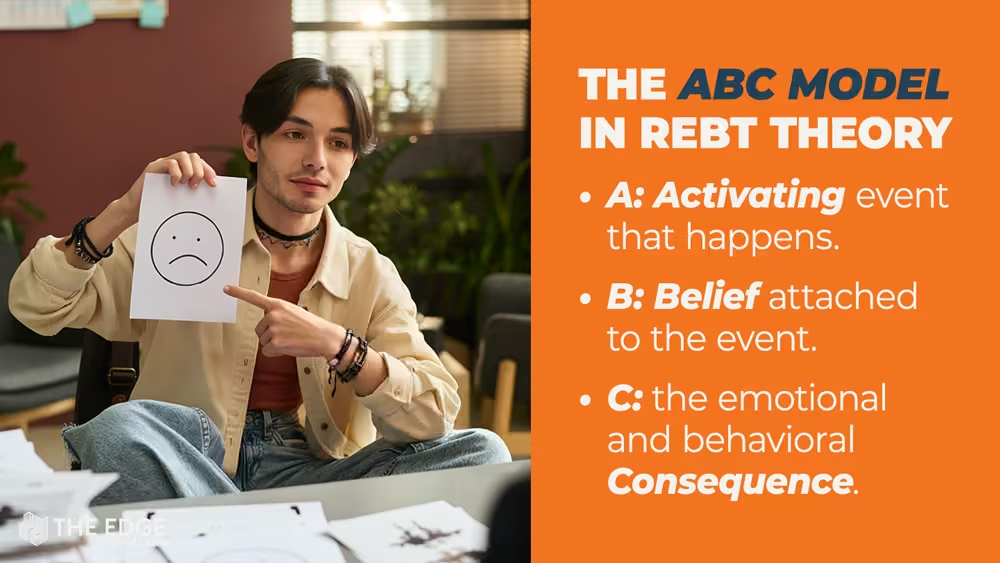
The ABC model in REBT theory is a framework that explains how beliefs shape the emotional and behavioral effects of life events. A stands for Activating event, which means the situation that happens. B stands for Belief, which means the interpretation, demand, or conclusion attached to the event. C stands for Consequence, which includes the emotional and behavioral result that follows the belief. REBT teaches that A does not directly create C in a simple, automatic way. Belief sits in the middle and shapes whether the outcome becomes healthy concern, frustration, sadness, anger, shame, panic, or avoidance. The model helps clients see that two people experience the same event differently because their beliefs are different. REBT uses the ABC structure to identify irrational thinking, dispute the belief, and build rational alternatives that lead to better consequences.
What are irrational beliefs in REBT psychology?
The irrational beliefs in REBT psychology are listed below.
- Demandingness: Demandingness means turning preferences into rigid rules about life, self, or other people. The belief often sounds like a must, should, or have to statement and creates intense emotional pressure.
- Catastrophizing: Catastrophizing means evaluating a difficult event as unbearably awful or completely terrible. Emotional disturbance increases because the mind treats discomfort as disaster.
- Low Frustration Tolerance: Low frustration tolerance means believing discomfort cannot be handled or should never happen. The belief often fuels avoidance, anger, impulsive behavior, and quick surrender under stress.
- Global Self Downing: Global self downing means judging the whole self as worthless after one mistake, rejection, or failure. Shame grows because the person turns a limited setback into a total identity judgment.
- Other Downing: Other Downing means condemning another person as bad, useless, or rotten because of one frustrating behavior. Anger and resentment become stronger when a single event becomes a total judgment.
- Life Downing: Life Downing means deciding that life itself is unbearable, ruined, or hopeless because circumstances feel unfair or painful. Despair may intensify when temporary difficulty is treated as permanent devastation.
What are examples of irrational beliefs in daily situations?
The examples of irrational beliefs in daily situations are listed below.
- Work Approval Belief: A person receives criticism from a manager and immediately believes, “That criticism proves total failure.” Anxiety and shame increase because one comment becomes a judgment of total worth.
- Relationship Rejection Belief: A partner seems distant, and the belief becomes, “This relationship must stay perfect, or everything is ruined.” Emotional distress rises because normal conflict is treated as proof of disaster.
- Performance Perfection Belief: A student makes one mistake during a presentation and thinks, “A perfect performance is required, or humiliation is certain.” Fear becomes stronger because the standard is rigid and unrealistic.
- Frustration Intolerance Belief: Traffic, delays, or inconvenience lead to the belief, “This should not happen, and it is impossible to tolerate.” Anger escalates because discomfort is interpreted as unbearable.
- Social Evaluation Belief: A person feels awkward in conversation and concludes, “Everyone must approve of me, or I cannot cope.” Avoidance grows because the belief ties social worth to total acceptance.
- Relapse Justification Belief: A person in recovery thinks, “One setback proves recovery is hopeless, so continued use makes no difference.” Despair and risky behavior increase because the belief turns one lapse into total defeat.
Every addiction is different, and so is every recovery
The Edge addresses the physical, emotional, and psychological factors behind addiction for sustainable recovery.
How does REBT explain addictive behavior patterns?

REBT explains addictive behavior patterns through cycles driven by irrational beliefs, emotional distress, and repeated behavioral reinforcement. Craving alone does not fully explain the pattern because beliefs about discomfort, relief, entitlement, shame, and control shape the choice to use. A person may think stress is unbearable, emotional pain is impossible to tolerate, or substance use is the only fast way to cope. Those beliefs intensify distress and make immediate relief feel necessary. Repeated use reinforces the pattern because the person learns to connect irrational beliefs with temporary escape. Addictive behavior becomes easier to justify when thinking turns rigid, catastrophic, and self-defeating. REBT targets the belief system behind the behavior instead of focusing only on the substance or the external trigger. Recovery support becomes stronger when craving justification thoughts are disputed and replaced with beliefs that support frustration tolerance, self-acceptance, and healthier coping.
What irrational beliefs contribute to addiction in the REBT model?
The irrational beliefs that contribute to addiction in the REBT model are listed below.
- Coping Inability Belief: “I cannot cope without the substance” is a classic irrational belief in addiction. Emotional pain feels unmanageable because coping ability is underestimated, and the drug is overvalued.
- Immediate Relief Belief: “Relief must happen now” turns discomfort into an urgent emergency. Impulsive use becomes more likely because patience and tolerance collapse.
- Entitlement Belief: “A hard day means a reward is deserved” creates permission for relapse behavior. Stress then becomes a reason to use instead of a signal to apply recovery skills.
- Shame Identity Belief: “A lapse proves total failure” turns one mistake into total self-condemnation. Shame may then trigger more substance use because the person sees no point in trying again.
- Unfairness Belief: “Life is too unfair to face sober” increases resentment and helplessness. Emotional discomfort feels bigger when hardship is treated as unacceptable rather than difficult.
- Low Frustration Tolerance Belief: “Cravings are unbearable” makes urges feel stronger and less survivable than they really are. Relapse risk rises because temporary discomfort is interpreted as impossible to handle.
How does REBT support addiction recovery and relapse prevention?
REBT supports addiction recovery and relapse prevention by identifying irrational beliefs that drive craving, emotional distress, and self-defeating behavior, then replacing those beliefs with more rational and flexible alternatives. Many relapse patterns are reinforced by thoughts such as “discomfort is unbearable,” “one lapse ruins recovery,” or “relief must happen immediately.” REBT disputes those beliefs through logical questioning, evidence review, and rational self-statements that strengthen frustration tolerance and emotional control. Healthier coping skills develop when clients learn to manage urges, accept discomfort, reduce shame, and respond to setbacks without turning them into total failure. Recovery work becomes more stable because the person starts separating craving from action and emotion from automatic substance use. Relapse prevention improves further through trigger awareness, structured self-monitoring, rational coping practice, and repeated rehearsal of healthier responses during stress, conflict, boredom, and disappointment.
How does REBT differ from Cognitive Behavioral Therapy (CBT)?
REBT differs from standard CBT by placing stronger emphasis on rigid irrational beliefs, philosophical disputation, and unconditional acceptance, while CBT focuses more on distorted thoughts linked to current symptoms. Albert Ellis built REBT around demandingness, catastrophizing, low frustration tolerance, and global rating beliefs. Standard CBT works through cognitive distortions, evidence testing, behavioral experiments, and symptom-focused skill building. Both therapies belong to the cognitive behavioral tradition, and both aim to change thought-driven emotional reactions. REBT tends to sound more direct and philosophical because it asks whether a belief is logical, flexible, and life-supporting. The Cognitive Behavioral Therapy (CBT) tends to sound more empirical and problem-focused because it asks whether a thought is accurate, useful, and supported by evidence.
The comparison of REBT and CBT is shown in the table below.
| Aspect | REBT | CBT |
| Core Focus | REBT focuses on irrational beliefs and rigid demands | CBT focuses on distorted thoughts and maladaptive patterns |
| Main Question | REBT asks whether a belief is logical, flexible, and helpful | CBT asks whether a thought is accurate, balanced, and evidence-based |
| Theory Style | REBT uses a philosophical model of emotional disturbance | CBT uses a broader cognitive and behavioral treatment framework |
| Emotional View | REBT distinguishes unhealthy emotions from healthy negative emotions | CBT often focuses on symptom reduction and cognitive correction |
| Main Method | REBT uses disputation, rational replacement, and acceptance work | CBT uses cognitive restructuring, behavioral experiments, and coping skills |
| Therapist Style | REBT is often more direct and active | CBT is often more collaborative and guided by evidence testing |
| Acceptance Emphasis | REBT strongly emphasises unconditional self, other, and life acceptance | CBT may use acceptance elements, depending on the model |
| Best Known Strength | REBT is especially useful for rigid belief patterns | CBT is especially broad across many diagnoses and treatment plans |
Which specific mental health conditions respond better to REBT versus standard CBT?
REBT fits anger, shame, perfectionism, frustration intolerance, and addiction-related beliefs, while standard CBT fits depression, anxiety, panic, trauma, OCD, and insomnia when structured symptom skills matter most. REBT is useful when rigid irrational beliefs, intense self-criticism, demanding thoughts, or poor frustration tolerance drive emotional distress. Standard CBT is strong when treatment needs behavioral activation, exposure, thought monitoring, coping skills, or step-based symptom reduction. The comparison is not absolute because therapist skill, treatment fit, symptom severity, and client preference strongly influence outcomes. Many clients improve with either model when the treatment approach matches the main problem and the client’s recovery goals.
The condition comparison is shown in the table below.
| Condition or Pattern | REBT May Be Especially Useful | Standard CBT May Be Especially Useful |
| Anger Problems | REBT strongly targets demandingness, unfairness beliefs, and other downing | CBT often targets triggers, arousal control, and behavior rehearsal |
| Low Frustration Tolerance | REBT directly disputes “I cannot stand it” beliefs | CBT may address coping steps and exposure to discomfort |
| Perfectionism | REBT challenges rigid standards and self-rating beliefs | CBT may target performance thoughts and test feared outcomes |
| Shame-Based Distress | REBT emphasizes unconditional self-acceptance and reduces global self-doubt | CBT often targets negative self-talk and avoidance behaviors |
| Irrational Belief Driven Anxiety | REBT directly works on catastrophizing and rigid demands | CBT often uses exposure and cognitive restructuring |
| Depression with Harsh Self-Judgment | REBT targets hopeless demands and self-condemnation | CBT often uses behavioral activation and thought review |
| OCD or Panic Features | REBT may help when rigid beliefs intensify distress | CBT usually has stronger established protocols through exposure-based methods |
| Trauma Related Symptoms | REBT may support belief work around shame and helplessness | CBT often has stronger structured trauma models and exposure tools |
Can a therapist integrate both REBT and CBT techniques within the same treatment plan?
Yes, a therapist can integrate both REBT and CBT techniques within the same treatment plan when the client’s needs support that combination. REBT and CBT share a cognitive behavioral foundation, so the approaches fit together well in many cases. A clinician may use REBT disputation for rigid beliefs and self-acceptance work, then use CBT for exposure, behavioral activation, coping practice, or structured homework. Integrated planning works well when a client shows both irrational belief patterns and specific symptom-driven behaviors. The therapist’s judgment matters because the treatment still needs a clear focus rather than a random mixing of methods. A blended plan can strengthen flexibility, emotional regulation, and practical skill use. Careful integration gives clients philosophical depth, symptom-focused structure, and practical CBT Techniques.
Empower His Path to Sobriety
Discover a dynamic, adventure-based treatment program engineered specifically to help young men defeat addiction and mental health issues.
What are the benefits of Rational Emotive Behavior Therapy?
The benefits of Rational Emotive Behavior Therapy are listed below.
- Emotional Regulation: REBT helps people understand how beliefs shape emotional reactions. Healthier beliefs often reduce panic, rage, shame, and hopelessness.
- Cognitive Flexibility: Rigid thinking becomes more flexible through disputation and rational replacement. Flexibility supports better judgment and less emotional escalation.
- Frustration Tolerance: REBT teaches that discomfort is difficult but tolerable. Better tolerance reduces impulsive avoidance and panic-driven reactions.
- Unconditional Self Acceptance: The model helps people separate behavior evaluation from total self-condemnation. Shame often weakens when mistakes stop defining total worth.
- Behavioral Change: Rational beliefs support healthier daily choices, persistence, and self-control. Long-term change becomes easier when beliefs and behavior move in the same direction.
- Relapse Prevention Support: REBT helps identify beliefs that justify avoidance, substance use, or emotional surrender. Rational coping beliefs support more stable recovery choices.
- Resilience Under Stress: The approach improves coping during criticism, failure, delay, uncertainty, and disappointment. Stress becomes easier to manage when beliefs are less extreme.
- Present Focus: REBT works actively on current beliefs and current consequences. Treatment often feels practical because the client can apply the model right away.
How does REBT improve Emotional Resilience?
REBT improves emotional resilience by teaching people to respond to stress with flexible beliefs instead of rigid demands. Stronger resilience develops when setbacks are treated as difficult rather than unbearable. Irrational beliefs often magnify pain because the mind adds catastrophic meaning, low tolerance, and harsh self-judgment to an already stressful event. Rational beliefs reduce that extra layer of disturbance and leave more room for problem-solving. REBT also reinforces unconditional self-acceptance, which protects against shame and collapse after mistakes. Emotional resilience improves because the person learns that disappointment, criticism, failure, and delay can be handled without total emotional breakdown. Repeated practice strengthens the belief that stress is survivable and manageable. A more stable coping style then supports better behavior under pressure.
How does REBT reduce Anxiety Symptoms?
REBT reduces anxiety symptoms by identifying and weakening the irrational beliefs that intensify fear. Anxiety often grows when a person catastrophizes outcomes, demands certainty, or believes discomfort cannot be tolerated. REBT disputes those beliefs directly and replaces them with more rational alternatives. Emotional response regulation improves because the person stops treating threat, uncertainty, or rejection as an absolute disaster. Healthier beliefs support concern instead of panic and caution instead of paralysis. The process also helps reduce avoidance because feared situations feel less unbearable when beliefs become more realistic. REBT may be especially useful when anxiety is strongly driven by perfectionism, approval seeking, catastrophizing, or low frustration tolerance. The belief-focused approach complements broader treatment strategies used for anxiety symptoms and anxiety disorders.
What are the limitations of Rational Emotive Behavior Therapy?

The limitations of Rational Emotive Behavior Therapy are listed below.
- Need for Cognitive Engagement: REBT depends on the client’s ability to notice thoughts, examine beliefs, and tolerate abstract discussion. Progress may slow when reflective thinking is very limited.
- Direct Style Barrier: REBT can feel intense because disputation is active and challenging. Some clients initially find the style uncomfortable or overly confrontational.
- Limited Fit in Severe Crisis: Severe psychosis, acute mania, severe cognitive impairment, or profound disorganization may reduce the usefulness of standard REBT methods. Stabilization may need to come first.
- Emotional Readiness Requirement: REBT works best when the client can stay engaged while difficult beliefs are examined. Very high emotional flooding may interfere with the process.
- Homework and Practice Demand: Belief change requires repetition, behavioral application, and self-monitoring. Treatment may feel demanding for clients who struggle with follow-through.
What challenges occur during REBT?
The challenges that occur during REBT are listed below.
- Resistance to Belief Change: Clients may feel attached to long-standing beliefs because those beliefs seem protective or familiar. Disputation can feel threatening when the belief has shaped identity for years.
- Emotional Discomfort: Challenging irrational beliefs may increase discomfort before improvement appears. Strong feelings sometimes surface when rigid thinking starts to weaken.
- Intellectual Agreement Without Practice: Some clients understand the rational alternative in session, but do not apply it during real stress. Lasting change depends on repeated use outside therapy.
- Harsh Self-Judgment: Shame may interfere with progress because the client keeps using setbacks as proof of worthlessness. Self-acceptance work becomes essential in such cases.
- Low Frustration Tolerance During Treatment: The same low tolerance that causes distress may also make therapy feel too demanding. Progress improves when treatment addresses discomfort tolerance directly.
Who may not respond well to REBT therapy?
The patients who may not respond well to REBT therapy are listed below.
- Patients with Severe Cognitive Impairment: Severe cognitive impairment may limit the ability to track beliefs, disputation, and abstract reasoning. A different or more adapted approach may be needed.
- Patients in Acute Psychotic States: Acute psychosis can disrupt reality testing and make standard belief disputation less effective. Stabilization and psychiatric care may need priority.
- Patients in Severe Emotional Flooding: Severe flooding may reduce the ability to pause, reflect, and examine beliefs. Early grounding and stabilization work may be more useful first.
- Patients Who Need Highly Experiential Methods: Some clients respond better to approaches that emphasize emotion processing, body-based work, or trauma-focused methods. REBT may still help later as part of a broader plan.
- Patients Unwilling to Participate Actively: REBT requires reflection, homework, and willingness to challenge personal beliefs. A passive treatment stance usually limits benefit.
Does REBT require active patient participation?
Yes, REBT requires active patient participation because belief change does not happen through insight alone. The patient needs to identify irrational thinking, examine it, dispute it, and practice rational alternatives in real situations. Homework, self-observation, and behavioral application are central parts of the method. Treatment works best when the person is willing to think carefully and respond honestly. Passive attendance usually produces weaker results because the therapy is not designed as simple emotional ventilation. Active participation makes the model practical and effective. Strong engagement often determines whether new beliefs become lasting habits.
Can REBT reduce emotional distress quickly?
Yes, REBT can reduce emotional distress quickly in some cases, especially when a rigid belief is clearly identified and successfully challenged early in treatment. Rapid relief sometimes appears because the person realizes the event is not the sole cause of the emotional reaction. A more rational belief can immediately reduce panic, shame, or rage intensity. Some cases still require longer work because long-standing beliefs, trauma history, or repeated behavioral patterns are harder to change. Speed depends on treatment fit, practice level, emotional readiness, and the complexity of the problem. Quick improvement is possible, but deeper cognitive and behavioral change often takes repeated effort. Stable change usually grows through practice rather than a single insight moment.
Is REBT effective for addiction recovery support?
Yes, REBT is effective for addiction recovery support when irrational beliefs, shame, low frustration tolerance, and craving justification thoughts are major parts of the problem. The model helps patients challenge beliefs such as “I need the substance to cope” or “One lapse ruins everything.” Belief restructuring can reduce emotional triggers that often drive relapse behavior. Recovery support improves when rational coping beliefs are paired with relapse prevention skills, monitoring, and behavioral structure. REBT is not the only useful therapy for addiction, and many treatment plans work best when REBT is combined with broader cognitive behavioral, medical, and social support. The method is especially helpful when self-defeating beliefs maintain avoidance, hopelessness, anger, or immediate relief seeking. Addiction recovery becomes more stable when belief change supports healthier behavior under stress.
It's Never Too Early—or Too Late—to Seek Help
Entering rehab can be intimidating, but understanding the journey ahead can shift your anxiety to hope. Reach out for a free consultation, and we’ll respond within 24 hours.
