
Social media addiction is excessive and compulsive use of social networking sites that becomes difficult to control despite problems in daily life.
The condition may involve repeated checking, strong urges to go online, loss of control, sleep disruption, poor focus, low mood, anxiety, and neglected responsibilities. Causes may include reward seeking, stress relief, loneliness, fear of missing out, low self-esteem, easy access, notifications, and personalized content feeds. Effects may include reduced productivity, relationship conflict, emotional distress, poor sleep, and lower mental well-being. The best solutions for social media addiction may include usage limits, digital breaks, therapy, support systems, offline activities, and structured digital detox plans. Social media addiction is not listed as a separate Diagnostic and Statistical Manual of Mental Disorders (DSM) diagnosis, but related technology use problems remain an active research and treatment concern.
What is social media addiction?
Social media addiction is excessive and compulsive use of social networking sites despite negative effects on health, work, school, relationships, or daily routines. The behavior becomes difficult to control when checking, scrolling, posting, or waiting for responses feels hard to stop. Usage may become excessive when a person spends more time online than intended and feels restless without access. Daily responsibilities may be affected when screen use interrupts sleep, study, work tasks, meals, family time, or recovery routines. Mental well-being may suffer when online comparison, conflict, rejection, or constant alerts increase stress. Professional support may be helpful when social media use continues despite repeated attempts to reduce it. Social media addiction is best understood as problematic online behavior rather than a formal, standalone diagnosis in the Diagnostic and Statistical Manual of Mental Disorders (DSM). Related digital problems remain clinically relevant because internet gaming disorder appears in the DSM as a condition for further study.
How do experts define social media addiction compared to normal social media use?
Experts define social media addiction compared to normal social media use through control, balance, distress, and daily life impact. Normal social media use is controlled and balanced because a person can stop, shift attention, and keep offline duties in place. Social media addiction involves compulsive use, reduced control, and continued use despite negative effects. Healthy use remains manageable when social networking supports communication, information, or entertainment without harming sleep, work, study, or relationships. Addiction disrupts functioning when online activity becomes a main source of comfort, validation, escape, or mood control. The key difference is control, because high screen time alone does not always mean addiction. Excessive dependence can develop when urges, alerts, rewards, and emotional needs reinforce repeated use.
Is social media addiction considered a real behavioral disorder?
Yes, social media addiction is considered a real behavioral problem by many experts, but it is not listed as a separate formal disorder in the DSM. The concern is real when compulsive use causes distress, loss of control, and problems in daily functioning. Compulsive behavior is a key feature because the person continues checking or scrolling even after harm appears. Mental health may be affected through stress, poor sleep, anxiety, low mood, and negative social comparison. Research continues to grow because experts debate diagnosis, measurement, and the difference between heavy use and addiction. Treatment approaches are available through therapy, habit planning, digital boundaries, support groups, and care for related anxiety or depression. Gambling disorder is a recognized behavioral addiction in the DSM, while internet gaming disorder appears as a condition for further study, which shows that technology-related behavioral patterns receive serious clinical attention.
Is internet addiction related to social media addiction?
Yes, internet addiction and social media addiction are closely related because social media addiction is viewed as a specific form of problematic internet use. Internet addiction and social media addiction involve excessive online behavior, difficulty stopping, strong urges, and continued use despite harm. Similar symptoms occur when online activity affects sleep, work, school, relationships, mood, and self-control. The conditions overlap because social media use happens through internet access, mobile devices, and app-based engagement. Treatment strategies are similar because care focuses on triggers, time limits, emotional regulation, and healthier offline routines. Men need broader care when online gaming, streaming, pornography, shopping, or gambling appears alongside social media overuse. Social media addiction connects with internet addiction treatment because social media overuse is a specific form of problematic internet behavior.
What causes social media addiction in users?
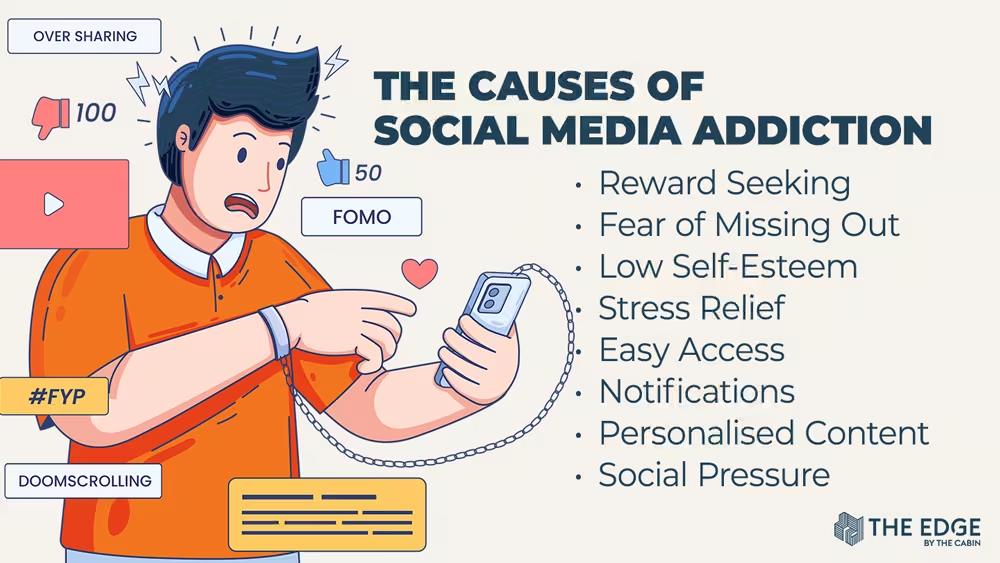
The causes of social media addiction in users are listed below.
- Reward Seeking: Reward seeking occurs when likes, comments, shares, messages, and notifications create quick emotional feedback. The brain may learn to repeat social media use when online rewards feel pleasant or relieving.
- Fear of Missing Out: Fear of missing out means worry about being excluded, uninformed, or disconnected from other people. The fear may lead to constant checking and difficulty staying offline.
- Low Self-Esteem: Low self-esteem may increase the need for approval through views, reactions, messages, or follower activity. Online validation may become a substitute for stable self-worth.
- Stress Relief: Stress relief can become a cause when social media becomes a fast escape from pressure, sadness, boredom, or loneliness. The habit may grow when scrolling becomes the main coping tool.
- Easy Access: Easy access increases risk because mobile phones keep social networking sites available at any time. Constant access may reduce natural stopping points.
- Notifications: Notifications pull attention back to the screen through alerts, sounds, badges, and message previews. Repeated alerts may strengthen the habit of checking.
- Personalized Content: Personalized content keeps users engaged by showing posts, videos, and updates that match past behavior. Continuous content feeds may extend screen time.
- Social Pressure: Social pressure may increase use when a person feels expected to respond, post, comment, or stay visible online. The pressure may make offline time feel uncomfortable.
Trade Screen Time for Real Time
When internet use and social media become an addiction—don’t worry—you’re not alone. Our trained professionals at The Edge will assess and guide you to recovery.
Why do people become addicted to social media so easily?
People become addicted to social media so easily because social networking sites provide frequent rewards such as likes, comments, messages, and notifications that encourage repeated use. Positive feedback is immediate, and quick rewards may make the brain expect another pleasant response. Engagement becomes habitual when checking social media gives relief from boredom, stress, loneliness, or uncertainty. Repetition strengthens usage patterns because the same cue and reward cycle happens many times each day. Excessive use may develop when a person begins using social media for mood control, validation, or escape. Social media sites remove stopping points through endless feeds, alerts, short videos, and algorithmic recommendations. Reward learning helps explain why repeated digital behavior can become hard to stop, since dopamine-related systems reinforce cues linked with reward.
Can Facebook addiction develop from general social media overuse?
Yes, Facebook addiction can develop from general social media overuse when excessive online behavior becomes focused on one site. Patterns of compulsive use emerge when checking Facebook becomes the main habit for connection, validation, news, groups, photos, or emotional escape. Time spent online increases when notifications, comments, friend updates, reels, and groups encourage repeated visits. Dependence develops gradually when a person feels anxious, bored, or left out without checking the site. The underlying behavior is similar because the issue involves compulsive use, reduced control, and continued behavior despite problems. Site choice varies because some users become attached to Facebook, while others overuse video apps, messaging apps, or photo-based social sites. Treatment focuses less on the site name and more on the behavior pattern behind Facebook addiction.
Can dopamine feedback loops explain social media addiction?
Yes, dopamine feedback loops can explain social media addiction because reward-based engagement encourages repeated checking and continued use. Rewards reinforce behavior when likes, comments, messages, views, and new posts create short bursts of interest or pleasure. Anticipation increases usage because the next notification or update can feel rewarding before it appears. Habit formation becomes stronger when the same cue, action, and reward cycle repeats many times each day. Compulsive use develops when a person keeps checking despite stress, poor sleep, conflict, or lost time. Dopamine does not explain every case because emotional needs, environment, mental health, and app design matter. Addiction science shows that reward systems help the brain learn cues linked with rewarding experiences, which supports careful discussion of dopamine in social media overuse.
What are the main symptoms of social media addiction?
The main symptoms of social media addiction are listed below.
- Compulsive Checking: Compulsive checking means frequent use of social networking sites throughout the day. The person may check updates during work, school, meals, conversations, or bedtime.
- Cravings: Cravings are strong urges to go online, scroll, post, reply, or check reactions. The urge may feel stronger during stress, boredom, loneliness, or anxiety.
- Loss of Control: Loss of control means difficulty reducing use even after deciding to stop. The person may spend more time online than planned.
- Neglected Responsibilities: Neglected responsibilities occur when daily tasks suffer because social media takes priority. Work, study, sleep, chores, exercise, and family time may decline.
- Excessive Time Online: Excessive time online means spending longer periods on social media than intended. The person may lose track of time while scrolling, watching videos, or replying to messages.
How can a person recognize signs of social media dependency in daily life?
A person can recognize signs of social media dependency in daily life by noticing when online use interferes with work, study, relationships, sleep, or daily activities. Control becomes difficult when checking or scrolling continues despite plans to stop. Screen time increases when short sessions turn into long periods of online activity. Offline activities decline when hobbies, exercise, face-to-face connection, and rest receive less attention. Daily functioning becomes affected when social media distracts from deadlines, conversations, meals, or emotional recovery. Dependence worsens over time when online activity becomes the main source of comfort, validation, or distraction. A clear warning sign appears when social media use causes harm, but the person still feels unable to reduce it.
Do withdrawal symptoms appear when someone stops using social media?
Yes, withdrawal symptoms appear when someone stops using social media, especially when use stops suddenly after compulsive or heavy engagement. Emotional discomfort occurs because the person loses access to a habit that provides stimulation, connection, validation, or escape. Irritability increases when checking urges appear without the usual online response. Anxiety appears temporarily when the person worries about missing messages, updates, comments, or social events. Symptoms are usually psychological rather than medical withdrawal seen with some substances. The discomfort improves with time when healthier routines, sleep, exercise, social contact, and coping skills replace compulsive checking. Professional help becomes useful when distress becomes severe or when social media use connects with anxiety, depression, trauma, or other behavioral addictions.
What are the effects of social media addiction on mental health?
The effects of social media addiction on mental health are listed below.
- Anxiety: Anxiety may increase when social media creates pressure to respond, compare, post, or stay connected. Fear of missing out may keep the mind alert and restless.
- Depression: Depression may worsen when excessive use increases isolation, negative comparison, shame, or low self-worth. Social media use does not affect everyone the same way, so personal context matters.
- Low Self-Esteem: Low self-esteem may develop when a person measures worth through likes, comments, views, or appearance-based comparison. Online approval may become unstable and stressful.
- Poor Sleep: Poor sleep may occur when late-night scrolling delays rest and keeps the brain stimulated. Sleep loss may worsen mood, attention, and stress control.
- Emotional Stress: Emotional stress may increase through online conflict, criticism, rejection, upsetting news, or constant alerts. Men may feel mentally crowded by continuous updates.
- Loneliness: Loneliness may increase when online interaction replaces deeper face-to-face support. Men may stay connected digitally but feel emotionally distant.
- Reduced Focus: Reduced focus may occur when frequent checking interrupts attention and task completion. Constant switching between tasks may lower productivity and increase frustration.
When screen time starts controlling your life
Professional support can help you regain balance. At The Edge, our innovative addiction treatment programme is not just about overcoming challenges; it’s about empowering young men to explore their potential and develop positive, constructive behaviours.
How does social media addiction impact relationships and productivity?
Social media addiction impacts relationships and productivity by diverting attention away from personal connections, responsibilities, and focused work. Attention is pulled online through notifications, messages, comments, videos, and content feeds. Time management becomes difficult when a person loses track of minutes or hours while scrolling. Social interactions may suffer when online activity interrupts conversations, family time, meals, or emotional presence. Conflicts may increase when partners, parents, friends, or coworkers feel ignored, compared, or replaced by screen use. Performance can decline when tasks take longer, deadlines are missed, and concentration weakens. Balanced limits may support better focus, stronger communication, and more stable daily routines.
Can social media addiction lead to anxiety or depression?
Yes, social media addiction can lead to anxiety or depression in some individuals, although the relationship differs from person to person. Excessive use affects emotional well-being when online comparison, cyberbullying, fear of missing out, poor sleep, or social pressure becomes frequent. Stress levels increase when a person feels pressure to respond, post, stay visible, or monitor others. Negative comparisons occur when curated images, success posts, or appearance-focused content lower self-worth. Mental health becomes affected when social media replaces rest, face-to-face support, exercise, study, work, or treatment routines. Balanced use matters because online connections help some people and harm others, depending on context. Prevention focuses on safer online habits, screen time limits, sleep protection, offline support, and emotional coping skills.
Why is social media designed to be addictive?
Social media is designed to be addictive because many features are built to maximize engagement and encourage repeated use. Notifications attract attention by creating immediate prompts to return. Rewards encourage return visits through likes, comments, messages, shares, follower activity, and fresh content. Engagement drives site activity because longer use creates more chances for interaction, content viewing, and advertising exposure. Usage can become habitual when a person repeatedly opens an app after boredom, stress, or an alert. Endless feeds, personalized recommendations, and short-form content reduce natural stopping points. The design does not affect every person the same way, but vulnerable users may develop compulsive patterns when emotional needs and reward-based features combine.
How do algorithms increase social media overuse and engagement?
Algorithms increase social media overuse and engagement by personalizing content to keep users interested and active for longer periods. Relevant content increases engagement because posts, videos, ads, and recommendations match past clicks, likes, searches, and watch time. Content is continuously tailored, so each session can feel fresh and hard to stop. User attention is maintained when the feed predicts what feels interesting, emotional, funny, upsetting, or rewarding. Time spent online increases because the next item may feel more appealing than the last one. Repeated use is encouraged when the algorithm learns from every interaction and refines the feed. Overuse may develop when personalized content becomes the main source of stimulation, comfort, or escape.
Is infinite scrolling a key driver of addiction?
Yes, infinite scrolling is a key driver of addiction risk because it provides an endless stream of content without clear stopping points. Content stays continuously available, so the user does not reach a natural end page. Engagement increases when each swipe or scroll reveals something new, interesting, emotional, or rewarding. Usage sessions become longer when the feed keeps refreshing with posts, videos, and recommendations. Self-control becomes challenged because the person must create a stopping point instead of reaching one automatically. Infinite scrolling does not cause addiction by itself, but it strengthens overuse when paired with stress, boredom, loneliness, or reward seeking. Digital limits, timed breaks, and app blockers help restore stopping points.
Is online gambling addiction similar to social media addiction in dopamine response?
Yes, online gambling addiction is similar to social media addiction in reward-related dopamine response because both behaviors can reinforce repeated engagement through reward, anticipation, and cues. Rewards encourage repetition when a person expects a win, a like, a message, a comment, or a new piece of content. Anticipation strengthens behavior because the next outcome feels uncertain and potentially rewarding. Similar brain mechanisms can be involved because addiction research links reward learning with dopamine and repeated cue-driven behavior. The activities differ because gambling involves financial risk and chance-based outcomes, while social media involves social feedback, attention, and content rewards. Some psychological processes overlap, including craving, loss of control, and continued use despite harm. Families concerned about betting-related harm need education on how dangerous my son’s gambling addiction is when gambling behavior appears alongside digital overuse.
Worried your son has a gambling addiction?
The good news is that help’s available. The Edge operates a gambling addiction treatment that’s tailor-made for teens and young men, and we’ll help you understand what help looks like.
How does social media addiction compare to other behavioral addictions?
Social media addiction compares to other behavioral addictions through shared features such as compulsive use, strong urges, difficulty stopping, and continued behavior despite harm. The specific activity differs because social media centers on online connection, validation, content feeds, and digital attention. Loss of control is common when a person tries to reduce use but returns to the behavior repeatedly. Repeated engagement occurs when reward cues, emotional relief, and habit patterns keep the behavior active. Similar patterns exist across gaming, gambling, shopping, pornography, and smartphone overuse, but each behavior has different risks and consequences. Consequences vary by behavior because social media may affect mood, sleep, focus, relationships, self-esteem, and productivity. DSM recognizes gambling disorder and lists internet gaming disorder as a condition for further study, which supports careful comparison without labeling every heavy online behavior as a disorder.
Is social media addiction similar to gaming or smartphone addiction?
Yes, social media addiction is similar to gaming and smartphone addiction because all involve excessive technology use, compulsive engagement, and difficulty stopping. Behavioral patterns often overlap when a person checks devices repeatedly, loses track of time, and continues despite problems. Compulsive engagement occurs when digital activity becomes a main source of reward, escape, or emotional regulation. Daily life may be affected through sleep loss, poor focus, conflict, missed tasks, and reduced offline connections. The sites and devices differ because gaming involves game play, smartphone addiction involves device use, and social media addiction involves networking sites and content feeds. Core symptoms can be similar because all patterns may involve craving, loss of control, withdrawal-like discomfort, and continued use despite harm. Treatment often focuses on behavior planning, digital limits, coping skills, and support rather than device removal alone.
Can social media addiction be as harmful as substance addiction?
Yes, social media addiction can be as harmful as substance addiction when compulsive use causes serious psychological, social, and daily functioning problems. The harms are not identical because substance addiction involves chemical effects, intoxication risk, withdrawal risk, and medical complications that social media use does not directly create. Mental health becomes affected when social media overuse increases anxiety, depression, poor sleep, low self-esteem, isolation, or emotional stress. Functioning declines when work, school, relationships, health routines, and recovery goals receive less attention. Consequences become serious when compulsive use continues despite harm and repeated attempts to stop fail. Early intervention helps reduce patterns before they become more fixed. Care includes therapy, routine changes, digital limits, treatment for co-occurring mental health concerns, and support from trusted people.
What are the best solutions for social media addiction?
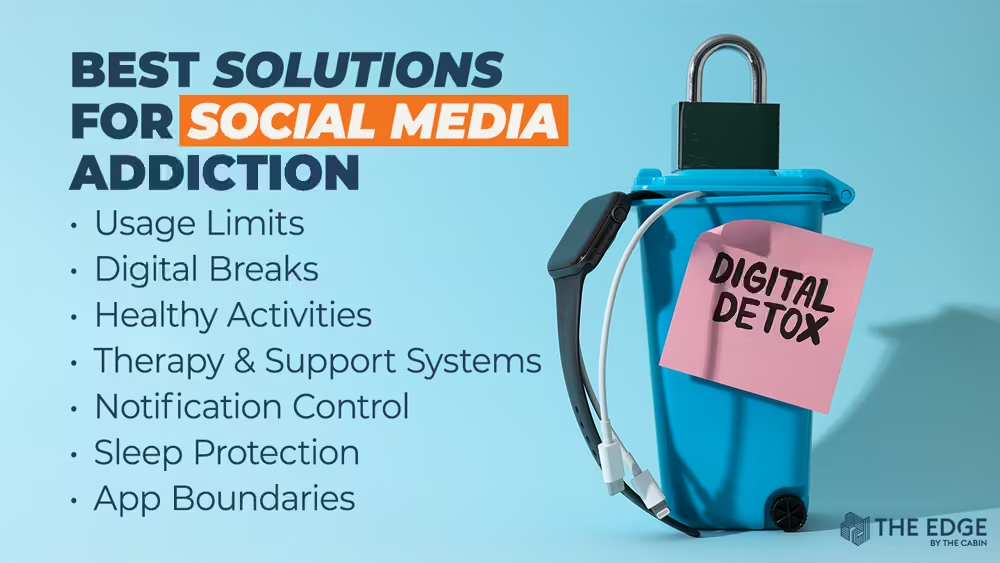
The best solutions for social media addiction are listed below.
- Usage Limits: Usage limits set daily restrictions on social media time, app access, or specific use periods. Clear limits help reduce automatic checking and restore control.
- Digital Breaks: Digital breaks schedule offline time during meals, sleep hours, work periods, study time, and family time. Planned breaks create space for rest and real-world connection.
- Healthy Activities: Healthy activities replace screen time with exercise, hobbies, reading, outdoor time, recovery tasks, and face-to-face support. Replacement habits matter because empty time can trigger relapse into scrolling.
- Therapy: Therapy addresses underlying issues such as anxiety, depression, trauma, loneliness, low self-esteem, or poor impulse control. Cognitive Behavioral Therapy may help change thoughts and habits that maintain compulsive use.
- Support Systems: Support systems encourage accountability through family, friends, counselors, support groups, or treatment teams. Shared goals make digital boundaries easier to maintain.
- Notification Control: Notification control reduces alerts that pull attention back to the phone. Turning off nonessential alerts may lower checking urges.
- Sleep Protection: Sleep protection keeps social media out of bedtime routines. A phone-free sleep area may improve rest and reduce late-night scrolling.
- App Boundaries: App boundaries use app timers, content limits, blockers, and scheduled access. Digital tools may support self-control when urges are strong.
How can social media detox help reduce dependency?
A social media detox can help reduce dependency by lowering exposure to social networking sites and breaking compulsive usage patterns. The detox creates healthier habits by giving the mind time away from alerts, comparison, endless scrolling, and online validation. Screen time decreases when apps are removed, muted, blocked, or limited during planned periods. Awareness of usage improves because offline time makes triggers, cravings, and automatic checking more noticeable. Dependence may lessen when a person learns to handle boredom, stress, loneliness, and anxiety without immediately going online. Balance can be restored when sleep, work, exercise, relationships, and self-care return to daily routines. A detox works best when paired with long-term boundaries rather than a short break followed by the same old pattern.
Are structured digital detox programs effective long-term?
Yes, structured digital detox programs are effective long-term when combined with ongoing behavior changes and support. Consistency is important because social media use often returns to old patterns after a short break. Healthy habits are reinforced when the program includes time limits, app rules, offline activities, sleep routines, and accountability. Self-control improves when a person practices planned use rather than emotional or automatic use. Results vary by individual because stress level, mental health, social support, work needs, and motivation affect progress. Ongoing effort supports success when the person keeps monitoring triggers, adjusting limits, and seeking help when relapse signs appear. Therapy improves long-term results when social media overuse connects with anxiety, depression, trauma, loneliness, or other behavioral health concerns.
Real recovery happens offline
If a young man you know is struggling with social media addiction, consider The Edge Rehab Centre. Our inpatient program for young adult men includes cognitive behavioural therapy, physical training, outdoor exploration, and mindfulness meditation. With our support, he can begin a healthier, recovery-focused life. Reach out to us—we respond within 24 hours.
