
Trauma-Focused Cognitive Behavioral Therapy (TF-CBT) addresses the emotional and behavioral effects of childhood trauma through a structured, evidence-based treatment model.
Trauma-Focused Cognitive Behavioral Therapy combines cognitive behavioral techniques with trauma-sensitive interventions designed for adolescents and their caregivers. Research supports its use for conditions such as post-traumatic stress disorder, anxiety, depression, and behavioral difficulties following traumatic events. Treatment progresses through stabilization, trauma processing, and integration phases over a defined number of sessions. Caregivers play an active role throughout treatment, supporting the child’s progress and reinforcing skills learned during sessions. The components help reduce trauma-related symptoms, improve emotional and behavioral functioning, and strengthen resilience in adolescents.
What is Trauma-Focused Cognitive Behavioral Therapy (TF-CBT)?
Trauma-Focused Cognitive Behavioral Therapy is a structured, evidence-based treatment designed to address trauma-related symptoms in adolescents and their caregivers. Trauma-Focused Cognitive Behavioral Therapy combines cognitive behavioral techniques with trauma-sensitive interventions to reduce emotional distress and behavioral difficulties following traumatic events. Treatment goals include processing traumatic memories, reducing symptoms of post-traumatic stress, and improving coping skills for both the child and caregiver. Sessions typically involve psychoeducation, relaxation training, emotional regulation, and gradual exposure to trauma-related memories in a safe therapeutic setting. Caregiver involvement remains a defining feature, distinguishing this approach from many other trauma treatments that focus on the individual alone. Clinical research has established strong support for its effectiveness across a range of trauma types and age groups. Its structured design, caregiver involvement, and strong evidence base have made trauma-focused cognitive behavioral therapy one of the most widely recommended treatments for childhood trauma.
Why was TF-CBT Developed?
Clinicians developed TF-CBT to address gaps in earlier trauma treatments that lacked structured support for both children and caregivers. Traditional therapy approaches focus solely on the child, overlooking the caregiver’s role in supporting recovery at home. Earlier trauma treatments also lacked a standardized structure, making outcomes inconsistent across different providers and settings. Researchers recognized the need for an approach combining cognitive behavioral techniques with trauma-specific interventions tailored to developmental stages. The resulting model integrated caregiver participation, structured phases, and measurable treatment goals into one cohesive framework. Ongoing research since its development has continued to refine and validate the approach across diverse populations.
Who is TF-CBT Intended for?
The groups TF-CBT is intended for are listed below.
- Children and Adolescents: Children and adolescents between roughly three and eighteen years old represent the primary population for TF-CBT treatment. The developmental stage often shapes how interventions are adapted during sessions.
- Non-Offending Caregivers: Non-offending caregivers participate alongside the child to reinforce skills and support recovery at home. Their involvement strengthens treatment consistency between sessions.
- Individuals with Trauma Symptoms: Individuals experiencing trauma symptoms such as intrusive memories, avoidance, or emotional dysregulation often qualify as suitable candidates. Symptom severity can influence the pace and structure of treatment.
- Individuals with Post-Traumatic Stress Disorder: Individuals diagnosed with post-traumatic stress disorder frequently benefit from the structured trauma processing components of TF-CBT. Diagnosis often guides the specific interventions selected during treatment.
- Families Affected by Complex Trauma: Families affected by complex or repeated trauma exposure may benefit from the caregiver-inclusive structure of the model. Family involvement often supports longer-term stability after treatment ends.
Can Adults use TF-CBT?
No, TF-CBT was primarily designed for children and adolescents rather than adult populations. The model’s structure relies heavily on caregiver involvement, developmental considerations, and age-appropriate interventions. Adults seeking trauma treatment typically pursue other evidence-based approaches designed specifically for adult cognitive and emotional processing. Some adapted versions of trauma-focused techniques exist for adult populations, though these differ from the original TF-CBT framework. Clinical appropriateness depends on age, developmental stage, and the presence of a caregiver relationship central to the model. Professional evaluation determines whether TF-CBT or an alternative trauma therapy better suits an individual’s treatment needs.
Early help matters
Your loved one deserves a safe recovery. Contact a specialist from The Edge Rehab for a confidential recovery assessment and personalised guidance.
Why is Trauma-Focused Cognitive Behavioral Therapy (TF-CBT) Considered an Evidence-Based Treatment?
Trauma-Focused Cognitive Behavioral Therapy (TF-CBT) is considered evidence-based because extensive clinical research supports its effectiveness in reducing trauma-related symptoms. Evidence-based treatment refers to therapeutic approaches validated through controlled studies, replicated outcomes, and peer-reviewed research. Multiple randomized controlled trials have demonstrated significant symptom reduction among children and adolescents receiving TF-CBT compared with other treatment approaches. Consistent outcomes across diverse populations, trauma types, and clinical settings strengthen the model’s evidence base. Professional organizations and clinical guidelines frequently recommend TF-CBT as a first-line treatment for childhood trauma and post-traumatic stress disorder. Ongoing research continues to refine treatment protocols and expand understanding of long-term outcomes, reinforcing its standing as a well-supported evidence-based treatment.
What Outcomes does TF-CBT Improve?
TF-CBT improves emotional, behavioral, and functional outcomes among children and adolescents recovering from trauma. Reductions in post-traumatic stress symptoms, including intrusive memories and hypervigilance, commonly appear following treatment completion. Anxiety and depressive symptoms often decrease as children develop healthier coping strategies through structured therapeutic exercises. Behavioral improvements frequently include reduced acting-out behaviors, better emotional regulation, and improved relationships with caregivers. Researchers commonly measure these outcomes using standardized assessment tools tracking symptom severity before and after treatment. Family functioning often improves alongside individual outcomes as caregivers strengthen their ability to support the child’s recovery. Long-term follow-up studies suggest that improvements frequently persist well beyond the conclusion of active treatment.
What Research Supports TF-CBT for Post-Traumatic Stress Disorder (PTSD)?
The research supporting TF-CBT for Post-Traumatic Stress Disorder (PTSD) is listed below.
- Randomized Controlled Trials: Randomized controlled trials have consistently shown greater symptom reduction among children receiving TF-CBT compared with alternative or no treatment. These studies remain central to establishing the model’s clinical credibility.
- Meta-Analyses: Meta-analyses combining data from multiple studies confirm consistent, moderate-to-large effect sizes for symptom improvement. Combined findings strengthen confidence in the treatment’s overall effectiveness.
- Longitudinal Follow-Up Studies: Longitudinal follow-up studies indicate that symptom improvements often persist for months or years after treatment ends. Sustained outcomes support the model’s long-term clinical value.
- Cross-Cultural Research: Cross-cultural research demonstrates effectiveness across diverse populations, settings, and trauma types. Findings suggest the model adapts well beyond its original research context.
- Comparative Effectiveness Studies: Comparative effectiveness studies frequently rank TF-CBT among the most researched treatments for childhood trauma and related Post-Traumatic Stress Disorder (PTSD) symptoms. The comparisons reinforce clinical guideline recommendations favoring the approach.
What are the Core Components of Trauma-Focused Cognitive Behavioral Therapy (TF-CBT)?
The core components of Trauma-Focused Cognitive Behavioral Therapy (TF-CBT) are listed below.
- Psychoeducation: Psychoeducation provides children and caregivers with information about trauma reactions and the treatment process. Understanding these reactions often reduces confusion and stigma surrounding symptoms.
- Relaxation Skills: Relaxation skills teach techniques for managing physical and emotional stress responses. Practicing these skills supports emotional regulation throughout treatment.
- Emotional Regulation: Emotional regulation components help children identify, express, and manage difficult emotions related to trauma. Skill development in this area often supports progress in later treatment phases.
- Cognitive Processing: Cognitive processing addresses unhelpful thoughts or beliefs connected to the traumatic experience. Restructuring these thoughts often reduces guilt, shame, or distorted self-blame.
- Trauma Narrative Development: Trauma narrative development guides the child through gradually processing and describing the traumatic experience. This component supports desensitization to distressing memories over time.
- Caregiver Involvement: Caregiver involvement reinforces treatment progress through parallel sessions and shared skill-building exercises. Active participation often strengthens outcomes for the child.
What does the PRACTICE Model Include?

The elements of the PRACTICE model are listed below.
- Psychoeducation and Parenting Skills: Psychoeducation and parenting skills introduce trauma-related information and strengthen caregiver support strategies. This component establishes a foundation for later treatment phases.
- Relaxation Skills: Relaxation skills teach techniques for reducing physical tension and emotional distress. These skills support the child throughout more difficult stages of treatment.
- Affective Expression and Regulation: Affective expression and regulation help children identify and manage a wide range of emotional responses. This component often improves communication about difficult feelings.
- Cognitive Coping and Processing: Cognitive coping and processing address unhelpful thought patterns connected to the traumatic experience. This step supports healthier interpretations of trauma-related events.
- Trauma Narrative and Processing: Trauma narrative and processing guide the gradual development of a coherent account of the traumatic experience. This component reduces avoidance and distress associated with trauma memories.
- In Vivo Mastery of Trauma Reminders: In vivo mastery of trauma reminders helps children confront and manage real-world triggers linked to the trauma. Gradual exposure often reduces avoidance behaviors over time.
- Conjoint Child-Parent Sessions: Conjoint child-parent sessions bring the child and caregiver together to share progress and strengthen communication. These sessions often prepare the family for treatment completion.
- Enhancing Safety and Future Development: Enhancing safety and future development focuses on building safety skills and supporting healthy development moving forward. This final component reinforces long-term stability after treatment ends.
Empower Young Men on their journey to sobriety
Discover a dynamic, adventure-based treatment program engineered specifically to help young men defeat mental health challenges.
What Interventions are used in TF-CBT?

The interventions used in TF-CBT are listed below.
- Psychoeducation: Psychoeducation introduces children and caregivers to common trauma reactions early in treatment. This intervention builds understanding before more intensive work begins.
- Relaxation Training: Relaxation training teaches breathing exercises and calming techniques to manage stress responses. Therapists often introduce this intervention during the early stabilization phase.
- Cognitive Restructuring: Cognitive restructuring addresses distorted or unhelpful beliefs connected to the traumatic experience. This intervention typically continues throughout multiple treatment phases.
- Gradual Exposure: Gradual exposure introduces trauma-related memories or triggers in a controlled, supportive manner. This intervention plays a central role during the trauma processing phase.
- Trauma Narrative Work: Trauma narrative work helps the child construct and process a detailed account of the traumatic event. Therapists introduce this intervention once foundational coping skills are established.
- Conjoint Sessions: Conjoint sessions bring caregivers and children together to reinforce shared understanding and communication. This intervention often occurs during later treatment stages.
Why is the Trauma Narrative Important in TF-CBT?
The trauma narrative holds central importance in TF-CBT because it allows children to process traumatic memories in a structured, supportive environment. Gradual construction of the narrative reduces avoidance behaviors that often maintain trauma-related symptoms. Repeated engagement with the narrative helps desensitize the child to distressing memories over successive sessions. Cognitive distortions connected to the traumatic event frequently surface and are addressed during narrative development. Emotional processing through the narrative supports long-term symptom reduction rather than temporary relief. Therapists carefully pace this component to match the child’s readiness and emotional capacity. Successful completion of the trauma narrative often marks significant progress toward treatment goals.
How does Trauma-Focused Cognitive Behavioral Therapy (TF-CBT) work?

TF-CBT works by guiding children and caregivers through a structured sequence of skill-building and trauma processing components. Treatment begins with stabilization, focusing on psychoeducation, relaxation, and emotional regulation skills. Cognitive processing techniques then address unhelpful thoughts connected to the traumatic experience before trauma narrative work begins. Gradual exposure through the trauma narrative helps reduce avoidance and distress associated with traumatic memories. Caregiver sessions run parallel to the child’s individual sessions, reinforcing skills and supporting communication at home. Conjoint sessions later bring the child and caregiver together to share progress and strengthen family understanding. Treatment concludes with a focus on safety planning and preparing the family for continued growth after therapy ends.
What Happens During each phase of TF-CBT?
Stabilization, trauma processing, and integration happen during each phase of TF-CBT. The stabilization phase focuses on building trust, teaching coping skills, and preparing the child for more difficult trauma-related work. Psychoeducation, relaxation training, and emotional regulation exercises dominate this early stage of treatment. The trauma processing phase introduces cognitive restructuring and gradual development of the trauma narrative. Distressing memories are addressed directly during this phase under close therapeutic guidance. The integration phase focuses on consolidating progress, addressing remaining triggers, and preparing for treatment completion. Conjoint sessions and safety planning typically occur during this final stage to support long-term stability.
How Long does TF-CBT Usually Last?
TF-CBT typically lasts between twelve and twenty-five sessions, depending on individual needs and trauma severity. Session frequency often occurs weekly, allowing consistent progress through each treatment phase. Complex trauma or multiple traumatic experiences may extend treatment duration beyond the typical range. Caregiver engagement, symptom severity, and the child’s response to treatment all influence overall length. Some cases may require additional sessions to fully process the trauma narrative or address emerging concerns. Treatment length remains flexible, with therapists adjusting the timeline based on ongoing clinical assessment. Shorter or longer courses of treatment do not necessarily indicate greater or lesser success.
What Role do Caregivers have in TF-CBT?

Caregivers provide parenting guidance, emotional support, and reinforcement of coping skills throughout TF-CBT treatment. Parallel caregiver sessions address parenting skills, emotional support strategies, and understanding of trauma reactions. Caregivers reinforce coping skills taught during the child’s sessions, extending progress beyond the therapy room. Conjoint sessions later bring caregivers and children together to share the trauma narrative and strengthen communication. Caregiver support often improves treatment outcomes by creating a consistent, understanding environment at home. Non-offending caregivers receive guidance on responding to trauma-related behaviors and supporting emotional regulation. Active caregiver participation distinguishes TF-CBT from trauma therapies focused solely on the individual.
What Conditions can Trauma-Focused Cognitive Behavioral Therapy (TF-CBT) Address?
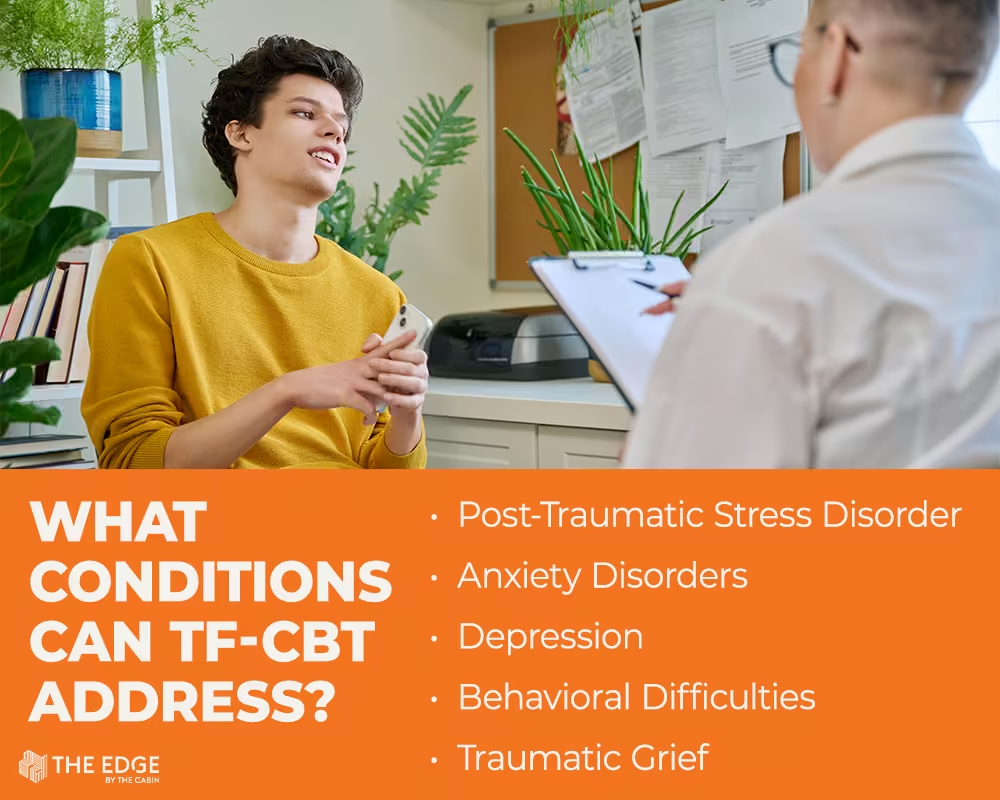
The conditions that Trauma-Focused Cognitive Behavioral Therapy (TF-CBT) can address are listed below.
- Post-Traumatic Stress Disorder: Post-traumatic stress disorder frequently responds to the structured trauma processing components central to TF-CBT. Symptom reduction often includes decreased intrusive memories and hypervigilance.
- Anxiety Disorders: Anxiety disorders connected to traumatic experiences often improve through emotional regulation and cognitive restructuring techniques. Reduced avoidance behaviors commonly accompany these improvements.
- Depression: Depression linked to trauma exposure may improve as children develop healthier coping strategies and process difficult emotions. Mood stabilization often accompanies broader symptom improvement.
- Behavioral Difficulties: Behavioral difficulties, including acting-out behaviors or emotional outbursts, often decrease as emotional regulation skills strengthen. Improved behavior frequently supports better relationships at home and school.
- Traumatic Grief: Traumatic grief following the sudden or violent loss of a loved one may respond to trauma-specific processing techniques within the model. Treatment addresses both grief and trauma-related symptoms together.
Which Types of Trauma are Commonly Treated with TF-CBT?
The types of trauma commonly treated with TF-CBT are listed below.
- Physical Abuse: Physical abuse cases often involve trauma symptoms tied to safety, trust, and emotional regulation. Treatment addresses both the traumatic memories and related behavioral impacts.
- Sexual Abuse: Sexual abuse represents one of the most extensively researched trauma types within TF-CBT treatment. Specialized components often address shame, guilt, and safety concerns unique to this trauma type.
- Domestic Violence Exposure: Domestic violence exposure often produces trauma symptoms related to safety and family stability. Treatment frequently includes caregiver components addressing household dynamics.
- Natural Disasters: Natural disasters can produce acute trauma symptoms requiring structured processing and coping skill development. Treatment often focuses on safety perceptions and emotional recovery.
- Traumatic Loss: Traumatic loss, including sudden or violent death of a caregiver or family member, frequently benefits from trauma-focused grief processing. Treatment addresses both bereavement and trauma symptoms simultaneously.
Can TF-CBT treat PTSD?
Yes, TF-CBT can treat post-traumatic stress disorder in children and adolescents. Extensive clinical research supports its effectiveness in reducing core PTSD symptoms, including intrusive memories and avoidance behaviors. Structured components such as trauma narrative development and gradual exposure directly address symptoms associated with the disorder. Caregiver involvement often strengthens treatment outcomes by reinforcing coping strategies outside of sessions. Symptom improvement typically becomes noticeable as treatment progresses through each structured phase. Clinical guidelines frequently recommend TF-CBT as a first-line treatment option for childhood PTSD.
Begin Your Wellness Journey
Entering rehab may feel daunting, but understanding what comes next can turn anxiety into hope. The Edge is here to provide the support you need to regain control of your life.
How does Trauma-Focused Cognitive Behavioral Therapy (TF-CBT) differ from other Trauma Therapies?
TF-CBT differs from other trauma therapies primarily through its structured, caregiver-inclusive model designed specifically for children and adolescents. Target populations, core techniques, and treatment duration vary considerably across different trauma-focused approaches. Some therapies focus exclusively on the individual, while TF-CBT integrates caregiver participation throughout treatment. Techniques such as trauma narrative development distinguish TF-CBT from approaches relying more heavily on eye movement or exposure-based methods alone. Evidence levels and typical treatment duration also vary depending on the specific therapy and population studied.
The differences between TF-CBT and other trauma therapies are shown in the table below.
| Therapy | Target Population | Core Techniques | Evidence Level | Typical Duration |
| TF-CBT | Children and adolescents with caregiver involvement | Trauma narrative, cognitive restructuring, relaxation training | Strong, extensively researched | 12 to 25 sessions |
| CBT for PTSD | Primarily adults | Cognitive restructuring, exposure therapy | Strong, extensively researched | 8 to 16 sessions |
| EMDR | Children, adolescents, and adults | Bilateral stimulation, memory reprocessing | Strong, well researched | 6 to 12 sessions |
What is the Difference Between TF-CBT and Cognitive Behavioral Therapy (CBT) for PTSD?
The difference between TF-CBT and Cognitive Behavioral Therapy (CBT) for PTSD is that the two approaches differ primarily in target population and structural design. TF-CBT incorporates caregiver involvement as a core treatment component, while standard CBT for PTSD typically focuses on the individual alone. Age adaptation plays a larger role in TF-CBT, given its design for children and adolescents rather than adults. TF-CBT and Cognitive Behavioral Therapy (CBT) share cognitive restructuring techniques, though TF-CBT integrates these within a broader, trauma narrative framework. Treatment duration and pacing often differ, reflecting developmental considerations unique to younger populations.
The differences between TF-CBT and Cognitive Behavioral Therapy (CBT) for PTSD are shown in the table below.
| Feature | TF-CBT | CBT for PTSD |
| Primary Population | Children and adolescents | Primarily adults |
| Caregiver Involvement | Core treatment component | Not typically included |
| Key Technique | Trauma narrative development | Cognitive restructuring and exposure |
| Session Structure | Phased, developmentally adapted | Structured, individually focused |
| Typical Duration | 12 to 25 sessions | 8 to 16 sessions |
What is the Difference Between TF-CBT and Eye Movement Desensitization and Reprocessing (EMDR) Therapy?
The difference between TF-CBT and Eye Movement Desensitization and Reprocessing (EMDR) Therapy is that TF-CBT relies on trauma narrative development while EMDR relies on bilateral stimulation to process traumatic memories. TF-CBT relies on structured trauma narrative development and cognitive restructuring across multiple treatment phases. EMDR uses bilateral stimulation, such as guided eye movements, to help reprocess traumatic memories more directly. Treatment duration often differs, with EMDR sometimes requiring fewer sessions to achieve symptom reduction. Caregiver involvement remains a defining feature of TF-CBT, while Eye Movement Desensitization and Reprocessing (EMDR) Therapy protocols vary in caregiver participation depending on the client’s age. Best use cases often depend on age, trauma type, and individual response to each therapeutic approach.
The differences between TF-CBT and Eye Movement Desensitization and Reprocessing (EMDR) Therapy are shown in the table below.
| Aspect | TF-CBT | EMDR | Best Use Cases |
| Core Mechanism | Trauma narrative and cognitive restructuring | Bilateral stimulation and memory reprocessing | Both effective for PTSD symptoms |
| Caregiver Role | Core treatment component | Varies by client age and protocol | TF-CBT favored for younger children |
| Session Length | 12 to 25 sessions | 6 to 12 sessions | EMDR often shorter in duration |
| Approach Style | Gradual, phase-based | Structured, memory-focused | Both require trained clinicians |
What Is the Difference Between CBT and Other Therapies?
CBT differs from other therapies because CBT focuses on the connection between thoughts, emotions, and behaviors through structured goals and skill practice. Group therapy focuses on shared support, peer learning, and guided discussion among multiple participants. CBT uses homework, measurable goals, cognitive restructuring, behavioral activation, and exposure strategies. Group therapy uses interaction, feedback, shared experience, and therapist-led discussion. Treatment choice depends on symptoms, comfort level, privacy needs, social support needs, and clinical goals. CBT may fit clients who prefer practical exercises and private work on specific symptoms. Group therapy may fit clients who benefit from shared support and community-based learning.
The differences between CBT and group therapy are shown in the table below.
| Aspect | CBT | Group Therapy |
| Session Structure | CBT therapy uses one-to-one or structured group sessions with agenda setting, skill practice, and homework review. | Group therapy uses therapist-led sessions with multiple participants and shared discussion. |
| Interaction | CBT interaction focuses on the therapist and client working through specific thoughts, behaviors, and goals. | Group therapy interaction includes therapist guidance and peer feedback. |
| Focus | CBT focuses on thoughts, emotions, behaviors, coping skills, and measurable symptom change. | Group therapy focuses on shared experiences, support, communication, and peer learning. |
| Duration | CBT often lasts 6 to 20 sessions, depending on symptoms and goals. | Group therapy length varies by program and group purpose. |
| Benefits | CBT provides practical tools, measurable goals, and focused skill practice. | Group therapy provides peer support, shared insight, and reduced isolation. |
| Disadvantages | CBT requires homework and may feel challenging during exposure or thought work. | Group therapy offers less privacy and less individual attention. |
| Advantages | CBT gives structured, targeted strategies for specific symptoms and behavior patterns. | Group therapy gives connection, group feedback, and social learning. |
| Ideal For | CBT fits depression, anxiety, PTSD, ADHD, stress, anger, and behavior change goals. | Group therapy fits grief, addiction support, social skills, and shared mental health concerns. |
| Cost | CBT cost varies by provider, session format, insurance, and location. | Group therapy often costs less per session because the therapist works with several participants. |
How can you get Started with Trauma-Focused Cognitive Behavioral Therapy (TF-CBT)?

You can get started with Trauma-Focused Cognitive Behavioral Therapy (TF-CBT) by following the six steps below.
- Obtain a Referral or Recommendation. Connect with a pediatrician, school counselor, or mental health professional familiar with the child’s history to begin the referral process. A referral helps link the family with a qualified TF-CBT provider.
- Complete an Initial Assessment. Evaluate trauma history, symptom severity, and treatment readiness alongside the therapist. This step establishes a baseline for measuring future progress.
- Discuss Treatment Goals. Clarify expectations for both the child and caregiver through open conversation with the therapist. Clear goals guide the structure and pacing of upcoming sessions.
- Begin the Stabilization Phase. Introduce psychoeducation, relaxation training, and emotional regulation skills during this early stage. This phase prepares the child for more intensive trauma processing work.
- Progress Through Trauma Processing. Address cognitive restructuring and gradual trauma narrative development during this stage. This stage addresses the core traumatic memories under therapeutic guidance.
- Complete Integration and Safety Planning. Consolidate progress and prepare the family for treatment completion during this final phase. This final step supports long-term stability after therapy ends.
How do you Choose a TF-CBT Therapist?
You choose a TF-CBT therapist by following the five steps below.
- Verify Specialized Training. Confirm that the therapist has completed certified TF-CBT training programs before beginning treatment. Certification indicates a strong understanding of the treatment model’s structure.
- Review Clinical Experience. Determine whether the therapist has worked with similar trauma types or age groups in prior cases. Experience influences treatment effectiveness and comfort level.
- Ask About Caregiver Involvement. Clarify how the therapist structures parallel sessions and family communication throughout treatment. Clear expectations help caregivers prepare for their role in treatment.
- Confirm Licensing and Credentials. Ensure the therapist meets state and professional requirements for mental health treatment. Proper licensing supports accountability and quality of care.
- Discuss Treatment Approach and Pacing. Determine whether the therapist’s style matches the family’s needs and comfort level through open conversation. Open communication supports a stronger therapeutic relationship from the start.
What should you Expect During your First TF-CBT Appointment?
You should expect a trauma history review, symptom assessment, and treatment goal setting during your first TF-CBT appointment. Therapists often ask about trauma history, current symptoms, and family circumstances during this initial session. Caregivers usually participate in part of the appointment to provide additional context and discuss their own observations. Assessment tools may be introduced to measure symptom severity and establish a baseline for tracking progress. Treatment goals become clarified based on the family’s specific concerns and the child’s presenting symptoms. Therapists often explain the overall structure of TF-CBT, including caregiver involvement and the phased treatment approach. This initial session sets the foundation for the stabilization phase that follows in subsequent appointments.
THE EDGE CRETE YOUR SUPERIOR CHOICE FOR RESIDENTIAL REHAB
Trauma affects everyone differently, but recovery is possible. The Edge Rehab offers a safe, structured, and compassionate environment for your recovery. Contact us for a free consultation—we’ll reply within 24 hours.