

Exposure and Response Prevention is the leading evidence-based treatment for obsessive-compulsive disorder, combining structured exposure exercises with deliberate avoidance of compulsive responses.
Exposure and Response Prevention works by gradually confronting feared thoughts or situations while resisting the urge to perform rituals that typically relieve anxiety. Clinical research consistently ranks ERP as the gold standard treatment, with strong response rates across adults, children, and severe OCD cases. Treatment duration varies based on symptom severity, consistency, and individual response, though many patients complete a structured course within 12 to 20 weeks.
What is Exposure and Response Prevention (ERP)?
Exposure and Response Prevention is a structured method that pairs deliberate confrontation of feared triggers with a strict prevention of compulsive responses. Exposure and Response Prevention involves confronting anxiety-provoking thoughts, images, objects, or situations without engaging in the rituals typically used to reduce distress. Anxiety naturally decreases over repeated exposures as the brain learns that feared outcomes do not occur or that discomfort can be tolerated without compulsions. This process gradually weakens the cycle connecting obsessions, anxiety, and compulsive behavior. Treatment typically progresses through a hierarchy of increasingly challenging exposures, tailored to each person’s specific symptoms. Understanding exposure and response prevention clarifies why this method remains the most researched and recommended treatment for OCD.
What is Exposure in ERP therapy?
Exposure in ERP therapy is the deliberate act of confronting feared thoughts, objects, or situations to reduce their power over time. Facing these fears directly allows anxiety to rise and then naturally decline without relying on compulsive behavior for relief. Direct contact with real feared situations, such as touching a doorknob for someone with contamination fears, characterizes in vivo exposure. Imaginal exposure involves confronting feared thoughts or scenarios through detailed mental visualization rather than physical contact. Intentionally triggering uncomfortable physical sensations, such as a racing heart, to reduce fear of those sensations themselves characterizes interoceptive exposure. Repeated practice across these exposure types helps the brain learn that feared outcomes are unlikely or manageable without compulsions.
What is Response Prevention in ERP therapy?
Response prevention in ERP therapy is the deliberate act of refraining from compulsive behaviors that typically follow anxiety-provoking triggers. Response prevention breaks the cycle where compulsions provide short-term relief while reinforcing long-term anxiety and obsessive thinking. Physical compulsions include observable behaviors such as handwashing, checking locks, or arranging objects in a specific order. Mental compulsions include internal acts such as silent counting, mental reviewing, or seeking reassurance through repeated thoughts. Both types of compulsions maintain OCD symptoms by preventing the natural reduction of anxiety that occurs when rituals are withheld. Consistent response prevention alongside exposure produces the lasting symptom relief associated with ERP therapy.
How does Exposure and Response Prevention (ERP) Therapy Work?
Exposure and Response Prevention (ERP) Therapy works by following the six steps listed below.
- Identify Feared Triggers. Pinpoint specific obsessions, situations, or sensations that provoke significant anxiety or discomfort. This step establishes the foundation for building a personalized exposure plan.
- Build an Exposure Hierarchy. Rank identified triggers from least to most distressing using a structured rating scale. This hierarchy guides the pace and order of treatment sessions.
- Engage in Gradual Exposure. Confront each trigger in a controlled setting, starting with less distressing items before progressing to more challenging ones. Repeated exposure allows anxiety to naturally decline over time.
- Practice Response Prevention. Resist the urge to perform compulsions during and after each exposure exercise. This step reinforces the learning that anxiety decreases without ritual behavior.
- Apply Inhibitory Learning Principles. Reinforce new, non-fearful associations with previously feared triggers through repeated practice. This mechanism helps replace old fear responses with more adaptive ones.
- Complete Homework Assignments. Practice exposure exercises independently between sessions to reinforce progress made in therapy. Consistent practice significantly strengthens treatment outcomes over time.
What does a Typical ERP Session look like?

A typical ERP session begins with reviewing progress from prior homework assignments and discussing any challenges encountered. The therapist and patient collaboratively select an exposure exercise appropriate for the current stage of the treatment hierarchy. The patient then engages in the planned exposure while the therapist provides guidance and support throughout the exercise. Anxiety levels are often tracked before, during, and after the exposure to monitor progress and habituation. Sessions typically conclude with a discussion of what was learned and the assignment of homework exposures to complete before the next appointment. This structured format helps ensure steady progress through the exposure hierarchy over the course of treatment.
How does ERP Weaken Compulsions?
ERP weakens compulsions by following the five steps listed below.
- Interrupt the Relief Cycle. Prevent compulsions from providing their usual short-term anxiety relief during exposure exercises. The interruption reduces the reinforcing power that maintains compulsive behavior.
- Allow Natural Anxiety Decline. Permit anxiety to rise and fall naturally without the interference of ritual behavior. The process teaches the brain that discomfort resolves without compulsions.
- Build New Learned Associations. Create new, less fearful associations between triggers and outcomes through repeated practice. These associations gradually compete with and weaken the original fear response.
- Reduce Avoidance Patterns. Decrease reliance on avoidance strategies that previously reinforced obsessive fears. Reduced avoidance supports more consistent, lasting symptom improvement.
- Strengthen Tolerance for Uncertainty. Build capacity to tolerate uncertainty and discomfort without needing definitive reassurance. This tolerance directly addresses the core mechanism driving many OCD symptoms.
Every journey is unique, just like each individual's experience
The Edge offers a holistic approach to overcoming OCD, addressing not just the physical symptoms, but also the emotional and psychological factors involved.
Why is Exposure and Response Prevention (ERP) Considered the Gold Standard for Obsessive-Compulsive Disorder (OCD) Treatment?
Exposure and Response Prevention is considered the gold standard for Obsessive-Compulsive Disorder (OCD) treatment because extensive clinical evidence and consistent long-term outcomes support its effectiveness. Treatment guidelines from major psychiatric and psychological organizations consistently recommend ERP as the first-line intervention for this condition. Randomized controlled trials demonstrate significant symptom reduction across a wide range of OCD presentations and severity levels. Long-term follow-up studies show that improvements from ERP often persist well beyond the completion of active treatment. Comparative research consistently ranks ERP above many alternative therapies in terms of both effectiveness and durability of results. This combination of strong evidence, broad applicability, and lasting outcomes explains why ERP remains the preferred treatment approach for Obsessive-Compulsive Disorder (OCD).
What are the Benefits of ERP Therapy?
The benefits of ERP therapy are emotional, behavioral, and quality-of-life improvements for individuals with OCD. Anxiety related to obsessive thoughts often decreases significantly as exposure practice reduces the perceived threat of feared triggers. Compulsive behaviors typically decline as response prevention breaks the reinforcement cycle sustaining these rituals. Daily functioning frequently improves as time previously spent on compulsions becomes available for other activities and responsibilities. Relationships often strengthen as reduced reassurance-seeking and ritual behavior ease strain on family and social connections. Long-term benefits generally include sustained symptom reduction and improved resilience when facing future triggers or stressors.
How Effective is Exposure and Response Prevention (ERP) for OCD?
Exposure and Response Prevention for OCD is highly effective, producing significant symptom reduction in the majority of individuals who complete treatment. Response rates across clinical studies generally range between 60% and 85%, depending on symptom severity and treatment adherence. Many patients experience substantial improvement within twelve to twenty sessions, though some cases require a longer course of treatment. Outcomes vary based on factors such as motivation, consistency in practicing exposures, and the presence of co-occurring conditions. Severe or long-standing OCD cases may require more intensive treatment formats to achieve comparable results. ERP remains one of the most consistently effective treatments available for obsessive-compulsive disorder across diverse patient populations.
What do Studies say about ERP Success Rates?
Adults Response
Intensive Care
Caregiver Impact
Clinical Treatment
Clinical trials and meta-analyses consistently report strong success rates for Exposure and Response Prevention across various populations. Studies involving adults typically show response rates between 60% and 85%, with many participants achieving significant symptom reduction. Research involving children and adolescents demonstrates similarly strong outcomes, particularly when caregivers are involved in supporting treatment. Severe OCD cases show somewhat lower but meaningful response rates, often improving with more intensive treatment formats. Meta-analyses combining data across multiple studies confirm moderate-to-large effect sizes for symptom reduction following ERP. Treatment guidelines from major psychiatric organizations cite this substantial body of evidence when recommending ERP as a first-line intervention.
Which Factors Influence ERP Outcomes?
The factors that influence ERP outcomes are listed below.
- Symptom Severity: Symptom severity at the start of treatment often correlates with the length and intensity of therapy required. More severe cases may need additional sessions or a more intensive treatment format.
- Motivation: Motivation to engage fully with exposure exercises significantly affects treatment progress and outcomes. Higher motivation often correlates with faster and more sustained symptom improvement.
- Adherence: Adherence to homework assignments and between-session practice strengthens the overall effectiveness of treatment. Consistent practice reinforces the learning achieved during formal sessions.
- Therapist Expertise: Therapist expertise in ERP techniques influences how effectively exposures are structured and paced. Experienced therapists often better tailor treatment to individual needs and challenges.
- Co-Occurring Conditions: Co-occurring conditions, such as depression or generalized anxiety, may affect the pace and complexity of treatment. Addressing these conditions alongside OCD often supports more consistent progress.
Empower Young Men on their journey to sobriety
Discover a dynamic, adventure-based treatment program engineered specifically to help young men defeat addiction and mental health challenges.
How is Exposure and Response Prevention (ERP) Treatment Performed?
Exposure and Response Prevention (ERP) Treatment is performed by following the six steps listed below.
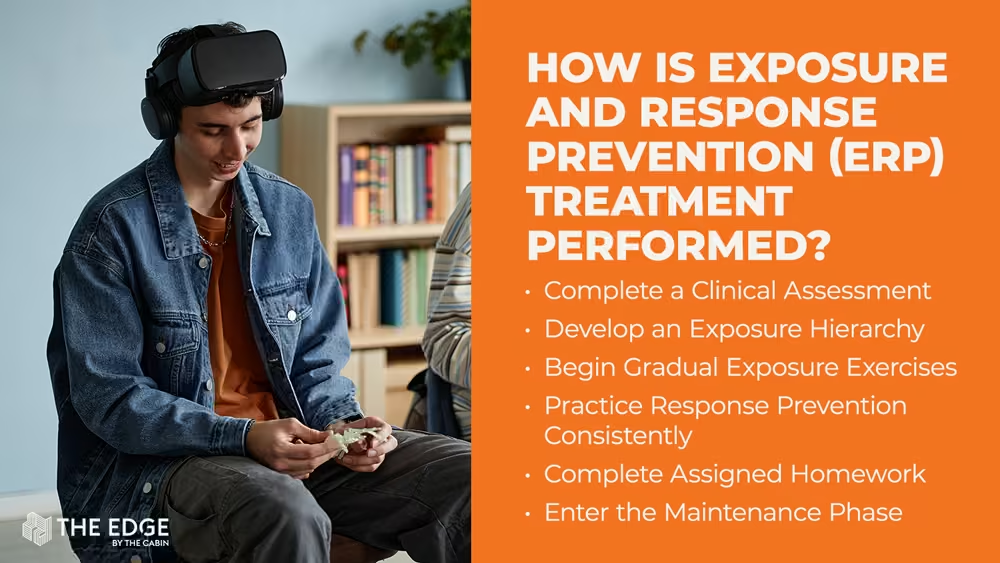
- Complete a Clinical Assessment. Evaluate OCD symptoms, severity, and specific obsessive-compulsive patterns with a qualified therapist. This assessment establishes the foundation for building an individualized treatment plan.
- Develop an Exposure Hierarchy. Rank feared triggers from least to most distressing based on personal experience. This hierarchy guides the structure and pacing of upcoming sessions.
- Begin Gradual Exposure Exercises. Start with lower-distress items on the hierarchy before progressing to more challenging triggers. Gradual progression builds confidence and tolerance throughout treatment.
- Practice Response Prevention Consistently. Resist compulsive behaviors during and after each exposure exercise. Consistent practice reinforces the core mechanism driving symptom improvement.
- Complete Assigned Homework. Practice exposure exercises independently between sessions to reinforce therapeutic progress. Regular homework completion significantly strengthens treatment outcomes.
- Enter the Maintenance Phase. Continue applying learned skills independently after formal treatment sessions conclude. This phase supports long-term symptom management and relapse prevention.
How are Exposure Hierarchies Created?
Exposure hierarchies are created by following the four steps listed below.
- List Feared Triggers. Identify specific situations, thoughts, or objects that provoke obsessive fears or compulsive urges. This list forms the foundation for the entire hierarchy.
- Assign Distress Ratings. Rate each trigger using a subjective distress scale, often ranging from zero to one hundred. These ratings help establish a clear order for treatment progression.
- Organize Triggers by Severity. Arrange the list from least distressing to most distressing based on the assigned ratings. This structure ensures a gradual, manageable progression through treatment.
- Review and Adjust the Hierarchy. Revisit the hierarchy periodically to reflect progress and any new triggers identified during treatment. Ongoing adjustment keeps the exposure plan relevant and effective.
For example, an individual with contamination-related OCD might rank touching a clean surface at the low end, touching a public door handle in the middle, and touching a trash can lid without washing hands at the high end.
How can Someone Prepare for ERP therapy?
Someone can prepare for ERP therapy by following the four steps listed below.
- Set Realistic Expectations. Understand that anxiety will likely increase temporarily before symptoms begin to improve. This expectation helps reduce discouragement during the early stages of treatment.
- Clarify Personal Goals. Identify specific ways OCD currently interferes with daily life and what improvement would look like. Clear goals help guide the direction and focus of treatment.
- Adopt a Willing Mindset. Approach exposure exercises with openness to discomfort rather than avoidance. This mindset significantly supports engagement with the more challenging aspects of treatment.
- Communicate Openly with the Therapist. Share concerns, questions, or hesitations honestly throughout the treatment process. Open communication helps the therapist adjust the pace and approach as needed.
Is ERP Therapy Difficult?
Yes, ERP therapy can be difficult, particularly during the early stages of treatment. Confronting feared triggers while resisting compulsions often produces significant temporary discomfort and anxiety. This difficulty reflects the core mechanism of the therapy rather than a sign that treatment is not working. Support from a trained therapist helps make the process more manageable through careful pacing and guidance. Difficulty generally decreases as tolerance builds and symptoms begin to improve over the course of treatment. Many individuals find the challenge worthwhile given the substantial and lasting symptom relief ERP typically provides.
Which conditions respond to Exposure and Response Prevention (ERP) Therapy?

The conditions that respond to Exposure and Response Prevention (ERP) Therapy are listed below.
- Obsessive-Compulsive Disorder: Obsessive-Compulsive Disorder represents the primary condition treated with ERP, addressing both obsessions and compulsions directly. This condition remains the most extensively researched application of the therapy.
- Body Dysmorphic Disorder: Body Dysmorphic Disorder often responds to ERP techniques adapted to address appearance-related obsessions and checking behaviors. Treatment focuses on reducing mirror-checking and reassurance-seeking rituals.
- Hoarding Disorder: Hoarding Disorder can benefit from ERP principles applied to discarding items and tolerating related distress. Treatment often incorporates additional strategies alongside standard exposure techniques.
- Anxiety Disorders: Anxiety disorders, including specific phobias and social anxiety, often respond well to exposure-based techniques similar to ERP. Treatment is adapted to address the specific fears associated with each condition.
- Illness Anxiety Disorder: Illness Anxiety Disorder frequently responds to ERP techniques targeting health-related reassurance-seeking and checking behaviors. Treatment helps reduce compulsive medical research and symptom monitoring.
Which OCD Subtypes Respond well to ERP?
The OCD subtypes that respond well to ERP are listed below.
- Contamination OCD: Contamination OCD responds well to ERP through exposures involving touching feared objects or surfaces without washing. This subtype represents one of the most researched applications of the therapy.
- Checking OCD: Checking OCD improves through exposures that involve resisting the urge to repeatedly verify locks, appliances, or other objects. Response prevention directly targets the checking rituals central to this subtype.
- Harm OCD: Harm OCD responds to ERP through exposures involving intrusive violent or harmful thoughts without performing mental compulsions. Treatment helps reduce the distress associated with these unwanted thoughts.
- Relationship OCD: Relationship OCD improves through exposures targeting intrusive doubts about a partner or relationship without seeking reassurance. This subtype often requires careful attention to subtle mental compulsions.
- Scrupulosity: Scrupulosity, involving moral or religious obsessions, responds well to ERP through exposures addressing feared moral transgressions without performing rituals. Treatment often incorporates sensitivity to personal religious or cultural context.
Can ERP help people with Anxiety Disorders?
Yes, ERP can help people with anxiety disorders beyond obsessive-compulsive disorder. Exposure-based techniques similar to those used in ERP effectively treat specific phobias, social anxiety, and panic disorder. Gradual exposure to feared situations helps reduce avoidance behaviors common across various anxiety conditions. Response prevention principles also apply when anxiety disorders involve reassurance-seeking or safety behaviors similar to compulsions. Treatment is adapted to address the specific fears and behavioral patterns associated with each individual anxiety disorder. This broad applicability reflects the underlying psychological mechanisms shared across many anxiety-related conditions.
Don’t let your mental health condition define your future
The Edge Rehab provides a safe, structured, and compassionate environment for your recovery. Reach out to us to see how we can help.
How long does Exposure and Response Prevention (ERP) therapy take?
Exposure and Response Prevention therapy typically takes between twelve and twenty sessions to complete for most individuals. Treatment duration varies based on symptom severity, with more severe cases sometimes requiring twenty-five sessions or more. Weekly session formats represent the most common approach, though intensive formats can compress treatment into a shorter timeframe. Individual factors, including consistency in practicing exposures and the presence of co-occurring conditions, also influence overall length. Some individuals experience significant improvement within a few months, while others require a longer course of treatment. Treatment length remains flexible, with therapists adjusting the timeline based on ongoing progress and clinical assessment.
How many ERP sessions do most people need?
Most people need between twelve and twenty ERP sessions to achieve significant symptom improvement. Mild to moderate OCD cases often respond within this typical range using a standard weekly format. Severe OCD cases may require twenty-five or more sessions, particularly when multiple obsessive-compulsive patterns are present. Weekly treatment formats generally involve one session per week over several months, allowing gradual progression through the exposure hierarchy. Intensive treatment formats condense several sessions per week into a shorter overall timeframe, often completing treatment within a few weeks. Choosing between these formats typically depends on symptom severity, scheduling flexibility, and individual treatment goals.
What affects the length of ERP treatment?
The factors that affect ERP treatment length are listed below.
- Symptom Severity: Symptom severity significantly influences treatment length, with more severe cases often requiring additional sessions. Milder presentations typically progress through the exposure hierarchy more quickly.
- Consistency: Consistency in completing homework exposures between sessions directly affects the pace of progress. Regular practice often shortens the overall treatment timeline.
- Co-Occurring Conditions: Co-occurring conditions, such as depression or generalized anxiety, may extend treatment length by adding complexity to the recovery process. Addressing these conditions alongside OCD often requires additional time and attention.
- Treatment Format: Treatment format, whether weekly or intensive, significantly affects overall duration. Intensive formats often complete treatment more quickly than standard weekly sessions.
- Motivation and Engagement: Motivation and engagement with the treatment process influence how efficiently progress occurs. Higher engagement often correlates with a shorter overall treatment timeline.
How is Exposure and Response Prevention (ERP) different from other therapies?
The ways ERP differs from other therapies are listed below.
- Specialized Focus: Specialized focus on obsessive-compulsive patterns distinguishes ERP from broader therapeutic approaches addressing general anxiety or mood concerns. This targeted structure supports more effective treatment of OCD specifically.
- Response Prevention Component: The response prevention component sets ERP apart from general exposure-based therapies that do not explicitly address compulsions. This distinction directly targets the behavioral cycle maintaining OCD symptoms.
- Structured Hierarchy Approach: A structured hierarchy approach organizes treatment around a personalized progression of feared triggers. This systematic structure differs from less formalized exposure methods.
- Strong Evidence Base: A strong evidence base specifically for OCD distinguishes ERP from therapies with less targeted research support for this condition. This evidence underlies its status as the recommended first-line treatment.
What is the Difference Between ERP and Cognitive Behavioral Therapy (CBT)?
The difference between ERP and Cognitive Behavioral Therapy (CBT) is that ERP represents a specialized form of CBT designed specifically to address obsessive-compulsive disorder. Standard CBT addresses a broader range of conditions through cognitive restructuring and general behavioral techniques. ERP narrows this focus by combining structured exposure exercises with deliberate compulsion prevention specific to OCD symptoms. Treatment goals in ERP center on breaking the obsession-compulsion cycle, while broader Cognitive Behavioral Therapy (CBT) often targets a wider range of thought patterns and behaviors.
The differences between ERP and CBT are shown in the table below.
| Feature | ERP | CBT |
| Scope | Specialized for OCD | Broad, applicable to many conditions |
| Techniques | Exposure and response prevention | Cognitive restructuring, behavioral techniques |
| Conditions Treated | OCD, body dysmorphic disorder, hoarding | Anxiety, depression, OCD, and other conditions |
| Treatment Goals | Break the obsession-compulsion cycle | Address unhelpful thoughts and behaviors broadly |
What is the Difference Between ERP and Exposure Therapy?
The difference between ERP and exposure therapy is that response prevention distinguishes ERP from exposure therapy used alone for other anxiety-related conditions. Exposure therapy alone focuses on reducing fear responses through repeated confrontation with feared situations. ERP adds a specific requirement to prevent compulsive behaviors that would otherwise follow the exposure. This addition directly targets the reinforcement cycle unique to obsessive-compulsive disorder. Suitable conditions for exposure therapy alone include phobias and social anxiety, while ERP specifically addresses OCD and related compulsive patterns.
The differences between ERP and Exposure therapy are shown in the table below.
| Components | ERP | Exposure Therapy | Suitable Conditions |
| Core Elements | Exposure plus response prevention | Exposure alone | Both address anxiety-related fears |
| Objectives | Break obsession-compulsion cycle | Reduce general fear response | ERP for OCD, exposure therapy for phobias |
| Outcomes | Reduced compulsions and obsessions | Reduced avoidance and fear | Both produce lasting symptom improvement |
How can you Find an Exposure and Response Prevention (ERP) Therapist?

You can find an Exposure and Response Prevention therapist by following the five steps below.
- Search Specialized Directories. Look through professional directories that list therapists trained specifically in ERP and OCD treatment. These directories often allow filtering by location and specialization.
- Verify Credentials and Training. Confirm that potential therapists have completed specialized training in ERP techniques. Proper training significantly influences the quality and effectiveness of treatment.
- Check Professional Organization Memberships. Look for affiliation with organizations focused on OCD treatment and behavioral therapy. Membership often reflects ongoing commitment to specialized training and best practices.
- Schedule an Initial Consultation. Arrange a preliminary conversation to discuss experience, treatment approach, and compatibility. This step helps determine whether the therapist’s style matches personal needs.
- Confirm Treatment Format Options. Ask whether the therapist offers weekly, intensive, or telehealth treatment formats. Format flexibility can significantly influence treatment convenience and accessibility.
THE EDGE CRETE: YOUR SUPERIOR CHOICE FOR RESIDENTIAL REHAB
The Edge Rehab provides a safe, structured, and compassionate environment for your recovery. Reach out to us to see how we can help.
What Qualifications Should an ERP Therapist have?
The qualifications an ERP therapist should have are listed below.
- Professional Licensing: Professional licensing as a psychologist, counselor, or clinical social worker ensures the therapist meets baseline legal and ethical standards. This credential remains a fundamental requirement for practicing therapy.
- Specialized ERP Training: Specialized ERP training demonstrates focused education in exposure and response prevention techniques specifically. This training often comes through certified workshops or supervised practicums.
- Experience with OCD: Experience with OCD treatment indicates familiarity with the specific challenges and nuances of this condition. Extensive experience often correlates with more effective, individualized treatment.
- Professional Organization Membership: Membership in professional organizations focused on OCD or behavioral therapy reflects ongoing commitment to specialized best practices. These affiliations often provide access to continuing education and updated treatment guidelines.
What Questions Should you ask an ERP Therapist?
The questions you should ask an ERP therapist are listed below.
- Experience with OCD: Asking about the therapist’s experience treating OCD specifically helps determine familiarity with the unique challenges of the condition. Extensive experience often correlates with more effective treatment outcomes.
- Treatment Methods: Asking about specific treatment methods clarifies whether the therapist follows established ERP protocols. This question helps confirm that the therapist’s approach aligns with evidence-based practices.
- Expected Treatment Timeline: Asking about the expected treatment timeline helps set realistic expectations for the course of therapy. This information supports better planning for scheduling and commitment.
- Telehealth Availability: Asking about telehealth availability clarifies whether remote sessions are an option for ongoing treatment. This flexibility can significantly improve accessibility for some individuals.
- Intensive Program Options: Asking about intensive program options reveals whether a more condensed treatment format is available. This information helps determine the best fit based on symptom severity and scheduling needs.
What happens after Exposure and Response Prevention (ERP) treatment ends?
Booster sessions and independent exposure practice happen after Exposure and Response Prevention treatment ends. Individuals continue applying learned exposure and response prevention skills independently to reinforce lasting symptom improvement. Booster sessions may be scheduled periodically to address emerging challenges or reinforce previously learned techniques. Self-monitoring for early warning signs helps identify potential setbacks before they escalate into significant symptom return. Ongoing practice of exposure exercises, even after formal treatment ends, supports continued resilience against OCD triggers. Long-term success generally depends on consistent application of these skills well beyond the conclusion of active therapy.
How can you prevent OCD Relapse after ERP?
You can prevent OCD relapse after ERP by following the five steps below.
- Continue Independent Exposure Practice. Maintain regular practice of exposure exercises even after formal treatment concludes. Consistent practice reinforces the skills developed throughout therapy.
- Monitor for Early Warning Signs. Watch for subtle increases in avoidance behavior or compulsive urges. Early recognition supports prompt intervention before symptoms escalate.
- Identify Common Relapse Triggers. Recognize situations such as major life stressors or illness that may increase vulnerability to symptom return. Awareness of these triggers supports proactive management.
- Schedule Booster Sessions. Arrange periodic check-ins with a therapist to reinforce skills and address emerging challenges. These sessions help maintain progress achieved during initial treatment.
- Maintain Response Prevention Habits. Continue resisting compulsive behaviors even when symptoms feel minor or manageable. Consistent response prevention remains central to long-term symptom control.
Can OCD return after ERP therapy?
Yes, OCD can return after ERP therapy, particularly during periods of significant stress or reduced practice of learned skills. Symptom return does not necessarily indicate treatment failure, since OCD often requires ongoing management rather than a one-time cure. Consistent application of exposure and response prevention skills significantly reduces the likelihood and severity of relapse. Booster sessions can help address emerging symptoms before they become more significant or entrenched. Early recognition of warning signs allows for prompt intervention and often prevents a full symptom return. Long-term success generally depends on continued commitment to the skills and strategies developed during active treatment.
Give yourself the best change for OCD recovery
The Edge Crete team is ready to help you work through your past and present struggles. Call us today for a confidential consultation.