
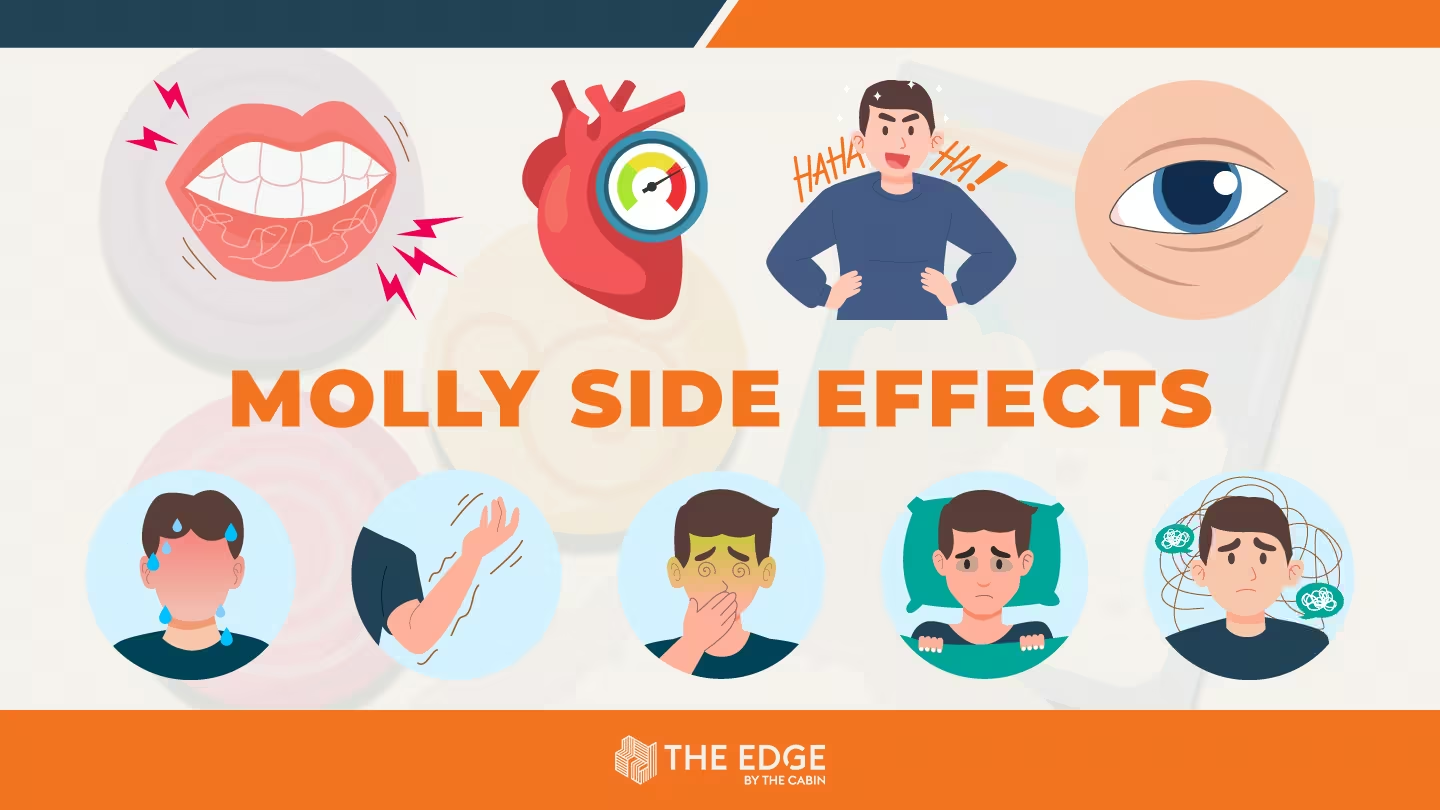
Molly side effects range from a faster heart rate and jaw clenching to more serious reactions like overheating, seizures, or an irregular heartbeat that can require emergency care.
Molly is the street name for MDMA, a synthetic drug known for producing euphoria, increased energy, and emotional closeness. These side effects typically last from a few hours up to several days, with the main effects lasting 3 to 6 hours and comedown symptoms such as fatigue and low mood lingering for 1 to 3 days. Drug and alcohol rehab should be considered for Molly use when cravings, repeated use despite harm, or failed attempts to quit make the pattern hard to control.
Common Short-Term Side Effects
Common short-term side effects of Molly typically occur while the drug is active or within the first 24 hours after use. These reactions largely stem from MDMA’s stimulant properties and its effect on the nervous system, temperature regulation, and neurotransmitter activity. Recognizing these effects early can help identify when a reaction becomes severe enough to require medical attention.
The common short-term side effects of Molly are listed below.
- Increased Heart Rate and Blood Pressure: Increased heart rate and blood pressure describe a rise in cardiovascular activity caused by MDMA’s stimulant effects. The body responds with a pounding pulse, chest tightness, and heightened physical exertion.
- Jaw Clenching or Teeth Grinding: Jaw clenching or teeth grinding is a muscular reaction commonly linked to MDMA use. Repeated episodes may cause jaw soreness, facial tension, or dental damage.
- Excessive Sweating: Excessive sweating occurs when MDMA raises body temperature and stimulates the nervous system. Fluid loss increases as the body attempts to cool itself during use.
- Dilated Pupils: Dilated pupils result from MDMA’s effect on the nervous system and visual response. Sensitivity to light and difficulty focusing often accompany this reaction.
- Dry Mouth and Intense Thirst: Dry mouth and intense thirst develop when MDMA reduces saliva production and increases fluid loss through sweating. A persistent urge to drink water often follows.
- Nausea or Loss of Appetite: Nausea or loss of appetite describes digestive discomfort that can occur during MDMA use. Stomach upset and reduced interest in food are common during this period.
- Muscle Tension or Cramps: Muscle tension or cramps involve tightness or spasms across various muscle groups. Discomfort often appears in the legs, arms, or jaw during use.
- Restlessness or Tremors: Restlessness or tremors describe an inability to stay still or involuntary shaking. Fidgeting, pacing, and trembling hands often accompany this reaction.
- Difficulty Sleeping: Difficulty sleeping refers to trouble falling or staying asleep while MDMA remains active in the body. Racing thoughts and prolonged wakefulness are common during this period.
- Blurred Vision: Blurred vision occurs when MDMA affects visual processing and eye function. Difficulty focusing and sensitivity to light may accompany this symptom.
- Anxiety or Panic: Anxiety or panic describes heightened fear, worry, or unease that may surface during use. Rapid breathing and racing thoughts often accompany this reaction.
- Feeling Unusually Energetic or Euphoric: Feeling unusually energetic or euphoric reflects the stimulant and mood-altering effects associated with MDMA. Heightened sociability and intense feelings of happiness are common during this period.
Increased Heart Rate and Blood Pressure
Increased heart rate and blood pressure describe a rise in cardiovascular activity caused by MDMA’s stimulant properties. The heart works harder as MDMA triggers the release of adrenaline and other stress-related chemicals in the body. Blood pressure rises alongside heart rate, placing additional strain on blood vessels and circulation. Symptoms may include a pounding or racing pulse, chest tightness, and a noticeable awareness of heartbeat. Some individuals may also experience lightheadedness or flushing in the face and neck. Preexisting cardiovascular conditions may intensify these symptoms and increase the risk of complications. Monitoring physical response during use can help identify concerning changes before they escalate.
Jaw Clenching or Teeth Grinding
Jaw clenching or teeth grinding is a muscular reaction commonly triggered by MDMA’s stimulant effects on the nervous system. The behavior often occurs involuntarily and may continue for the duration of intoxication. Tension builds in the jaw and facial muscles as the body responds to heightened neurological activity. Symptoms may include soreness in the jaw, tightness in the face, and discomfort while chewing or speaking. Repeated episodes over time may contribute to dental wear, cracked teeth, or jaw joint pain. Some individuals use gum or pacifiers to reduce the physical impact of this reaction. Persistent jaw discomfort following use may warrant evaluation by a dental professional.
Excessive Sweating
Excessive sweating occurs when MDMA disrupts the body’s normal temperature regulation and stimulates the nervous system. The body attempts to cool itself as internal temperature rises during use. Fluid loss increases significantly, particularly in warm environments or during physical activity such as dancing. Symptoms may include damp or clammy skin, a flushed complexion, and visible perspiration even at rest. Prolonged sweating without adequate fluid replacement can contribute to dehydration and electrolyte imbalance. Clothing may become soaked, and body odor may increase due to heightened perspiration. Staying in a cool environment and replacing fluids can help manage this symptom during use.
Dilated Pupils
Dilated pupils result from MDMA’s effect on the nervous system and its influence on visual response. The pupils widen beyond their normal size as neurotransmitter activity increases in the brain. This reaction typically appears shortly after use and may persist for several hours. Symptoms may include sensitivity to bright light, difficulty focusing on nearby objects, and a noticeable change in eye appearance. Vision may become slightly blurred as the eyes adjust to the altered pupil size. Sunglasses or dim lighting can help reduce discomfort associated with this symptom. Pupil size gradually returns to normal as the effects of MDMA wear off.
Dry Mouth and Intense Thirst
Dry mouth and intense thirst develop when MDMA reduces saliva production while simultaneously increasing fluid loss through sweating. The mouth and throat may feel unusually dry, making speech or swallowing uncomfortable. Thirst often becomes intense, leading some individuals to drink large amounts of water in a short period. Symptoms may include a persistent urge to drink, a sticky or dry feeling in the mouth, and cracked lips. Excessive water intake without proper balance can contribute to a dangerous drop in blood sodium levels. Sipping fluids gradually rather than drinking large amounts at once supports safer hydration. Chewing gum or sucking on ice may help relieve mild dry mouth discomfort.
Nausea or Loss of Appetite
Nausea or loss of appetite describes digestive discomfort that frequently accompanies MDMA use. The stomach may become unsettled as the body processes the stimulant effects of the drug. Appetite often decreases significantly during use and may remain suppressed for several hours afterward. Symptoms may include queasiness, stomach cramping, and reluctance to eat even familiar foods. Some individuals experience mild vomiting, particularly during the earlier stages of intoxication. Skipping meals during use can contribute to fatigue and nutritional depletion later on. Eating small, easily digestible foods once nausea subsides can support recovery.
Muscle Tension or Cramps
Muscle tension or cramps involve tightness, stiffness, or spasms across various muscle groups during MDMA use. The nervous system’s heightened activity often causes muscles to contract more than usual. Areas commonly affected include the legs, arms, neck, and jaw. Symptoms may include aching muscles, involuntary twitching, and discomfort during movement or stretching. Extended periods of physical activity, including dancing, may worsen muscle tension and increase fatigue. Stretching and rest can help ease tightness once the drug’s effects begin to fade. Severe or prolonged cramping may indicate a need for medical attention.
Restlessness or Tremors
Restlessness or tremors describe an inability to remain still or involuntary shaking that may occur during MDMA use. The nervous system’s heightened state often drives repetitive movement or physical agitation. Individuals may feel compelled to pace, fidget, or move continuously without an obvious reason. Symptoms may include shaky hands, jittery movements, and difficulty sitting calmly for extended periods. Tremors may become more noticeable as the drug’s stimulant effects peak. This restlessness typically decreases as the substance is metabolized and effects begin to fade. A calm environment can help reduce the intensity of this symptom during use.
Difficulty Sleeping
Difficulty sleeping refers to trouble falling or staying asleep while MDMA remains active in the body. Heightened brain activity and elevated energy levels often interfere with the body’s natural ability to rest. Racing thoughts and physical restlessness may prevent the mind from settling enough for sleep. Symptoms may include prolonged wakefulness, tossing and turning, and a sense of being unable to relax. Sleep difficulties may extend beyond the immediate hours of use and into the following day. A dark, quiet environment may support rest once the drug’s effects begin to subside. Persistent sleep disruption following repeated use may indicate a need for professional guidance.
Blurred Vision
Blurred vision occurs when MDMA affects the eyes and the brain’s visual processing pathways. Pupil dilation and altered neurological activity can make it difficult to focus clearly on objects. Symptoms may include hazy or unclear vision, mild double vision, and increased sensitivity to light. Reading, driving, or performing detailed visual tasks may become more difficult during this period. Eye strain may also develop, particularly in bright or artificially lit environments. Vision typically returns to normal as the drug’s effects wear off. Persistent visual disturbances after use may warrant medical evaluation.
Anxiety or Panic
Anxiety or panic describes heightened feelings of fear, worry, or unease that may surface during MDMA use. Rapid changes in brain chemistry can trigger sudden emotional shifts, even in individuals without a history of anxiety. Symptoms may include a racing heart, shortness of breath, and an overwhelming sense of dread. Some individuals may experience a fear of losing control or a feeling of impending danger. Panic symptoms may intensify in crowded, loud, or unfamiliar environments. A calm setting and reassurance from trusted individuals can help ease these symptoms. Severe or prolonged panic episodes may require medical attention.
Feeling Unusually Energetic or Euphoric
Feeling unusually energetic or euphoric reflects the stimulant and mood-enhancing effects associated with MDMA. Increased neurotransmitter activity produces heightened feelings of happiness, sociability, and physical energy. Symptoms may include a strong urge to talk, dance, or engage socially with others. Some individuals report an intense sense of emotional connection or affection toward those around them. Judgment may become impaired despite the pleasant nature of these feelings. Energy levels often decline sharply once the drug’s effects begin to wear off. This shift frequently marks the beginning of the comedown period that follows use.
Understanding the signs is the first step toward recovery
If you recognise the signs of substance use, The Edge Crete offers structured, expert care to help you break free from the cycle and begin recovery.
Serious Side Effects
Serious side effects of Molly can become life-threatening and require immediate emergency medical care. These reactions typically develop when MDMA places extreme strain on the body’s cardiovascular, neurological, or temperature-regulating systems. Recognizing these warning signs quickly can make a critical difference in preventing lasting harm.
Serious side effects of Molly are listed below.
- Very High Body Temperature (Hyperthermia): Very high body temperature, known as hyperthermia, occurs when MDMA disrupts the body’s ability to regulate heat. Internal temperature can rise to dangerous levels, especially during physical activity in warm environments.
- Severe Dehydration: Severe dehydration develops when fluid loss from sweating exceeds intake or when water balance becomes disrupted. The body’s ability to function normally becomes compromised as fluid levels drop significantly.
- Low Blood Sodium (Hyponatremia): Low blood sodium, or hyponatremia, can occur, especially from drinking excessive amounts of water while using MDMA. Sodium levels become diluted, disrupting normal cellular and neurological function.
- Seizures: Seizures involve sudden, uncontrolled electrical activity in the brain that can occur during severe MDMA reactions. Convulsions and temporary loss of awareness may accompany this dangerous complication.
- Loss of Consciousness: Loss of consciousness refers to a sudden inability to remain awake or aware during a severe reaction to MDMA. This complication often signals a medical emergency requiring immediate attention.
- Irregular Heartbeat: Irregular heartbeat describes an abnormal heart rhythm that may occur during severe MDMA toxicity. The heart’s electrical signals become disrupted, increasing the risk of further cardiac complications.
- Serotonin Syndrome: Serotonin syndrome may occur, particularly if MDMA is combined with antidepressants or other drugs that increase serotonin. Excess serotonin activity in the brain can trigger a dangerous cluster of physical and neurological symptoms.
- Kidney, Liver, or Heart Damage: Kidney, liver, or heart damage can occur in severe cases of MDMA toxicity or prolonged misuse. Organ systems become strained under the combined effects of dehydration, overheating, and cardiovascular stress.
Very High Body Temperature (Hyperthermia)
Very high body temperature (hyperthermia) occurs when MDMA disrupts the body’s natural ability to regulate internal heat. The condition develops as the drug’s stimulant effects increase metabolic activity and interfere with the brain’s temperature control center. Physical exertion, crowded spaces, and warm environments often intensify this dangerous reaction. Symptoms may include hot, flushed, or dry skin, confusion, rapid breathing, and a racing heartbeat. Body temperature can climb to levels that damage internal organs within a short period. Untreated hyperthermia can cause organ failure, seizures, or death. Cooling the body quickly and getting emergency medical care are essential.
Severe Dehydration
Severe dehydration develops when fluid loss from sweating, physical activity, and heat exposure exceeds the body’s fluid intake. MDMA’s stimulant effects often mask normal signals of thirst and fatigue, allowing dehydration to progress unnoticed. The body’s ability to regulate temperature and maintain healthy blood pressure becomes compromised as fluid levels drop. Symptoms may include dizziness, dry skin, dark urine, rapid heartbeat, and extreme thirst. Confusion and weakness may follow as dehydration becomes more severe. Untreated dehydration can strain the organs and heart. Replacing fluids quickly and seeking medical care can help stop the condition from getting worse.
Low Blood Sodium (Hyponatremia)
Low blood sodium (hyponatremia) can occur, especially from drinking excessive amounts of water while using MDMA. The condition develops when sodium levels in the blood become diluted beyond a safe threshold. MDMA’s effect on hormone regulation can further disrupt the body’s ability to balance fluid and electrolytes. Symptoms may include headache, confusion, nausea, and swelling in the hands or feet. Severe cases may progress to seizures, brain swelling, or loss of consciousness. This condition is considered a medical emergency requiring immediate intervention. Careful fluid intake, rather than excessive water consumption, helps reduce this risk.
Seizures
Seizures involve sudden, uncontrolled electrical activity in the brain that can occur during severe MDMA toxicity. Seizures often develop alongside hyperthermia, dehydration, or dangerously low sodium levels. The brain’s normal function becomes disrupted as chemical and temperature imbalances intensify. Symptoms may include convulsions, muscle rigidity, loss of awareness, and temporary confusion afterward. Seizures may occur without warning and can happen more than once during a severe reaction. This complication requires immediate emergency medical attention to prevent lasting harm. Monitoring for early warning signs can help reduce the risk of this outcome.
Loss of Consciousness

Loss of consciousness refers to a sudden inability to remain awake or aware during a severe reaction to MDMA. Loss of consciousness often signals that the body is experiencing a serious medical emergency. Contributing factors may include overheating, severe dehydration, or dangerous heart rhythm changes. Symptoms may include unresponsiveness, collapse, and a failure to react to voice or touch. The individual may appear limp or show shallow, irregular breathing. Immediate emergency care is critical to prevent further complications or death. Bystanders must seek emergency assistance without delay if this occurs.
Irregular Heartbeat
Irregular heartbeat describes an abnormal heart rhythm that may occur during severe MDMA toxicity. The condition develops as MDMA places excessive strain on the cardiovascular system. Electrical signals controlling the heartbeat may become disrupted, leading to dangerous fluctuations in rhythm. Symptoms may include heart palpitations, chest pain, dizziness, and a fluttering sensation in the chest. Severe cases may progress to cardiac arrest without prompt treatment. Preexisting heart conditions can significantly increase the risk of this complication. Emergency medical evaluation is necessary when irregular heartbeat symptoms appear.
Serotonin Syndrome
Serotonin syndrome may occur, particularly if MDMA is combined with antidepressants or other drugs that increase serotonin. The condition develops when serotonin levels in the brain rise to dangerous and excessive levels. Combining substances that each affect serotonin significantly raises this risk. Symptoms may include agitation, confusion, rapid heart rate, high fever, and muscle rigidity. Severe cases may progress to seizures, loss of consciousness, or organ damage. This condition requires immediate emergency treatment to prevent life-threatening complications. Avoiding substance combinations that affect serotonin reduces the likelihood of this reaction.
Kidney, Liver, or Heart Damage
Kidney, liver, or heart damage can occur in severe cases of MDMA toxicity or prolonged misuse. These complications often develop as a result of extreme dehydration, overheating, and cardiovascular strain occurring together. Organ systems become overwhelmed when the body cannot recover from repeated or severe physical stress. Symptoms may include abdominal pain, swelling, jaundice, and reduced urine output. Long-term damage may persist even after the immediate crisis resolves. Emergency treatment focuses on stabilizing organ function and preventing further harm. Ongoing medical monitoring supports recovery following a severe reaction of this kind.
Feel Like You Can’t Stop Using Molly?
It’s time to understand why and take action. You don’t have to navigate this journey by yourself—at The Edge, our professional support is here to empower and transform young men’s lives.
“Comedown” Effects
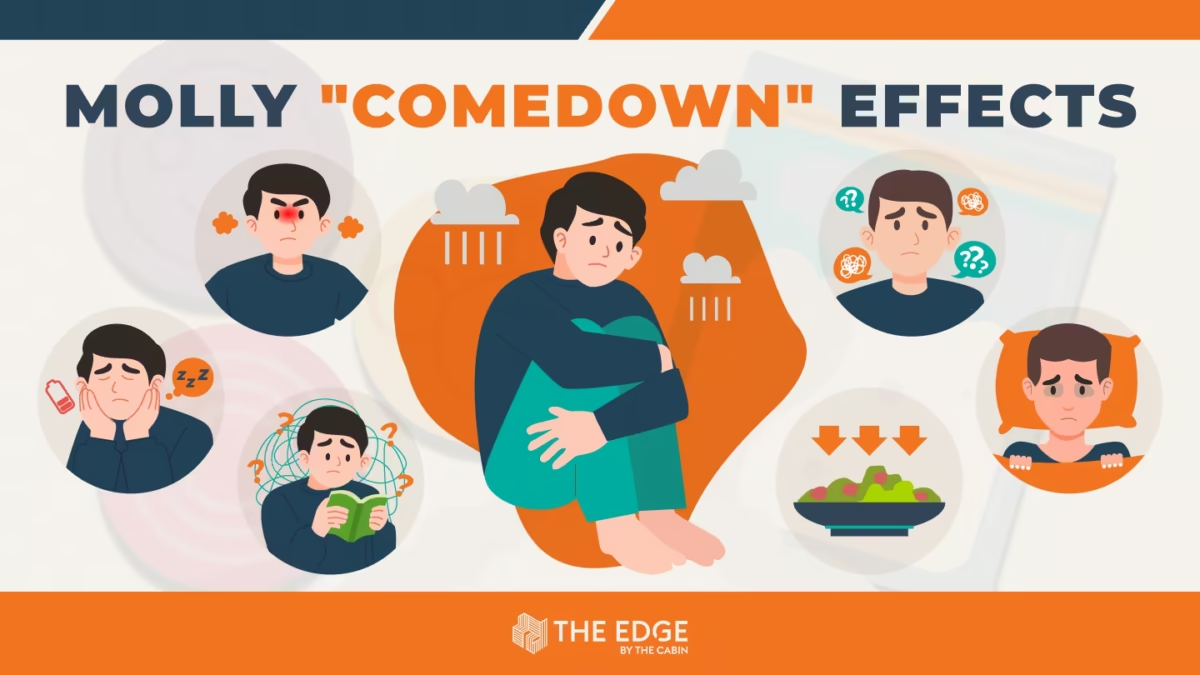
The “Comedown” effects typically appear once MDMA’s main effects wear off and can last for 1 to 3 days, sometimes longer. These symptoms often develop as the brain’s serotonin levels recover from being heavily depleted during use. Understanding this phase can help set realistic expectations for recovery time.
The comedown effects of Molly are listed below.
- Depression or Low Mood: Depression or low mood describes a noticeable decline in emotional state following MDMA use. Feelings of sadness or emptiness often develop as the brain’s serotonin levels drop after being heavily depleted.
- Anxiety or Irritability: Anxiety or irritability refers to heightened nervousness or a shortened emotional temper during the comedown period. Small frustrations may feel more intense as the body and mind recover from the drug’s effects.
- Fatigue: Fatigue describes an overwhelming sense of physical and mental exhaustion following MDMA use. The body often needs extra rest to recover from the energy expended during use.
- Trouble Concentrating: Trouble concentrating involves difficulty focusing on tasks or conversations after MDMA use. Thoughts may feel scattered or slow as the brain adjusts back to its normal chemical balance.
- Memory Problems: Memory problems refer to short-term difficulty recalling information following MDMA use. Recent conversations or details may feel harder to remember during the recovery period.
- Insomnia: Insomnia describes continued difficulty sleeping during the days following MDMA use. The body’s disrupted sleep cycle may take time to return to normal.
- Reduced Appetite: Reduced appetite refers to a continued lack of interest in food after MDMA use. Hunger cues may stay low even after the drug’s other effects have worn off.
Depression or Low Mood
Depression or low mood describes a noticeable decline in emotional state that often follows MDMA use. The condition develops as serotonin levels drop after being heavily depleted during the drug’s active effects. This chemical imbalance can leave the brain temporarily unable to produce normal feelings of pleasure or contentment. Symptoms may include sadness, hopelessness, a lack of motivation, and reduced interest in daily activities. These feelings can appear suddenly and may catch a person off guard after the initial euphoria fades. Most cases improve gradually as brain chemistry returns to its usual balance within a few days. Persistent or severe low mood lasting beyond a week may warrant professional support.
Anxiety or Irritability
Anxiety or irritability refers to heightened nervousness or a shortened emotional temper during the comedown period. The condition develops as the nervous system adjusts after intense stimulation from MDMA wears off. Small stressors that would normally feel manageable may suddenly seem overwhelming or frustrating. Symptoms may include restlessness, tension, quickness to anger, and an inability to relax. Sleep loss and physical exhaustion often make these emotional symptoms feel more intense. Support from friends or family and a calm environment can help ease this discomfort. Symptoms that persist for several days may benefit from additional guidance or care.
Fatigue
Fatigue describes an overwhelming sense of physical and mental exhaustion that follows MDMA use. The condition develops as the body works to recover from the energy expended during the drug’s stimulant phase. Depleted nutrients, disrupted sleep, and dehydration often contribute to this drained feeling. Symptoms may include heavy limbs, low motivation, difficulty staying awake, and reduced physical stamina. Daily tasks may feel far more demanding than usual during this recovery period. Rest, proper nutrition, and hydration typically help the body regain its normal energy levels. Fatigue lasting more than a few days may indicate a need for additional recovery time.
Trouble Concentrating
Trouble concentrating involves difficulty focusing on tasks or conversations following MDMA use. The condition develops as the brain works to restore its normal chemical balance after intense stimulation. Mental clarity often feels reduced, making it harder to process information or stay on task. Symptoms may include forgetfulness, distraction, slower thinking, and difficulty following conversations. Work or academic performance may temporarily decline during this period of recovery. Adequate rest and time away from demanding tasks often support quicker mental recovery. Concentration typically improves as the brain’s chemical balance stabilizes over the following days.
Memory Problems
Memory problems refer to short-term difficulty recalling information following MDMA use. The condition develops as neurotransmitter activity involved in memory formation becomes temporarily disrupted. Recent events, conversations, or details may feel harder to access during the recovery period. Symptoms may include forgetfulness, difficulty retaining new information, and confusion about recent events. These effects are usually temporary and improve as brain function stabilizes. Repeated or frequent MDMA use may extend the duration of these memory difficulties. Persistent memory issues lasting beyond the expected recovery period may require further evaluation.
Insomnia
Insomnia describes continued difficulty sleeping during the days following MDMA use. The condition develops as the body’s natural sleep-wake cycle becomes disrupted by the drug’s stimulant effects. Heightened brain activity and residual energy can make it difficult to fall or stay asleep. Symptoms may include frequent waking, restlessness, racing thoughts, and an inability to relax at bedtime. Poor sleep during this period often worsens fatigue and irritability. A calm sleep environment and consistent routine can help the body return to normal rest patterns. Sleep difficulties that persist beyond several days may benefit from additional support.
Reduced Appetite
Reduced appetite refers to a continued lack of interest in food following MDMA use. The condition develops as the drug’s stimulant effects suppress normal hunger signals in the body. This suppression can last well beyond the immediate hours of use, extending into the following days. Symptoms may include skipped meals, low interest in eating, and unintentional weight changes over time. Poor nutrition during this period can slow the body’s overall recovery process. Eating small, easily digestible meals can help restore normal appetite gradually. Appetite typically returns to normal as the body’s chemical balance stabilizes.
Because YOUNG MEN ARE AT HIGH RISK FOR ADDICTION
Seeking professional treatment isn’t just a choice; it’s a crucial step toward saving your loved one’s life.
Long-Term Risks with Repeated Use
Long-term risks with repeated use of Molly become more likely as frequent or heavy exposure places lasting strain on the brain and body. These effects often develop gradually and may persist even during extended periods without use. Recognizing these risks early can support timely intervention and reduce lasting harm.
Long-term risks with repeated use of Molly are listed below.
- Persistent Memory and Attention Problems: Persistent memory and attention problems describe ongoing cognitive difficulties linked to repeated MDMA use. Forgetfulness and trouble focusing may continue well beyond the immediate recovery period.
- Anxiety or Depression: Anxiety or depression may develop or worsen with frequent MDMA use over an extended period. Emotional instability can become more persistent as repeated use continues to affect brain chemistry.
- Sleep Disturbances: Sleep disturbances refer to ongoing difficulty maintaining a regular sleep pattern after repeated MDMA use. Irregular sleep cycles may persist even during periods without use.
- Increased Risk of Dependence: Increased risk of dependence describes a growing reliance on MDMA to feel normal or manage emotions. Cravings and compulsive use may develop as repeated exposure continues.
- Possible Long-Term Changes in Brain Serotonin Function: Possible long-term changes in brain serotonin function may occur with repeated MDMA use, although the extent varies among individuals and remains an area of ongoing research. Mood regulation and emotional stability may be affected as serotonin activity shifts over time.
Persistent Memory and Attention Problems
Persistent memory and attention problems describe ongoing cognitive difficulties that can develop after repeated MDMA use. The condition develops as prolonged serotonin depletion affects the brain regions responsible for memory formation and focus. Repeated exposure may prevent these systems from fully recovering between periods of use. Symptoms may include forgetfulness, difficulty concentrating, slower information processing, and trouble learning new information. These difficulties may extend well beyond the immediate days following use and into ongoing daily life. Reduced use and extended recovery time often support gradual cognitive improvement. Long-standing memory or attention problems may benefit from professional evaluation and support.
Anxiety or Depression
Anxiety or depression may develop or worsen with frequent MDMA use over an extended period. The condition develops as repeated serotonin depletion affects the brain’s ability to regulate mood over time. Emotional instability may become more persistent rather than resolving fully between periods of use. Symptoms may include ongoing sadness, excessive worry, irritability, and a reduced ability to feel pleasure. These emotional changes may begin to affect relationships, work, and daily functioning. Reducing use and seeking emotional support can help ease these symptoms over time. Persistent or severe symptoms may require professional mental health treatment.
Sleep Disturbances
Sleep disturbances refer to ongoing difficulty maintaining a regular sleep pattern after repeated MDMA use. The condition develops as the brain’s sleep-regulating chemicals become disrupted through continued exposure. Sleep cycles may remain irregular even during extended periods without use. Symptoms may include chronic insomnia, frequent waking, unrefreshing sleep, and daytime drowsiness. Poor sleep quality over time can worsen mood, memory, and overall physical health. Establishing a consistent sleep routine may help the body gradually restore healthier patterns. Sleep problems that persist for weeks or months may require further medical attention.
Increased Risk of Dependence
Increased risk of dependence describes a growing reliance on MDMA to feel normal or manage emotions. The condition develops as repeated use reinforces the brain’s association between the drug and temporary relief or pleasure. Control over use may become more difficult as this pattern continues. Symptoms may include strong cravings, compulsive use, and continued use despite awareness of harm. Attempts to cut back or stop may result in frustration or repeated relapse. Recognizing early warning signs can help prevent dependence from becoming more severe. Professional treatment can support recovery for individuals experiencing this pattern.
Possible Long-Term Changes in Brain Serotonin Function
Possible long-term changes in brain serotonin function may occur with repeated MDMA use, although the extent varies among individuals and remains an area of ongoing research. The condition develops as prolonged use places continued strain on serotonin-producing neurons. Some individuals may experience lasting effects, while others show more complete recovery over time. Symptoms may include mood instability, altered emotional regulation, and changes in cognitive performance. These effects may persist even after use has stopped for an extended period. Researchers continue to study how significant and lasting these changes may be. Reducing or stopping use gives the brain the best opportunity to recover its natural balance.
What is Molly?

Molly is the common name for a powdered or capsule form of MDMA, a synthetic psychoactive drug. Molly produces feelings of euphoria, increased energy, and emotional closeness. Effects vary depending on dose, purity, and individual body chemistry. Molly may also contain other substances that increase health risks, since illicit production lacks regulated quality control. Physical reactions can range from mild stimulation to severe cardiovascular or neurological complications. Psychological effects, including anxiety or mood instability, may accompany or follow physical symptoms. Understanding these risks supports safer decision-making and faster recognition of warning signs.
What Is the Difference Between Molly and Ecstasy?
The difference between Molly and ecstasy is that Molly is typically marketed as a purer form of MDMA, while ecstasy is usually sold as tablets that may contain MDMA mixed with other drugs. Ecstasy is more likely to contain unknown or adulterated ingredients due to its tablet form and production methods. Molly and ecstasy carry similar health risks and may be unpredictable regardless of how they are marketed or sold. Purity claims associated with Molly are not verified through any regulated process. Laboratory testing remains the only reliable way to confirm the actual contents of either substance. These distinctions become clearer when comparing Molly vs. Ecstasy side by side.
Is Molly the Same as MDMA?
Yes, Molly is a street name for MDMA, although products sold as Molly may contain other substances. Purity cannot be guaranteed in illicit drugs, regardless of how they are marketed or packaged. This increases the risk of unexpected side effects, since unknown ingredients can interact unpredictably with the body. Consumers relying on the Molly name should not assume MDMA is the only substance present. Testing services, where available, provide the most reliable way to verify contents. Awareness of this uncertainty supports more cautious decision-making.
Can Molly Addiction Develop Over Time?
Yes, Molly addiction can develop over time, since repeated use can lead to psychological dependence in some people. Frequent use may increase cravings and compulsive drug-seeking behavior over time. The risk rises with continued or heavy use, particularly when Molly is combined with other substances. Dependence may develop gradually as the brain adjusts to repeated exposure. Behavioral patterns, including prioritizing use over responsibilities, may signal a developing dependence. Recognizing the signs early supports timely intervention and reduces long-term harm. Molly addiction is considered part of the broader types of addiction that involve compulsive substance use.
Addiction to MDMA Doesn’t Define You
MDMA Addiction Is Real, But So Is Hope. Take charge of your journey to recovery with the support of The Edge.
How Long do Molly Side Effects Last?
Molly side effects can last from 3 hours to 7 days, depending on the person and dose. The main effects typically last 3 to 6 hours, while comedown symptoms such as fatigue, low mood, and sleep problems commonly persist for 1 to 3 days after the drug wears off. Recovery time varies based on individual factors and repeated use. Hydration, nutrition, and rest often support a smoother recovery from lingering effects. Higher doses or frequent use may extend comedown symptoms to 4 to 7 days in some cases. Individual metabolism and overall health also influence how quickly effects subside. Persistent symptoms lasting beyond one week may warrant medical evaluation.
How Long does Molly Last?
The effects of Molly typically last about 3 to 6 hours. Some after-effects can continue for up to 24 hours or longer. Duration depends on the dose, purity, and individual metabolism. Higher doses generally produce longer-lasting effects and more intense aftereffects. Purity plays a significant role, since unknown adulterants may alter expected duration. Individual factors, including body weight and hydration, also affect how long effects persist. Repeated use within a short period may prolong or intensify lingering symptoms.
Does the Comedown Last Longer Than the High?
Yes, the comedown often lasts longer than the drug’s euphoric effects. Fatigue, anxiety, and low mood may persist for a day or more. Repeated use can make comedown symptoms more severe over time. Sleep disturbances often accompany the comedown period and may extend recovery time. Nutritional depletion and dehydration can worsen the intensity of comedown symptoms. Emotional instability during this period may increase vulnerability to continued use. Support and rest during the comedown phase can help ease the transition back to baseline functioning.
Who is Most at Risk of Molly Side Effects?
People most at risk of Molly side effects are listed below.
- Frequent Users: Frequent users are more likely to develop harmful effects due to repeated exposure. Tolerance and dependence may increase with continued use over time.
- People With Heart Conditions: People with heart conditions face increased cardiovascular risk during Molly use. Preexisting conditions may worsen the strain placed on the heart.
- People With Mental Health Disorders: People with mental health disorders face a greater risk of anxiety or mood changes. Existing symptoms may intensify during or after use.
- Young Adults: Young adults are more likely to engage in high-risk use, including combining substances. Developmental factors may increase vulnerability to harmful outcomes.
- People Mixing Drugs: People mixing drugs face a higher chance of dangerous reactions. Combined substances can intensify toxicity and unpredictability.
How Can Mixing Molly With Other Drugs Increase the Risks?
Mixing Molly with other drugs can increase the risks through overdose, serotonin syndrome, and dangerous cardiovascular strain, particularly when combined with alcohol, stimulants, or antidepressants. Combining it with these substances can be especially dangerous due to their compounding effects on the body. Drug interactions may cause severe heart, brain, or body complications. Alcohol can intensify dehydration and impair the body’s ability to regulate temperature. Stimulants may place additional strain on the cardiovascular system when combined with MDMA. Antidepressants increase the risk of serotonin syndrome when taken alongside Molly. Awareness of these interactions supports safer decision-making and reduces the likelihood of medical emergencies.
Is Molly More Dangerous for People With Health Conditions?
Yes, Molly is more dangerous for people with health conditions, since certain conditions can increase the risks associated with its use. Heart disease, high blood pressure, and mental health disorders may worsen its effects. Medical complications are more likely in these individuals due to added physical or psychological strain. Preexisting cardiovascular issues may increase the chance of severe reactions during use. Mental health conditions may become more difficult to manage during and after use. Awareness of personal health history supports more informed decisions about risk. Medical guidance can help individuals understand how existing conditions may affect their response to Molly.
When Should you Consider Drug and Alcohol Rehab for Molly Use?

You should consider drug and alcohol rehab for Molly use when cravings, repeated use despite harm, or failed attempts to quit make the pattern difficult to control. Warning signs include repeated use despite harm, cravings, or failed attempts to quit. Professional treatment can provide therapy, support, and relapse prevention strategies. Co-occurring mental health symptoms, including anxiety or mood instability, may also indicate a need for structured care. Early intervention often improves outcomes by addressing patterns before they become more severe. Rehabilitation offers a structured environment for addressing both the physical and psychological aspects of Molly misuse. Ongoing support through Drug and Alcohol Rehab helps individuals build healthier habits and reduce the risk of continued substance use.
Every type of addiction deserves the right treatment
Push yourself one step further to The Edge by contacting our admissions team for a confidential, 24/7 consultation and take the first step toward a brighter tomorrow!